By Anthony Ouellet
BUSRC narrowly avoided disaster at its last Annual General Meeting (AGM) on Oct. 26, as 20 students, the bare minimum needed to conduct such a meeting, were in attendance. This number is declining as the year passes, showing what could be understood as a disinterest from students in their union, something that the SRC’s leadership wants to address.
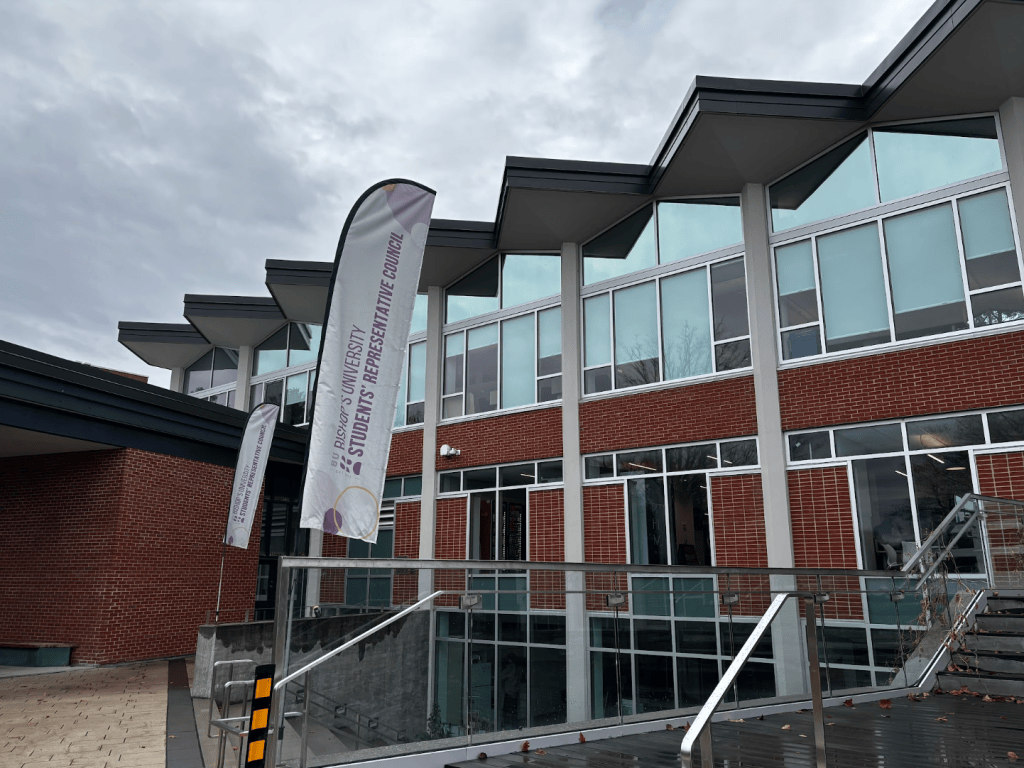
Photo courtesy of Anthony Ouellet
The last AGM started with 20 students in attendance at The Gait, which is the minimum quorum needed according to the BUSRC’s bylaws. These bylaws were changed in 2025 to bring down the quorum for AGMs to 20 students; it was somewhere between 25 and 30 before that.
In the years leading up to this change, attendance at AGMs dropped by some margin. Up to 39 students, and never less than 30, attended between 2020 and 2023, for instance. However, after registering 29 participants in 2024, the AGMs brought 21 participants in 2025.
Thus, the bylaws on the quorum were changed “to address the difficulty”, BUSRC’s presidence Grace Cordeiro told The Campus. Talking about attendance and interest problems in the SRC, Cordeiro was candid and straightforward about issues. “For this year’s AGM, I walked into the Pod and called out to ask students who were free to come over. I can be shy and socially awkward sometimes, so that was definitely outside my comfort zone, and honestly, kind of cringe. Needing to do that speaks to the distance we need to close between students and the SRC. We need ongoing relationships where students know their representatives and understand what taking part can mean for them”, she said.
The SRC’s president still did not want to directly assume that students do not care about their union. Still, similar reports on disinterest towards student democracy were made in other student- led outlets in the past year, such as La Pige at the Cégep de Jonquière and the Montréal Campus at the UQÀM. “What are we doing to support and advocate for ourselves as students? Because that is the function of a student union and the SRC. As an organization, we need to make it easier for students to bring those concerns forward, take part in deciding what we do about them, and see what comes of that work. That requires an ongoing relationship with students throughout the year, and we’re looking at how we can strengthen that relationship“, Cordero said, noting that the SRC is in constant representation with the university on issues such as budget cuts, affordable housing, and international students.
Solutions
To strengthen this relationship between the SRC and its members, the students, Grace Cordeiro is open to revising the functioning of the union. “[…]Our current structure places elected directors primarily in governance and oversight, without enough opportunities to carry out student-led initiatives and maintain direct connections with different student communities. I have concerns about whether it responsibly manages our resources, both financially and in terms of the time and capacity students have to carry out their responsibilities“, she notes.
Other unions across the province have a different governing model, with elected student executives getting portfolios and representing a constituency. This model could be worth exploring, according to the SRC’s president.
Moreover, the way assemblies are handled could also use a little revamping to ensure more people would join. “Some other associations have incorporated hybrid meetings, with Zoom or Teams, to allow for more attendance, and maybe we need to think about that as well. Are we meeting students where they are?“, Cordeiro asked.