By Jean-Simon Rhéaume
With the temperatures nearing 20°C in Sherbrooke in November, it’s the kind of weather that makes you check the date. So, with the rising winter temperatures, it feels fitting that Bishop’s offered a screening of YUMI – The Whole World, which highlights the devastating effects climate change has on the world, especially in the Pacific. YUMI shows that the signs of a changing climate are harder to take in stride. In Vanuatu, heavy rain can topple papaya trees and damage the food families grow. Along Fiji’s coast, rising seas and erosion are washing away some communities, and forcing others to move inland.
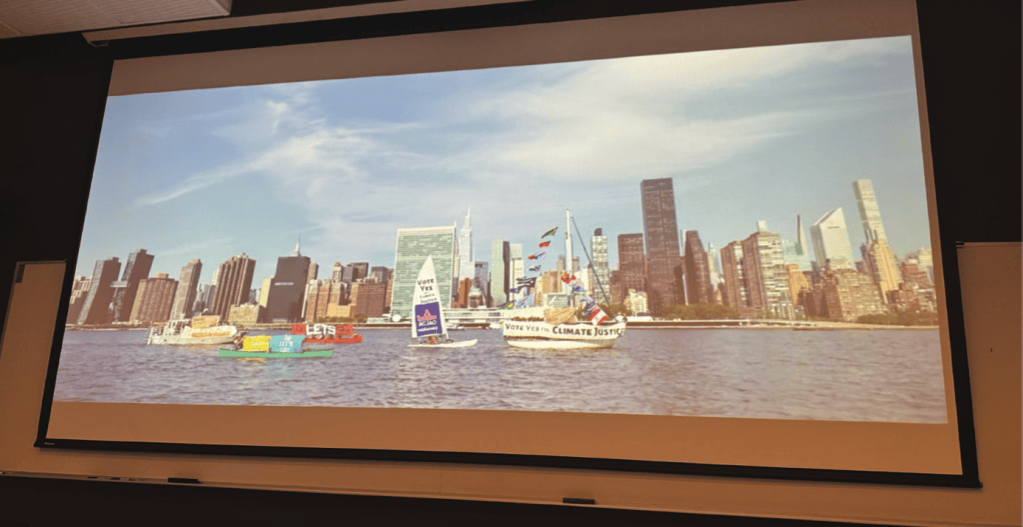
Photo courtesy of Lauren Root
Directed by Felix Golenko, the documentary follows Romabeth Siri, Solomon Yeo and Vishal Prasad, three law students from the University of the South Pacific in Fiji. These students created the Pacific Islands Students Fighting Climate Change, where they push for the International Court of Justice to clarify what countries are legally required to do about climate change through an advisory opinion.
The students in YUMI are challenging governments that won’t condemn climate change. Their legal campaign, and their goal of trying to get their resolution heard by the International Court of Justice, gives the broader climate movement a way to press for accountability alongside demands for faster emission cuts and support for affected communities. The Pacific Islands are the ones suffering the most from climate change, yet as the film points out, they create less than one per cent of global greenhouse gas emissions.
Vanuatu’s experience helps explain why those demands go together. When Cyclone Pam, a category five cyclone, struck in 2015, it caused the country to lose approximately 65 per cent of their GDP overnight. Rebuilding schools and roads takes resources that are also needed to prepare for future disasters, which are happening more often and at closer intervals.
The students first needed support from Pacific governments. The government of Vanuatu then took the proposal to the United Nations, where the General Assembly adopted it without a vote on Mar. 29, 2023. After a nearly four-year-long campaign, the students succeeded in their mission and were able to have their voices heard. A journey that started in the office of the Minister of Foreign Affairs for Vanuatu led a group of university students all the way to the UN headquarters in New York City.
On Jul. 23, 2025, after the film’s release, the International Court of Justice issued its advisory opinion. The opinion is non-binding, but it clarifies existing duties under international law, including the duty to take measures to prevent significant harm to the climate system. The moral and legal pressure this advisory opinion carries is something the Pacific Islanders hope will influence the actions of countries around the world.
The students who created the Pacific Islands Students Fighting Climate Change showed what commitment and hard work can accomplish. As the film states, they fought to bring the world’s biggest problem in front of the world’s biggest court, and they won. Their tenacity and fight are going to help people around the world. More than anything, they’ve proven what students are capable of doing.