By Josef Spence
On Sept. 28, provincial politics came to BU’s campus for a provincial election debate between candidates for the local riding of Saint- François. The Bishop’s University Politics and International Studies Association (PISA), Bishop’s University Students’ Representative Council (SRC), and Champlain Students’ Association (CSA) co-organized this debate as an opportunity for students to engage with the political process and ensure the community had the opportunity to hear the perspectives of the candidates whom they directly vote for in English.
Despite difficulties in engaging the candidates in the debate, this debate was highly attended by both students and members of the community, with around 75 people in total in attendance.
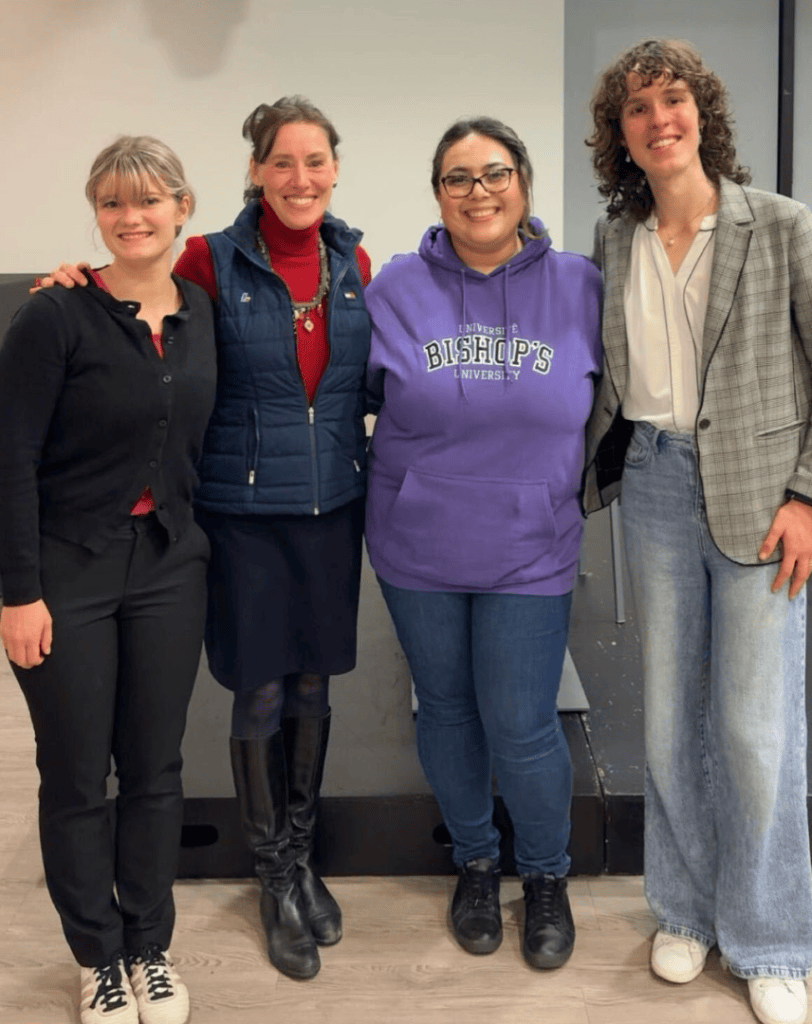
Photo courtesy of Reagan Russell
The invitation to participate in the debate was extended to every candidate running in the riding of Saint-François. Only Québec Liberal Party candidate Jacqueline Belleau and Québec Solidaire candidate Mia Fréchette attended the debate. Geneviève Hébert, the candidate for the Coalition Avenir Québec (CAQ), declined to attend the debate, and the candidate for the Parti Conservateur du Québec, Esteban Méndez-Hord, explained he would be unable to attend as he was focusing his efforts on other projects such as knocking on doors. The Parti Québecois candidate, Sylvie Tanguay, did not respond to the invitation.
Last year, PISA organized a debate between the mayoral candidates in the Sherbrooke municipal election. PISA leveraged this experience in organizing this event, ensuring that candidates were contacted well in advance of the debate night. Besides communications with the candidates, PISA selected pertinent topics for the debate to cover, ranging from Quebec sovereignty to laïcité in education to healthcare.
The Advocacy Positions Committee of the SRC, together with the CSA, promoted the debate to their respective students. Students were given the opportunity to submit questions in advance to the Advocacy Positions Committee. These questions were reviewed for relevance and civility, though doubts were later raised by audience members who wish to remain unnamed about the appropriateness of some questions for local candidates. The Advocacy Positions Committee wrote additional questions to supplement those student questions deemed appropriate.
Reagan Russell, a student in the School of Education and leader in a variety of clubs and student organizations, moderated the debate, timing the candidates’ responses and ensuring that the debate flowed smoothly. The candidates conducted themselves with the utmost professionalism — and even a degree of friendliness; Jacqueline commented that meeting and learning from Mia was one of the best parts of running in the election. Both candidates used their time efficiently and rebutted sparingly. Nevertheless, audience questions at the end of the debate resulted in the debate ending twenty minutes later than anticipated.
After the debate, PISA executives observed that it had been a stunning success with a higher-than-expected turnout and excellent answers from the candidates to the difficult questions posed to them. Indeed, it was a clear demonstration of how students can actively contribute to our democratic process.