By Addison Walker
Recent discussion about Canada’s relationship with the European Union has raised interest in the potential benefits of a closer relationship. European Commission President Ursula von der Leyen has highlighted the possibility of Canada becoming an EU associate member.
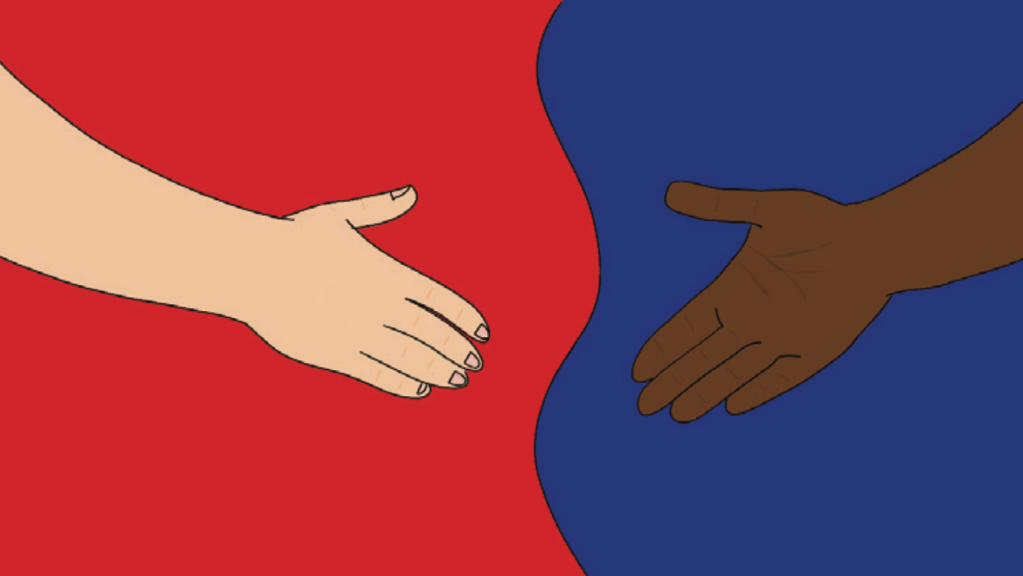
Graphic courtesy of Gabrielle Lalonde
This proposal could be a major step, but it also raises important questions about the future of Canadian business, international trade, and our economic ties with Europe. On Sept. 16, 2026, European Commission President Ursula von der Leyen proposed making Canada the EU’s first associate member during her annual State of the European Union address. According to Reuters, the proposal would introduce a new type of partnership, allowing Canada to develop closer ties with Europe without becoming a full EU member.
But what does associate membership actually mean?
According to the Associated Press, the specifics are unknown. Associate membership is not recognized under existing EU treaties, so the EU would need to negotiate details before any agreement could continue. The potential benefits, responsibilities, and economic implications of such a partnership remain unclear.
The following day, Prime Minister Mark Carney addressed the European Parliament and welcomed. the proposal for closer cooperation. However, as Euronews reported, he made it clear that Canada is not seeking full EU membership and stressed that the partnership’s substance matters more than its title.
From a business perspective, recent discussions have emphasized strengthening cooperation in A.I., energy, manufacturing, defence, and critical minerals. A closer partnership may create opportunities for Canadian businesses to access European markets and reduce reliance on the United States.
However, the proposal has received mixed reactions.
Building stronger ties with Europe could help Canada rely less on the United States for its economy. In a September survey by Abacus Data, about four out of five Canadians said they supported closer integration with the EU. However, that doesn’t mean they all back the specific idea of associate membership.
Others are worried about what this kind of partnership could mean. Conservative Leader Pierre Poilievre asked if closer integration would make Canadian taxpayers pay into the EU budget or force Canadian businesses to follow European rules. But these requirements are not part of the current proposal.
Some international experts have wondered how much real change the proposal would bring. Anand Sundar from the European Council on Foreign Relations says that without a clear legal definition, associate membership could become a symbolic gesture rather than a real partnership.
The proposal has also drawn attention in Washington as U.S. President Donald Trump warned that he may impose additional tariffs on Europe if he views the partnership as hostile to the United States. European officials emphasized that the proposal aims to strengthen cooperation, not target any country.
For now, the proposal remains an idea rather than a finalized agreement. European leaders have expressed different views, and key details require further negotiation. Canada and the EU are expected to continue discussions at their upcoming summit in Montreal on October 29-30. Nevertheless, recent discussions underscore Canada’s commitment to strengthening international relationships and pursuing economic opportunities beyond its traditional trading partners.