By Megane Masson
On Oct. 8, Gay and Grey Montreal (GGMTL), together with Bishop’s University, held a panel-type Q&A at the Gait called Queer Elders Sharing. This collaboration aimed to connect members of the 2SLGBTQI+ community across generations. According to their own description, “Queer Elders Sharing vast historical context faced by is an educational and community the 2SLGBTQI+ community in event connecting students and Montreal. A few historical facts community members with the tinted the background, such as the lived experiences of queer elders.” This was Gay and Grey Montreal’s first event held at Bishop’s, but they are hoping for many more collaborations to come.
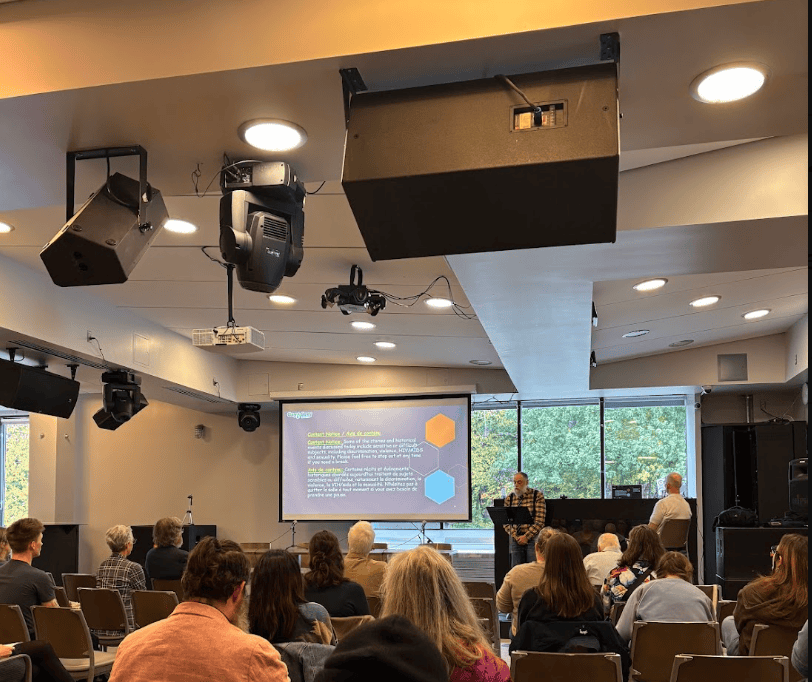
Photo courtesy of Megane Masson
Other resources from the Eastern Townships were also present at the meeting. Université de Sherbrooke’s 2SLGBTQI+ student club had a stand next to GGMTL. Gris Estrie and Iris Estrie, a non-profit organization in the Estrie region that supports the 2SLGBTQ+ community and public health, were also in attendance, calling to attendees and promoting their services. As M. Domingue states, “Events like QES really help connect 2SLGBTQIA+ people and allies from different walks of life; they are also great opportunities to raise awareness of the different organizations and services that cater to the community.”
The forum began with sentimental clips of personal stories from gay elders, highlighting the vas historical context faced by the 2SLGBTQI+ community in Montreal. A few historical facts tinted the background, such as the HIV/AIDS crisis of the 80s, which long vilified the queer community. Gay bars were long targeted during those times, leaving painful memories but also a legacy of resilience amongst the community. An attendee and Bishop’s alumnus brought up the idea of reopening a gay bar here in Sherbrooke.
The suggestion raised an interesting question about the role of physical spaces in building queer community. Beyond providing a space to socialize, queer bars have historically offered opportunities for people to meet others like themselves, form relationships, and find a sense of belonging. In a smaller city like Sherbrooke, the desire for such a space also speaks to the importance of creating opportunities for queer people to connect locally, rather than having to look toward larger urban centres, such as Montreal.
Events like these matter to the community because queer heritage is not merely a chronicle of bygone days and remains an enduring legacy that individuals embody and actively refine. Think of it this way: history is not fixed. People write it; it’s still being written, and sometimes it’s even rewritten. Passing these stories on between generations is one way of ensuring that this history is not forgotten. For younger members of the community, hearing directly from those who lived through different periods of queer history offers a perspective that textbooks alone cannot provide. For older generations, sharing these experiences creates an opportunity to have their lives and struggles recognized. These conversations also remind attendees that, while much has changed, the work of building inclusive and supportive communities continues.
Queer Elders Sharing offered more than a look into the past. By bringing together all generations and local organizations, it created an opportunity to reflect on where the community has been, what it needs today, and what it hopes to build for the future.