By Daphne Moore
As a female golfer and a student-athlete at Bishop’s University, I have noticed how differently women can be portrayed in sports advertising compared with how we actually experience sports. Lately, two ads have made that especially obvious: the Good Good and Callaway golf advertisement and the Novig sports gambling advertisement, featuring Sydney Sweeney. Both have started conversations about how women are represented in sports, and these conversations are important.
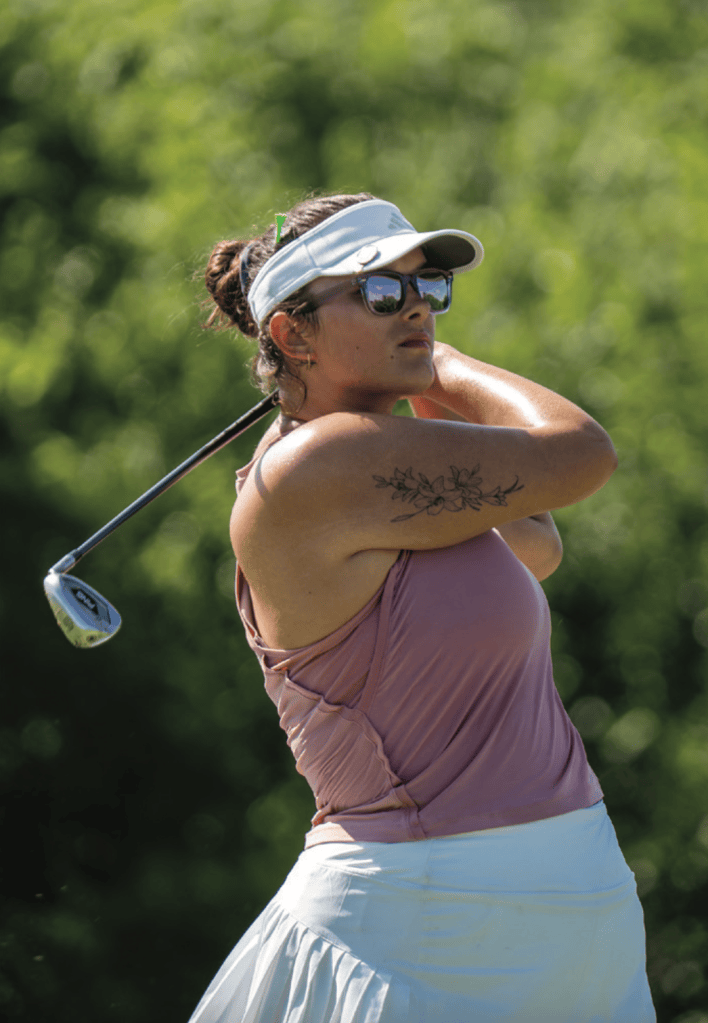
Photo courtesy of Daphne Moore
Golf has been a huge part of my life since growing up in Texas. I played competitively throughout high school, spent years playing junior golf and now I continue to play at Bishop’s. Being a female golfer means that I know firsthand how much work goes into the sport. There are hours of practice, early mornings, bad rounds, good rounds, travelling, workouts and a lot of frustration. When I see women included in sports advertising, I want to see that side of sports represented too.
The Good Good and Callaway advertisement is a good example of where things can go wrong. The ad showed Good Good co-founder Garrett Clark pushing female golfer Alexis Miestowski to the ground as part of a joke about a golf club. The video was removed, both companies apologized and Callaway eventually ended its partnership with Good Good. Reuters reported that Callaway also committed $1 million to organizations working to prevent violence against women.
Sydney Sweeney’s Novig advertisement created a different conversation. Female athletes criticized the campaign for focusing on sexuality instead of athletic ability. One of the strongest responses came from British sprinter Amy Hunt, who said, “Sydney Sweeney, this is what women in sport look like. Muscles, hard work, sweat, blood, tears.” Former U.S. gymnast Gracie Kramer also spoke out about the ad, saying that female athletes have been “oversexualized, reduced to our bodies and forced to fight to be taken seriously.” The Associated Press reported that several other female athletes made similar criticisms.
I do not think that every advertisement featuring a woman has to be serious or completely focused on competition. Women’s personalities, senses of humor and different styles should still be highlighted. The problem happens when being a female athlete seems secondary to being entertaining or attractive. There is a difference between showing confidence and reducing women in sports to objects of attention.
At Bishop’s, I get to be around female athletes who understand this firsthand. We are students, teammates and competitors. We work hard because we love our sports and because we want to improve. I think advertisements should reflect that reality. They have the opportunity to show younger girls that being an athlete is about skill, confidence, teamwork and dedication.
Sports advertising has a huge influence on what people think athletes look like and what they are supposed to be. As a female golfer, I would much rather see an ad that makes a young girl think, “I want to play golf,” than one that makes her question whether she belongs in the sport. That is why the Good Good and Callaway ad was so disappointing to me. Instead of showing the skill, competition and personality that make golf enjoyable, the ad used a joke involving a female golfer being pushed to the ground. Ads like this can make it harder for young girls to see themselves as serious athletes. Golf already has a long history of being seen as a male-dominated sport, so the way women are represented matters.