
Ana Luiza Torres Castelete – Contributor
On the evening of Mar. 18, Bishop’s University welcomed students and members of the community for a night shaped by poetry and reflection. The second edition of Printemps des Passeurs, organized by the Salon du Livre de l’Estrie in partnership with Sherbrooke Info and the Oui Experience program, brought participants together around literature as a way of opening a window into Francophone culture for those whose first language is not French.
Soft lighting, quiet music and an attentive audience set the tone for an intimate and inviting evening, where each reading seemed to linger in the room a little longer. The event was led by Mélanie Noël, poet and president of the Salon du Livre, alongside Louise Marois, finalist for the Grand Prix Québecor at the Trois-Rivières International Poetry Festival.
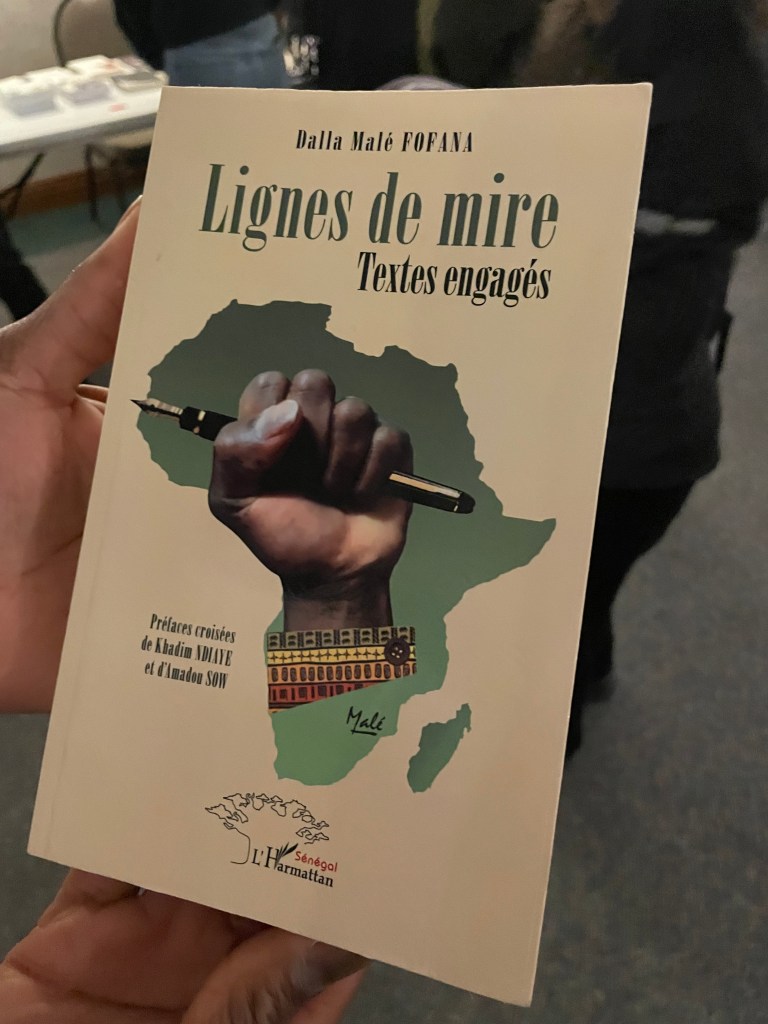
Image courtesy of Ana Luiza Torres Castelete
Throughout the night, the theme “La littérature au cœur de l’éveil social” guided the readings and conversations, highlighting literature not only as an art form but as a space for awareness and social reflection.
For some participants, the evening also carried a personal dimension tied to language learning. Emilia, a Bishop’s student from the United States, attended as a listener and found poetry to be a bridge into the French language. She explained that the slower rhythm of the readings made it easier to follow pronunciation and meaning, allowing her not only to understand more but to feel more connected to the language. By the end of the night, she described feeling both inspired and more confident in her learning process.
Among the featured readers, Professor Malé Fofana shared three poems from his collection, “Lignes de Mire,” which he wrote over a decade and is centered on the African continent. His readings moved through themes of conflict, memory and humanity. He began with “Stratégie,” reflecting on war in Senegal, followed by “Innocence,” a tribute to those lost in conflict and concluded with “La terre attend” (“the earth is waiting”), leaving the audience with a quiet invitation to reflect.
For Dr. Fofana, the importance of the event lies in both language and meaning. He noted that poetry can make language more approachable for learners, while also offering something deeper. Literature, he suggested, creates space for questioning, reflection and sharing perspectives. In doing so, it helps preserve stories, spark dialogue and remind us of what connects us as people.
By bringing together diverse voices around a shared theme, Printemps des Passeurs highlighted literature as more than a form of expression. It became a meeting point between languages, experiences and ideas, where words not only described the world but invited those present to engage with it more thoughtfully.


 The Campus