
Megane Masson – Staff Writer
On Nov. 7, the Eastern Townships Resources Center (ETRC), in collaboration with the Institute on Quebec Studies of SUNY Plattsburgh, took an impressive step and celebrated its first major scholarly book publication: “Quebec’s Eastern Townships and the World: A Region and Its Global Connections” (McGill-Queen’s University Press, 2025). The ETRC, primarily a non-profit and English-speaking institution in Quebec, has faced quite its share of whiplash from linguistic legislation, yet has accomplished this long-lasting milestone by putting forth the Eastern Townships region.
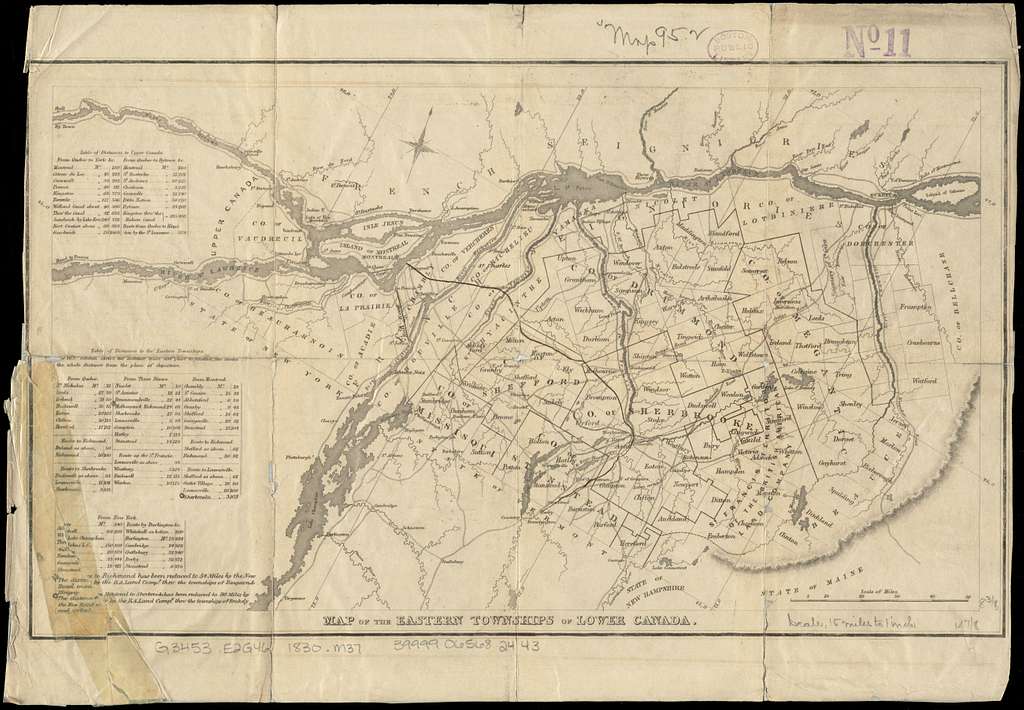
Image courtesy of Eastern Townships
The book launch began with a panel of speakers, with Dr. Webster, president of the ETRC, to break the ice. Then, Principal Lebel-Grenier shared a few words of gratitude and highlighted the importance of the ETRC’s accomplishment. He stated that “the book lays a foundation for our understanding of how the eastern townships came about, and where it’s going.” Despite its small bearing, the eastern townships are connected to many other places around the world, and this book seeks to underscore the importance of this region’s key feature. As a matter of fact, while contributing to the book, each author had to address two specific prompts: “How have the Eastern Townships been influenced by or linked to global trends?” and “ Have these global trends marked the Eastern Townships and their people?” These two questions serve to showcase the Eastern Townships’ strength, importance, and large-scale impact on the global landscape.
In a nutshell, “Quebec’s Eastern Townships and the World: A Region and Its Global Connections” is divided into four sections, respectively addressing the transformation and influence of the Eastern Townships, a case study of human mobility and engagement, followed by the roles and impact of institutions (such as Bishop’s), and lastly, how local literature and cinematography, globally connects the eastern townships.
Quite a few sections from the book, as well as contributors, have raised issues considered fundamental to Bishop’s community. This includes Bishop’s unrighteous colonial foundation upon which the university was built. The latter may not be forgotten, but learnt from and moved beyond. Dr. Jean Manore, Dean of Humanities, has contributed an essay on Abenaki Mobility in the Eastern Townships to the publication. Manore’s article neatly aligns with the recent opening of Kwigw8mna and the indigenous community’s relentless effort to regain their voices.
The launch of “Quebec’s Eastern Townships and the World: A Region and Its Global Connections” is a huge step forward for the visibility of the Eastern Townships. It is important to consider the processes that have shaped the region and led to its present form. Sometimes the culmination of events hides harsh truths, which is, in part, what this book seeks to emphasize. Bishop’s community is known for its diverse and welcoming body. Still, the foundation of a community needs to be fortified to stand tall, and this begins by understanding the very land on which we work and study.

 The Campus