
Sara Scafuro – Contributor
Why student internships in marketing, finance and HR are being quietly replaced by algorithms.
There was a time when internships meant endless coffee runs, spreadsheet cleanups and late nights perfecting PowerPoints. But in 2025, those “grunt work” tasks, the classic rite of passage for business students, are increasingly being handled not by humans, but algorithms. Artificial intelligence, once a buzzword confined to Silicon Valley, is now becoming the go-to assistant in white-collar offices everywhere. And it’s changing what it means to “get your foot in the door.”
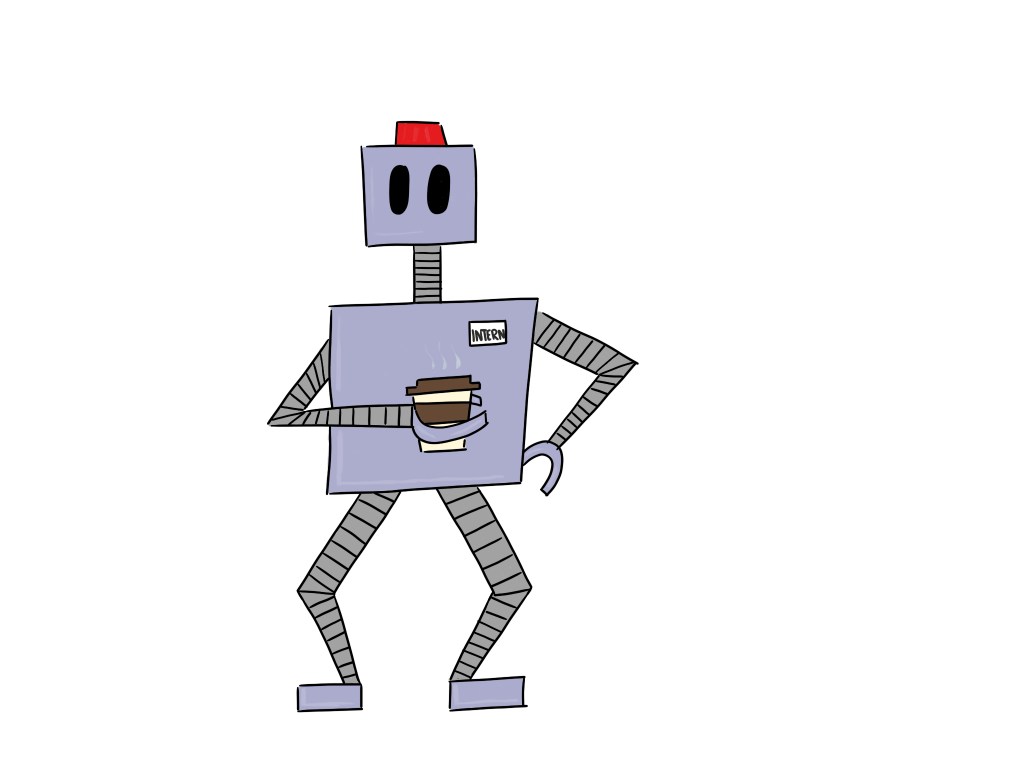
Graphic courtesy of Gabrielle Lalonde
The rise of the algorithmic intern
At PwC, one of the world’s largest consulting firms, AI-driven systems now handle much of the data entry and analysis that used to occupy armies of interns and junior analysts. In marketing, machine learning tools automatically generate consumer insights, analyze campaign performance and even write draft ad copy. Major insurance companies are using similar automation to review claims, spot anomalies and manage customer queries, all tasks that used to train young professionals in the fundamentals of corporate work.
What’s happening is not loud or flashy; it’s quiet and efficient. Many companies aren’t announcing they’ve “cut internship positions,” they are simply finding that the new AI platforms can handle the same workload faster, cheaper and without coffee breaks. For employers, this is progress. For students eager to gain hands-on experience, it’s a wake-up call.
A lesson from labour economics
Economists have a name for what’s happening: technological displacement. That’s when machines or software replace human labor in performing specific tasks. Historically, this concept was most visible in factories, robots assembling cars, for instance, but it’s now spreading into white-collar environments.
However, there’s another side to the story: task augmentation. Instead of replacing humans entirely, AI can also enhance what people do. Humans and machines work together, with AI handling repetitive tasks while people focus on interpretation, strategy and creativity. A finance intern, for example, might use AI to automate budget reports, freeing up time to develop insights or recommendations, work that’s far more valuable and fulfilling.
The challenge for today’s students is to position themselves on the augmentation side of the equation. Those who only master technical or clerical skills are the most vulnerable to being replaced. Those who develop the ability to think critically, manage technology, and make sound judgments will find AI to be a partner, not a threat.
What this means for Bishop’s students
Bishop’s prides itself on producing well-rounded graduates who can think beyond the spreadsheet. In an age of automation, that mindset is more important than ever. While coding and data literacy are valuable, they’re not enough on their own. What employers will increasingly pay for, and what AI can’t easily replicate, are soft skills.
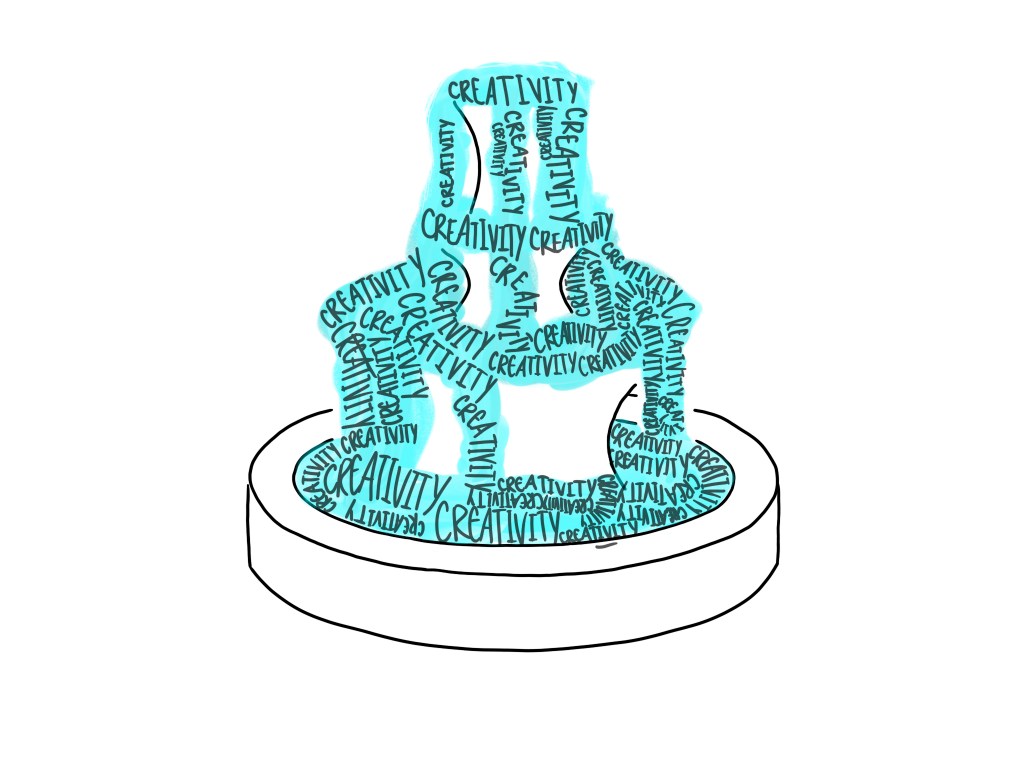
- Creativity: Machines can analyze data, but they can’t truly innovate. Marketing students who can translate analytics into original campaign ideas will remain indispensable.
- Adaptability: The tools we use today will look different in two years. Those who stay curious and embrace change will thrive, no matter how technology evolves.
- Ethical judgment: As AI takes on more decision-making, humans must ensure those decisions remain fair, transparent and aligned with societal values. Business students who can navigate these ethical gray areas will be in high demand.
So instead of worrying that AI will steal your future job, think of it as an invitation to level up. Learn how to use these tools, not just coexist with them. Focus on what makes you uniquely human, the capacity to connect, empathize and think creatively under uncertainty.
The bottom line
The “AI intern” isn’t coming; it’s already here. But the story doesn’t end with displacement. It ends with adaptation. For Bishop’s students, the goal isn’t to out-code the computer, it’s to do what computers can’t: combine intelligence with insight, data with empathy and automation with imagination.In short, the future of work isn’t human or AI, it’s both. The smartest move we can make is to be ready for that partnership.

 The Campus