
Grace Mackay – Contributor
Jane Goodall is commonly known for her long career as an environmentalist, conservationist and activist. She is known for shifting the rhetoric around our understanding of animals and was an advocate for the environment her whole life. After Goodall’s passing on Oct. 1, research and reflection on her life and legacy revealed a common trend that is often overlooked – her influence on feminism. Goodall was able to indirectly influence feminism in several ways. Not only did she influence women all over the world, but her work brought an important theme to light: The significance of finding similarities.
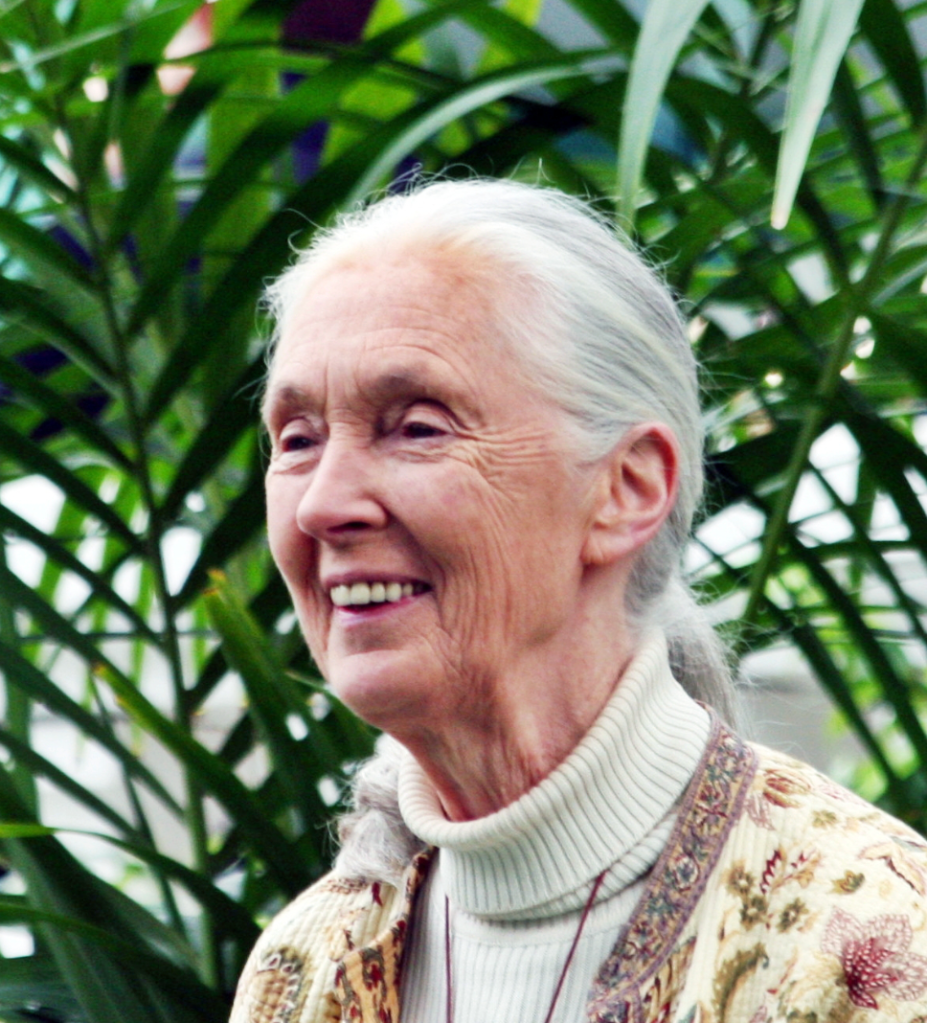
Photo courtesy of Picasa/CC BY-SA 3.0
For background information, Goodall was born in a time when there was very little buzz around feminism (1934). Women weren’t necessarily encouraged to pursue their dream careers and there was certainly no support for it. When talking about her dream to live in Africa and work with wildlife, Goodall was laughed at. Despite this, she continued to reach for her goals. When Goodall was just 26, she was offered an opportunity to study chimpanzees in Tanzania. Here, she made the discovery that would redirect her career. She observed chimpanzees using tools.
While this discovery may seem minimal, it shifted science’s understanding of animals. This discovery brought to light a connection between humans and chimpanzees that had never before been observed. What makes this so groundbreaking is that, in a world focused on differences, she was able to find similarity. Goodall was able to find commonalities where most people wouldn’t have even imagined looking.
As humans, we have a tendency to focus on differences. This is a basic psychological process called ‘social categorizing.’ Our brain uses this process to identify potential threats and allies. This tendency is the reason for the many social groups we have outlined as a species. While this can be positive, it has the serious potential to lead to discrimination against specific groups.
Goodall was able to take a group and identify ways in which they are similar to ourselves, breaking our tendency as humans to focus on differences. This search for connection should be applied to our society and understanding of social groups. Instead of obsessing over the differences between one another, we need to emphasize our similarities. The similarities that connect us and make us human.
This is not a radical or difficult idea. It is entirely based on finding human connections between one another. This connection, rooted in identifying similarity, has the ability to bring us together as a species, allowing for increased acceptance and understanding.
Through her work, Goodall has taught the beauty of similarity. Her ability to find commonality and connection has influenced the interpretation of feminism and overall acceptance of differing social groups. Although the discussion may make it seem straightforward, Goodall’s work is far more complex. Goodall’s work represents the importance and impact that the connection between groups can have on our understanding of one another. It is this understanding that will lead to further acceptance within our society and minimize discrimination against one another.
While Jane Goodall’s work is not directly related to feminism, it highlights important themes seen in our society. Her work as a conservationist is impactful in many ways and this is just one interpretation of it. Goodall will continue to be an inspiration to environmentalists, activists, women and many others. This is merely a tribute to one facet of the many impacts she has had on humanity.



 The Campus