
Rebecca Bergeron, Mary Evans and Sonia Ungur – Contributors
Bishop’s students Rebecca Bergeron, Mary Evans and Sonia Ungur spent three months volunteering in Thailand this summer with the Mae Sot Education Project. Here, each reflects on their experience. They will further discuss their experiences at “Border Stories 2025” on Oct. 28 at 5 p.m. in the Gait with the Education Community Club.
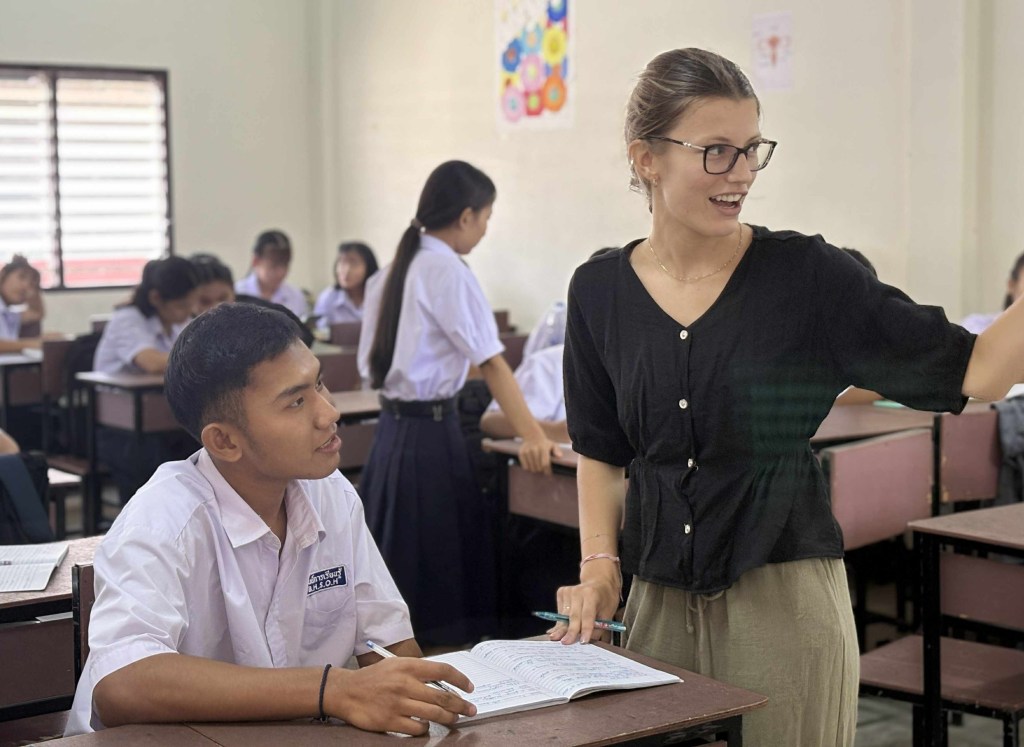
Photo courtesy of Mary Purkey
STRUGGLES OF BURMESE PEOPLE
Rebecca: Being at the border of a country (Burma, now called Myanmar) that has been in a civil war since 2021 and whose citizens have experienced both economic hardships and military repression since at least the 1960s is hard to describe. While in Mae Sot, volunteering in migrant schools for refugee-migrant Burmese/Myanmar youth, numerous teachers told me their stories of illegally crossing the Myanmar-Thailand border. Some swam across the river, some fled on boats, others flew. All left everything behind, yet none lost their compassion, loyalty, or kindness. Losing their family members, seeing violence with their own eyes and having their human rights removed never took away their foundational beliefs. After learning the treatment that they are victims of, I found their empathy for each other surreal. They cannot go back to Myanmar (Burma) because of the conflict there. Despite facing violence, displacement, and a lack of basic rights in Thailand, they supported one another by sharing food, clothes and even sleeping spaces. Hearing their stories made me realize how easily we take privileges like passports for granted. To others, such documents represent freedom and the right to exist. Witnessing their resilience and empathy, even amid trauma, reminded me of the strength of human connection.
Sonia: Thailand does not officially recognize refugees, leaving many people from Myanmar without legal identity or documentation. As a result, they remain vulnerable to police harassment and cannot leave Mae Sot. Checkpoints at the city’s borders require valid ID or passports, documents that most do not have, forcing them to live in constant fear of detention.
One lasting impression: While I had been worried about my future career and life choices, a Burmese friend said, “Your problem isn’t serious. If you have money, you can go wherever you want, but we’re stuck here.” His words made me realize how easily I take freedom and safety for granted.
CHALLENGES AND DIFFICULTIES FACED
Volunteering in Mae Sot came with its share of obstacles. “Many of my students had a very limited level of English, which made it hard to hold even the simplest conversations,” Sonia said. The experience taught her how essential verbal communication is for mutual understanding and how isolating it can feel when words fail. Still, she realized that connection isn’t limited to language. Despite the barriers, she was able to form strong and genuine bonds with her students, proving that understanding can go far beyond words.
COMING HOME
Mary: I never expected returning to Canada to be harder than arriving in Mae Sot. Adapting there was easy thanks to the warmth and openness of the community. Coming home, I felt a deep emptiness. There’s a loneliness that comes from leaving a collectivist environment for Canada’s individualistic culture. The experience reshaped my values, making me more grateful and reflective about what truly matters. I’m no longer certain of my future plans, because I wonder what could ever feel as fulfilling as helping the Burmese migrant and refugee community.
Sonia: I’m still processing everything since coming home. Living in Mae Sot and connecting with such kind people was life-changing. Even my friends say I seem happier and more confident. Leaving was heartbreaking, and I think about going back often. The experience inspired me to consider a career in humanitarian aid. Whether or not that happens, I’ve learned that life is about the people you help, the connections you make, and the impact you leave behind.
WHY GO FOR SUCH AN EXPERIENCE?
Mary: This is a community that is incredibly grateful for all the support and love the MSEP demonstrates. I think that our help gives these individuals hope for their future, and shows that there are groups of people in the world who genuinely care about their well-being and future.
Rebecca: I would advise BU students to step out of their comfort zone. It’s scary at first, but so rewarding. The MSEP changed me in ways I didn’t expect. I learned to let go of control, to let my new reality lead me. My priorities, fears and values changed. I outgrew my old self. The beautiful souls I met taught me to be connected to the present. We are so lucky to have all these experiences awaiting us.

 The Campus