
Abigail Epstein – Layout Editor
Nobody knows what my major is. Well, some people do, after asking for clarification. A few people, candidly curious, ask me what on Earth I think I’m doing. What is there to be gained, to measure, from a liberal arts degree?
The idea of a liberal arts education is part of a longstanding tradition and ideal of what constitutes a human in the context of a civilization. It is oriented towards the goal of cultivating the knowledge and skills required to be a free person, free in the sense that they possess the tools to engage critically in the civic sphere. The educational model, with a history dating back to the Ancient Greeks, is traditionally formed out of seven subjects: rhetoric, grammar and logic (the trivium); astronomy, arithmetic, geometry and music (the quadrivium). These subjects structure the foundation of the free person in the Western world with subjects spanning an array of disciplines, strongly rooted in the humanities. Upon the late 19th century, ideals of higher education shifted towards a greater emphasis on natural sciences; subsequently, fragmentation and specialization became the norm – majors, as we know them today.

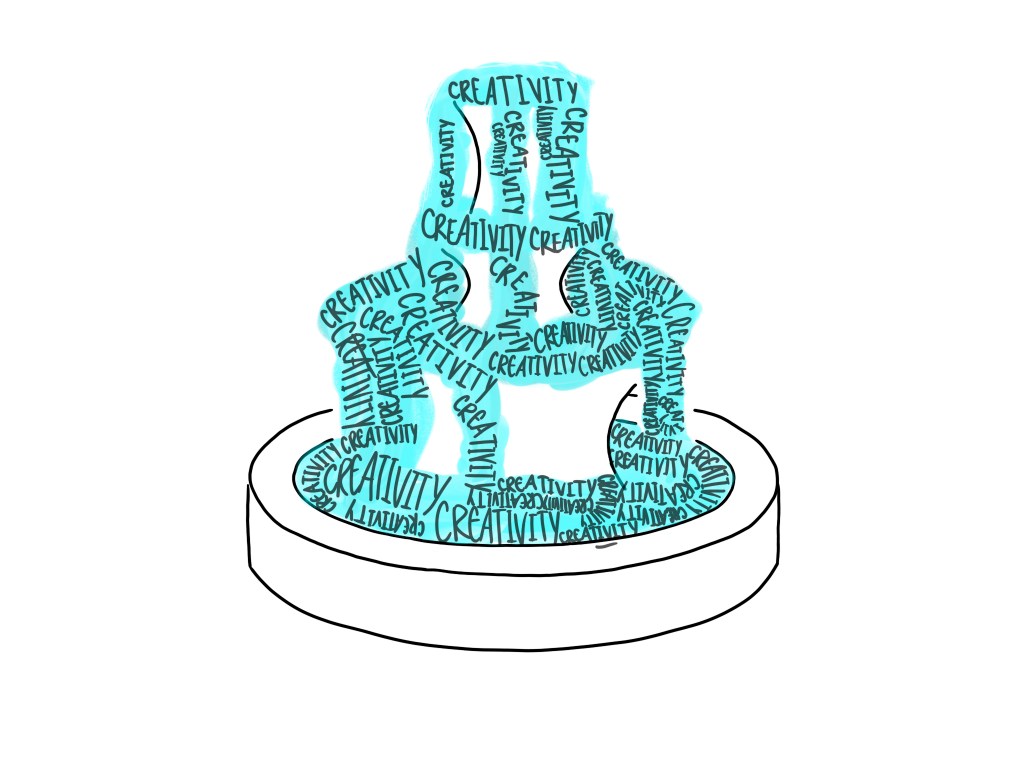
Graphic courtesy of Latoya Simms
Bishop’s self-identifies as an institution which provides a liberal education, citing the mission statement of its founders in 1843: “to offer the country a sound and liberal education.” Bishop’s maintains this ethos, yet is not immune to the wider trend of our local universe: as the future as we have imagined in is eaten by a stubborn taste for past wins of industrialization; as late-stage capitalism grinds its gears with the last of its extractive capacity; as domination flattens the dimensions of human imagination – the tenants of humanism have been kicked from their central place in our development for the sake of feeding the machine with STEM and vocational training. There is a shallow demand for what the liberal arts can offer.
The implication of a liberal arts education and striving towards its goal, is that the curriculum guides its students in the direction of freedom. It’s a tall order. One answer has been the American tradition of a “Great Books” program, a survey of the formative works that have built up Western identity. The liberal arts major at Bishop’s, rather, is characterized by its interdisciplinary approach; there is an incredible breadth requirement that spans at least nine disciplines, on top of the Liberal Arts Foundation courses which are by nature multidimensional. Moreover, the liberal arts major advertises a tight cohort for intellectual collaboration, as well as trips to metropolitan centres and local exhibits of culture. Disappointment felt by the realization that these are no longer feasible opportunities falls into the larger despondency felt at the apparent trajectory of the world – in my experience, at least.
Who is there to blame but the superstructures, and the systems that have promoted domination under the guise of productivity? The devaluation of cultural currency associated with being well-read is partly due to a necessary reassessment of the traditional Western canon’s service to modern norms. It comes as a consequence of diversification and democratization of production and consumption, disseminated today through algorithmic devices. But the current state of affairs comes out of an accelerated history of industrialization and capitalism, and this culture shapes higher education. STEM-related degrees and vocational training have a definitive utility for the sake of productivity, and the functional status quo that a life should be led in service of the useful. This is intensified by the cost of education. How can an education-for-the-sake-of-itself compare to an education for the purpose of near-assured employment?
Oscar Wilde famously said that “all art is quite useless,” which certainly seems to apply to the state of the liberal arts. I believe that this uselessness is at the core of its value – to maintain a spirit of freedom against the institutions that necessitate unfree participation. To keep the horizons wide to welcome the possibility of a difference.
 The Campus