
Jean-Simon Rhéaume – Contributor
This past weekend’s annual Homecoming celebration is one of the most anticipated events of the year. A trademark feature of homecoming is the sheer amount of games that happen on campus in one weekend, and this year was no different. It featured multiple games from nearly all of our in-season athletic programs, the majority of which were played on Coulter Field.
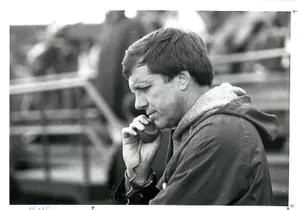
Photo courtesy of Bishop’s Wall of Distinction
Every athlete will agree that there is no better feeling than playing on home turf in front of a crowd, especially when the field is so special. It’s no secret that Coulter Field is one of (if not the best) facilities in the RSEQ. From the high-quality surface to the spectacular views of the surrounding hills and forest, it paints the perfect backdrop for a great game.
While Coulter Field may be a relatively new addition to campus, its name and inspiration come from a tradition that many other buildings follow: being named after someone important to the history of Bishop’s.
To dig into Coulter Field’s history, it’s important to note the football history behind it. The Bishop’s football program was initially established in 1884 and as everyone knows, to have a football team, you need a football field. So, a stadium was built and it took the name “Bishop’s Football Stadium.” The stadium kept this name for more than a century, up until it was eventually renamed in 1991, to honour Bruce Coulter, a former football head coach.
Bruce Coulter, born in 1927, played 10 seasons for the Montreal Alouettes as a defensive back. While playing, Bruce even won the Grey Cup in 1949, which is an accomplishment not many can boast. Bruce held the role as head coach of the Bishop’s football team from 1962 to 1990. While at Bishop’s, he was more than a football coach; he also served as the Athletic Director and Dean of Students. Many of his former players and students claim that he played an active role in their lives and left a lasting impact on them. Many students even kept in touch with Bruce long past their time at Bishop’s.
As amazing as his legacy is at Bishop’s, it was equally important to have the facility be the highest quality possible, to honour Bruce. That being said, the stadium was a work in progress for many years and continues to receive modifications to keep it up to date and to ensure it stays at top quality. The seating area, as we know it, was constructed during the 1980s and the first turf was put into place in 2008. In 2021, though, the original turf had reached its full extent and needed to be replaced, which continues to be used to this day.
While the stadium’s original intention was to be used for football, it has turned into much more than that. Nowadays, soccer, lacrosse and rugby also use the pitch daily, helping to contribute to the greatness of the Gaiter athletic program.
While the seating capacity of Coulter Field sits at 2200, during big games (such as the 2024 Utech Bowl), the seating expands to a significantly higher number. The sheer number of people who come to watch our Gaiters can also be attributed to Bruce, as it was his football program that really helped to put our school on the map as a great athletic program.
Looking into its history, it’s safe to say that Coulter Field is much more than just our training and game field; it’s a major part of Bishop’s athletic history.


 The Campus