
By Katy Stoneburner – Features Editor
Dr. Genner Llanes-Ortiz, a Maya scholar from Yucatan, Mexico, and the Canada Research Chair in Digital Indigeneities at Bishop’s, recently delivered a compelling presentation titled “Better Together: Digital Indigeneities – Technologies for the Next 7 Generations”.

In his talk, Dr. Llanes-Ortiz explored the concept of “digital indigeneities,” a term coined in 2013 by Indigenous media practitioners and scholars to describe the myriad ways Indigenous communities harness digital technologies to preserve, transmit and invigorate their cultural practices and knowledge systems. He emphasized that Indigenous peoples are not merely passive consumers of technology but active agents who adapt and reshape these tools to serve their needs and aspirations.
One of the key points Dr. Llanes-Ortiz discussed was the establishment of digital territories by Indigenous groups. By creating online spaces, these communities assert their presence in the digital realm, ensuring their voices and perspectives are represented and heard. This digital occupation serves as a modern extension of their physical territories, reinforcing sovereignty and self-determination.
Furthermore, he highlighted how digital platforms have expanded Indigenous storytelling repertoires. Traditional narratives are being reimagined and shared through various multimedia formats, allowing for a broader reach and engagement with both Indigenous and non-Indigenous audiences. This evolution not only breathes new life into age-old stories but also fosters cross-cultural understanding and appreciation.
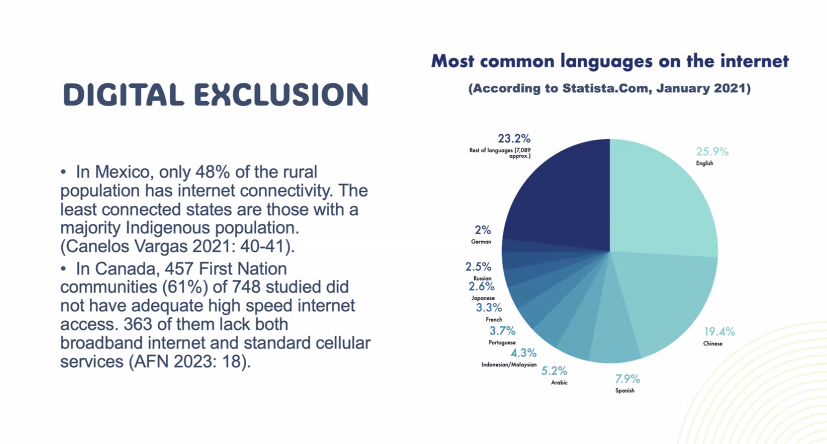
Dr. Llanes-Ortiz also addressed the critical issue of data sovereignty. He underscored the importance of Indigenous communities having control over their digital data, ensuring that it is collected, stored, and used in ways that align with their values and interests. This autonomy safeguards against potential exploitation and misrepresentation, empowering communities to manage their information responsibly.
Another intriguing aspect of his presentation was the concept of indigenizing algorithmic principles. Dr. Llanes-Ortiz illustrated how Indigenous perspectives and knowledge systems can inform and transform the design and function of algorithms, leading to more inclusive and culturally sensitive technological solutions.
Through these innovative approaches, Indigenous practitioners are not only preserving their heritage but also ensuring its relevance and vitality for future generations. Dr. Llanes-Ortiz’s insights shed light on the dynamic interplay between tradition and technology, demonstrating that Indigenous communities are at the forefront of creating a more inclusive and diverse digital future.
For those interested in delving deeper into this subject, further information about Dr. Llanes-Ortiz’s work and the Canada Research Chair in Digital Indigeneities can be found on the Bishops University’s website.


 The Campus