
By Halle Brindley – Opinions Section Editor
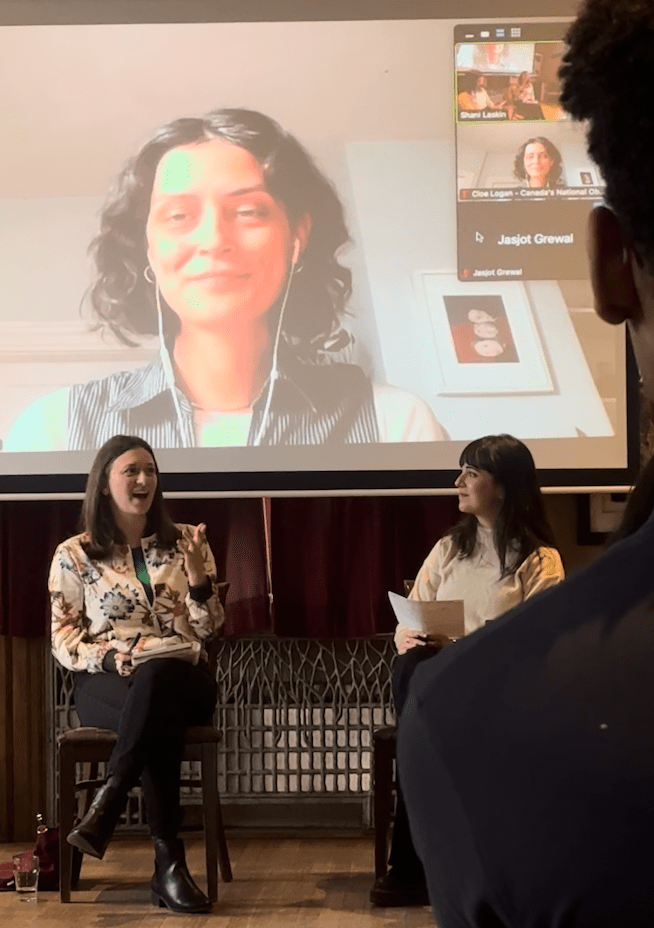
A couple of weeks ago, I had the privilege of going to the event, Journalism in Crisis, a journalistic discussion panel hosted by The Tribune (McGill’s version of The Campus) at McGill. Speakers included Ashira Darwish, Jaela Bernstein, Cloe Logan, Jasjot Grewel, and a handful of others. Darwish concluded the event with her evening speech, and this is where I will begin this piece.
Ashira Darwish, Palestinian journalist, filmmaker, and trauma healer, noted how she wanted to have a career in music, but in growing older and being exposed to a harsh reality, she questioned the purpose of singing in a world like this. The concept of ‘fake news’ isn’t an unfamiliar one, in fact it has been a point of scrutiny. Fake news is dangerous, but biased media is as well. Biased media can range from being very clearly representative of a personal opinion on one side to the simple configuration of an article. Notably, Jakob Nielson described in his NNGroup article in 2008 that “On the average Web page, users have time to read at most 28% of the words during an average visit; 20% is more likely.” Usually, only the title and first paragraph get read, and journalists know this attention span problem and that’s why there’s an emphasis on having a strong first paragraph and an accompanying article summary under the title. Jaela Bernstein, journalist for CBC News, and Cloe Logan, a climate journalist for Canada’s National Observer, emphasized this problem at the McGill event.
I ask you to consider how much of an article you read. Now, considering this, think about the information at the bottom of the page. When journalists are writing articles claiming to cover both sides, information on the side they, or the article’s audience, perhaps prefer less can be pushed to the bottom. The threat of this is that stories are only getting partially told. It’s like hearing only ONE side of the story. Think about how disappointed you were in someone from hearing one side of the story. Hearing both sides facilitates clarity and understanding. So, what happens when we assemble an article to prioritize one side of the story?
Total conflict.
We, being the world, have seen the divide that can tear us apart. It’s nasty. It’s not a good reflection of humanity. This doesn’t have to be the way of the world.
By interviewing perspectives from both sides, trying to report as unbiased as possible, and assembling articles fairly, readers can better understand the world they live in.
In the case of the current climate in Israel and Palestine, keynote speaker Ashira Darwash suggested that if you are going to listen to one side, listen to the other. Your opinion might remain the same, but you will be a more informed, more well-rounded citizen. It’s uncomfortable to “read the other side.” I am guilty of this feeling as well, but understanding blossoms when you know about both sides. Think of how you were taught history in school. Was it from multiple perspectives or just one? Does that alter how you see the world?
I urge you, the reader, to challenge yourself in reading reports on both sides of things, always, whatever that may be.
If even just the first paragraph.
Now, how does this relate to us, as students? Change has been brought on by university students. We are change-makers. We just need to act. Or write. Or read.
“More than anything, journalism is an act of revolution” – The Tribune’s Editor in Chief, Jasjot Grewal


 The Campus