
By Katy Stoneburner – Features Section Editor
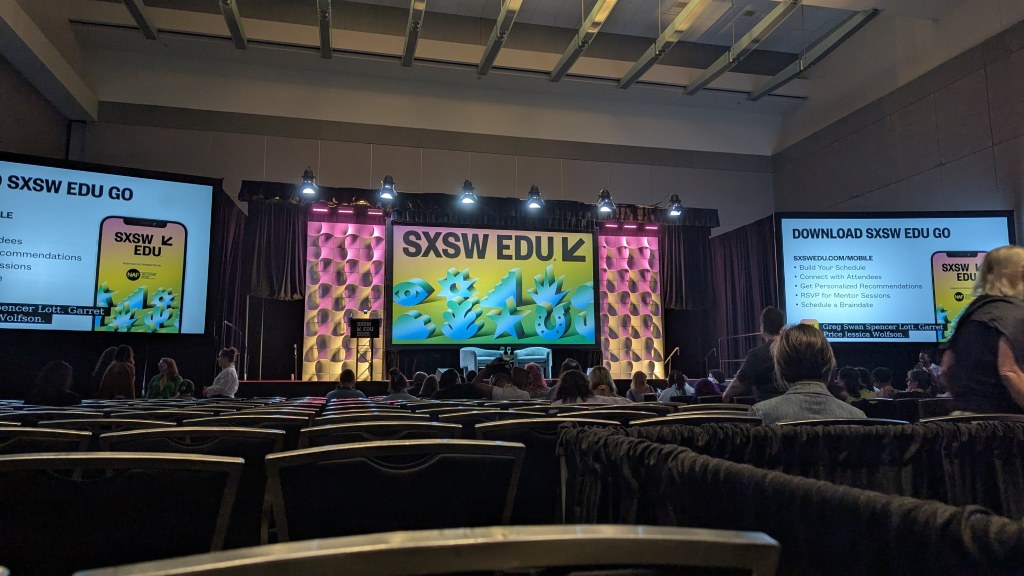
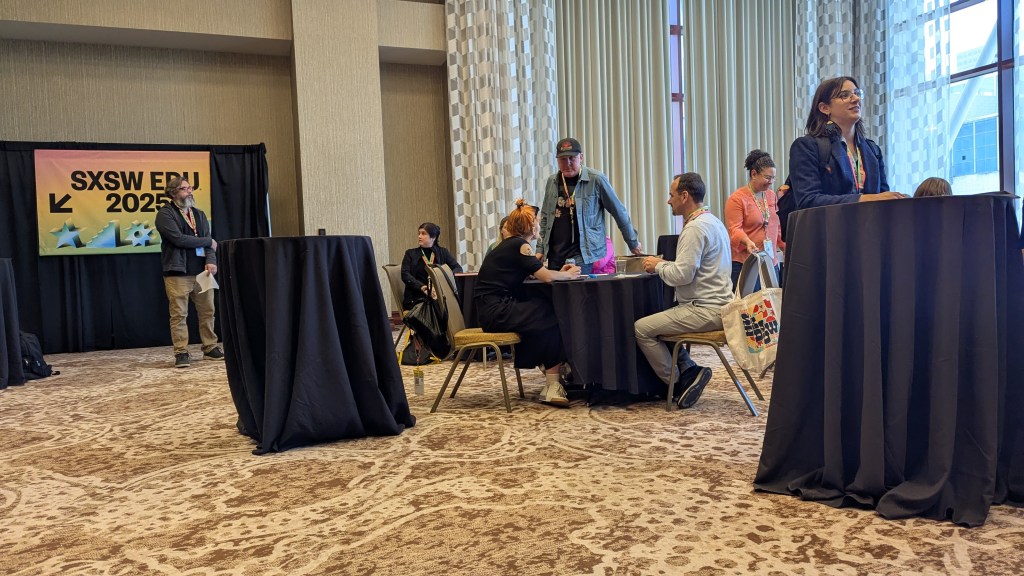
Attending SXSW EDU was an experience that reinforced and reshaped my understanding of the future of education. As someone who started my career as an educator in the U.S. and is now pursuing graduate studies at Bishop’s, I found myself constantly reflecting on how the conversations at this event apply not only to the current state of education but also to the road ahead—both for students and for those who teach them.
The Changing Landscape of Education
One of the most striking themes that emerged from SXSW EDU was the need for adaptability in education. The world students are preparing for is changing at an unprecedented pace, and traditional classroom structures are struggling to keep up. Sessions like “Students and Curriculum Development” highlighted the importance of designing education around curiosity, problem-solving, and real-world applications rather than just graduation requirements.
This focus on student-driven learning resonated deeply with me. Coming from the U.S. education system, where standardized testing often dictates curriculum priorities, I’ve seen firsthand how difficult it can be to cultivate meaningful engagement in students. Now, in my studies as a graduate student, I can reflect on how these ideas translate into teacher education and curriculum development at the university level. How do we prepare future educators to embrace flexibility, curiosity, and innovation in their own teaching?
The Role of Technology in Learning
Discussions about AI and media literacy were unavoidable at SXSW EDU, and for good reason. Turnitin’s workshop “How much is too much AI” cited an ITHAKA survey stating that 64 per cent of students express concern over AI in education and 59 per cent worried about its impact on critical thinking (Ruediger et al., 2024). The conversation is no longer about whether AI will play a role in education, but how it should be integrated responsibly.
The session on “Empowering Media Literacy through Games” stood out to me as an exciting example of how technology can be used to engage students in meaningful ways. Using interactive experiences to teach civics, history, and news literacy aligns with the principles of active learning—an approach that I believe should be more deeply embedded into university education as well. The challenge for educators is not just teaching students how to navigate the digital world but ensuring that they become critical consumers and creators of information.

Addressing Free Speech and Difficult Conversations
Another crucial conversation at SXSW EDU revolved around free speech and the challenges of fostering open dialogue in an increasingly polarized world. The tension between giving space for difficult discussions and concerns over “deplatforming” is something that educators must grapple with, from elementary to post-secondary education.
This discussion made me think about how these same issues play out in the university setting. The School of Education explores the importance of inclusive pedagogy and creating classrooms where students feel heard while also engaging with diverse perspectives. How do we create environments where productive struggle—intellectual challenge without emotional harm—is not just encouraged but expected?
The Future of Education and Teacher Preparation
One of the most valuable takeaways from SXSW EDU was the reminder that education is more than just the transfer of knowledge; it is about preparing students to navigate an increasingly complex world. From discussions on “Revolutionizing Media and Education” to the role of libraries in accessibility and inclusion, the sessions reinforced the idea that education should not be confined to the classroom.
For those of us in the School of Education, this raises critical questions: How do we train teachers to move beyond traditional instructional models? How do we ensure that future educators are not just prepared to teach content but also to foster curiosity, resilience, and lifelong learning in their students?
SXSW EDU left me inspired but also acutely aware of the challenges that lie ahead. As I continue my studies, I find myself thinking about how these insights can be applied to university-level education—both in how we train future teachers and in how we design learning experiences that prepare students for the world beyond academia. The future of education is being shaped now, and it is up to us—educators, students, and policymakers—to ensure that it is one that truly serves the next generation.



 The Campus