
By Eryn Costello – Junior Copy Editor
Let’s be honest: we’ve all fallen for the hype. You’re doom scrolling on TikTok and come across an influencer that swears a new mascara will change your life. Our Instagram feeds are overflowing with aesthetic hauls of the latest trendy items and suddenly, we start convincing ourselves that we need another lip product, despite our makeup drawers already overflowing. In reality, there are thousands of men in suits working day and night to commercially capture our attention – to convince us to buy, buy, buy. It’s not your fault that your closet won’t shut anymore, because that’s the way the system’s been designed; we’re conditioned to overconsume.
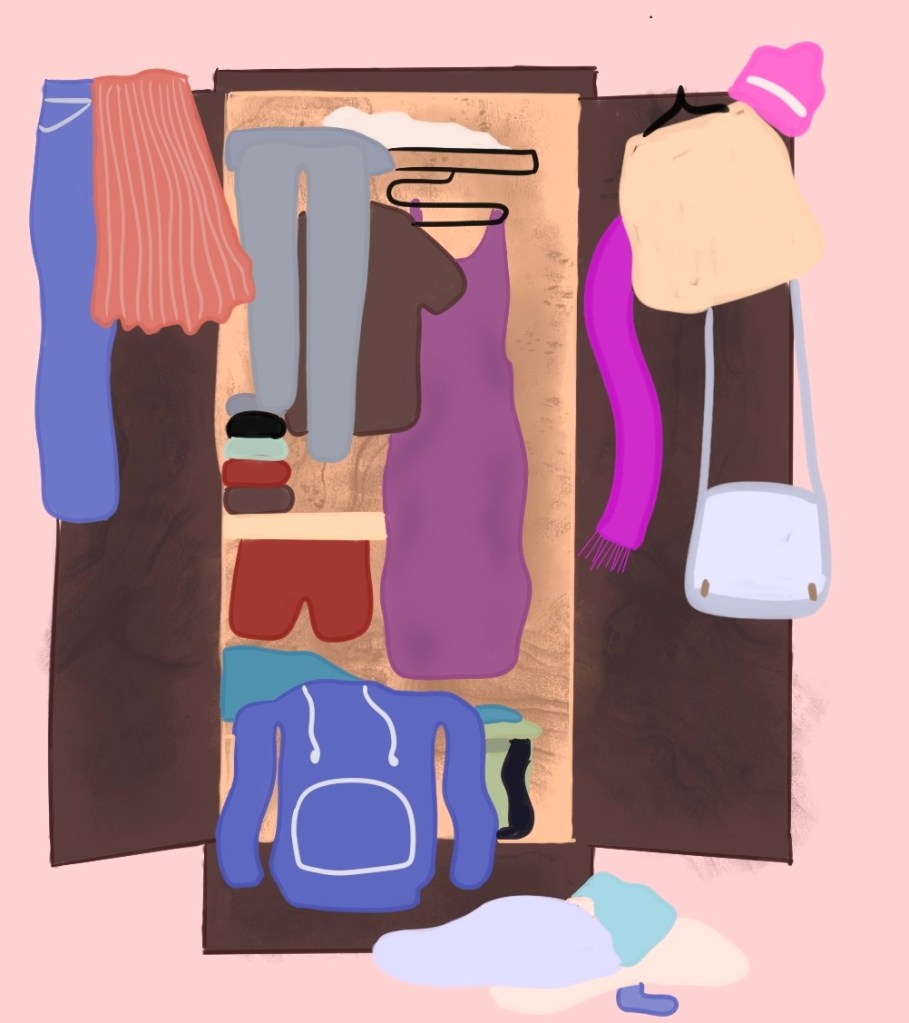
However, certain rising trends have emerged that may help give us a reality check. You might have heard the term ‘under consumption-core’ pop up on your feed recently. This trend is all about intentional consumption: buying less, choosing better, and using what you already have. It’s similar to the aesthetic of minimalism, but without the judgmental vibes and boringness of sterile white. Picture it as smart shopping: where your purchases are guided by mindfulness and sustainability.
Project Pan has been around for a few years, with its roots in the beauty world. The goal of this trend is to actually use up your makeup. Hitting “pan” in this case just refers to getting to the bottom of that bronzer pallet before impulsively buying the latest launch. Revolutionary, right? The trend of ‘de-influencing’ has also risen in the makeup and fashion corner of social media. Influencers (ironically), are trying to convince their followers not to buy certain products. This stands in stark contrast to the massive hauls, algorithmically targeted ads, and relentless pressure to ‘keep up’ that we usually get from influencers. The ‘de-influencing’ going on across social media is a gentle reminder that we don’t need to chase after every micro-trend. That serotonin hit from a new purchase is fleeting, I promise.
So, why are so many of us jumping on the under consumption-core bandwagon? For starters, have you checked your bank account lately? Between sky-high rent, inflation, and the cost of existing in 2025, spending wisely isn’t just trendy—it’s necessary. But it’s not all about money. Overconsumption is an environmental nightmare, with landfills piling up with fast fashion flops and beauty products that expired before they were half-used. Lest we forget the cow print pants trend of 2020. Remember those? How many of us are still rocking them today? Trends fade. Your wallet and the environment will thank you if you invest in pieces that have staying power. The same goes for beauty products. Finishing that liquid blush before jumping onto the next big thing feels like a small victory. It’s proof that you don’t need endless options to feel put together.
Embracing under consumption doesn’t mean you have to become a frugal monk. It’s all about balance. Splurge on the occasional treat, but make it intentional. Will you still love that cheetah print sweater next winter? (Let’s be real—you probably won’t.) Do you actually need another neutral-toned eyeshadow palette? Probably not. Sometimes, the most empowering choice is sticking with what you’ve got. Learn to repair a broken zipper or loose thread, check out a thrift shop, maybe even attempt to salvage your stained bar shoes. “Add to cart” shouldn’t be our default.
Now, don’t get me wrong—I’m not here to preach. Does any of this mean that you can’t treat yourself to a new expensive skincare product every now and then, or buy that trendy shirt you’ve been eyeing for a few weeks? Absolutely not. If that $40 Dior lip oil is calling your name and you know you’ll use it on the daily, go for it. The point is to stay intentional. Buy things because they add value to your life, not because an algorithm told you to. The ‘under consumption-core’ trend and Project Pan aren’t meant to guilt-trip you out of a Sephora trip; they’re about finding a balance between treating yourself and being mindful of your impact. So, the next time you’re tempted by yet another “must-have” product, pause. You might realize that less, really is more.



 The Campus