
By Jenna Downey – Contributor
The Foreman Art Gallery currently features Shake the Ground: Au creux des sillons, a captivating exhibition by a Japanese-Canadian artist, Alexa Kumiko Hatanaka. The exhibition, which began on Jan. 17, will remain open to the public until Mar. 15, 2025.
On Feb. 24, Bishop’s University offered a unique opportunity for the community to learn more about Hatanaka’s artistic approach, her sources of inspiration, and her creative journey. The event provided a platform for attendees to ask questions and engage with the artist directly. The curator of the exhibition, Gentiane Bélanger, personally introduced Hatanaka, who then delivered a detailed presentation of her artistic history and creative processes online. The presentation sparked widespread curiosity across campus, drawing over 30 students eager to be inspired by her innovative work.
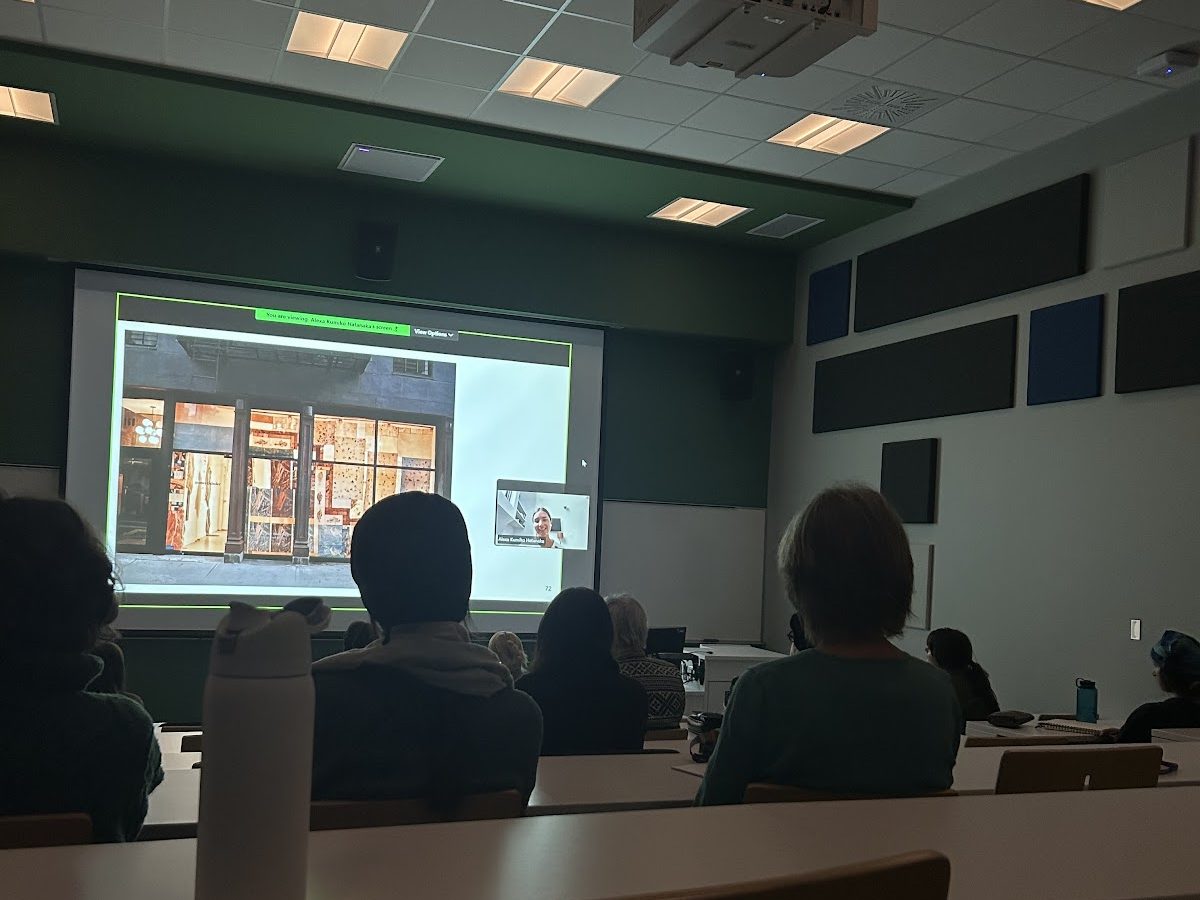
Hatanaka’s multidisciplinary practice encompasses printmaking, paper-making, and wearable sculpture. Her work is deeply rooted in her identity as a queer, disabled artist and is informed by historical and land-based materials. She began her career with portraiture and large-scale public murals, notably in the Arctic and Ottawa, where she emphasized community engagement. Through mural projects, she trained youth in painting and worked with elders to incorporate traditional knowledge into her art. Over time, her practice evolved, shifting toward dimensional and wearable art. Hatanaka began exploring handmade paper as a medium after being inspired by Japanese paper-making techniques learned during a residency in Japan. Her work touches on themes of resilience, climate change, and mental health, reflecting her ongoing commitment to sustainability. Hanakas’ Kyoto printmaking workshops demonstrate the intersection of art and daily life, as well as a dedication to ecological consciousness.
Hatanaka’s recent body of work examines the psychological and environmental consequences of “precarity”. Using print installations and sculptural pieces, she addresses issues of mental health, climate change, and human adaptability. Her large-scale linocut prints depict Arctic landscapes and snow formations, aiming to raise awareness of climate change’s impact on vulnerable communities. Additionally, her self-portraits explore the experience of bipolar disorder, illustrating the physical and emotional toll of depressive states, while also conveying themes of levitation and hope. Hatanaka expressed that her work reflects her attempt to “find a semblance of stability and control in a time that was extremely the opposite.” Through her innovative use of materials, she bridges traditional craft with contemporary social issues, challenging concepts of belonging.
The students were captivated by her presentation and actively participated throughout the question period. Students proclaimed their “surprise that there were so many ways to create paper” while expressing their keen interest in learning more. Their statements emphasize their admiration for her work and the students’ enthusiasm to learn more about her creative journey. Following the talk, Regine Neumann, a professor at Bishop’s University, organized a Japanese paper-making workshop, providing students with the opportunity to experiment with the techniques Hatanaka employs. This hands-on experience allowed participants to visually connect with Hatanaka’s creative process while gaining a deeper appreciation for her artistic approach.


 The Campus