
By Katy Stoneburner – Features Section Editor
For many education students at Bishop’s University, practicum placements mark the first real taste of life in a classroom—not as students, but as teachers. Whether they are working in Sherbrooke’s local schools or traveling across Quebec to teach in English school boards, these experiences are shaping their perspectives on the profession in ways that no lecture or research paper ever could.
Practicum is often a mix of excitement and nerves. “It was stressful but very enriching,” shared Camille Boyeaux, reflecting on the challenges of stepping into a classroom for the first time. Balancing lesson planning, classroom management, and adjusting to different teaching styles can be overwhelming, but it is also an essential part of their training.
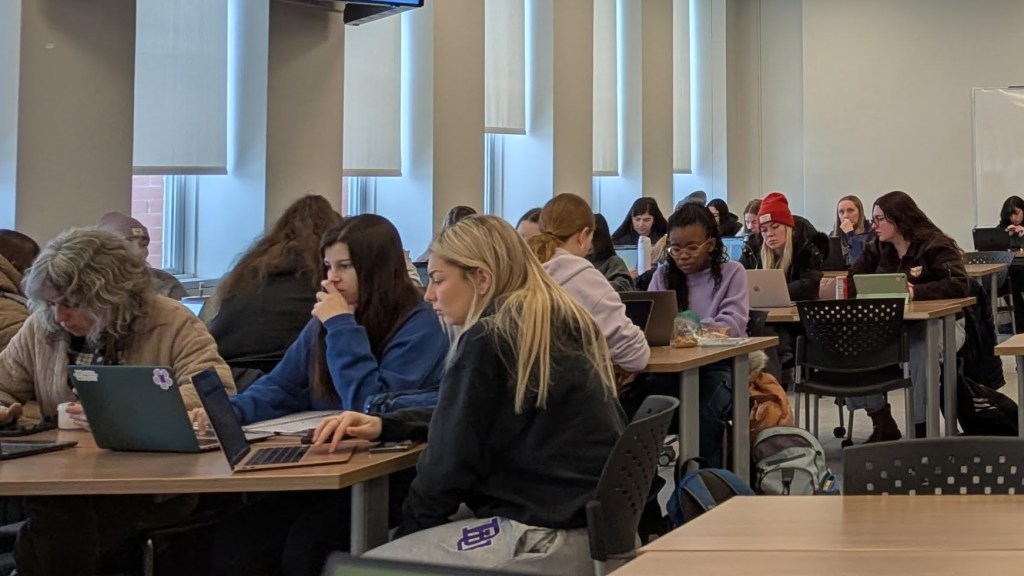
For some, the relationship with their Associate Teacher (AT) is pivotal in their growth. “I wasn’t sure about my Associate Teacher at first, but I’m learning so much,” said Jaime Fava. “She’s a pro and has such great advice. What’s great about the ATs is that they know what we’re going through… She can really understand me.”
While coursework and theory are foundational, many students feel that practicum should take an even larger role in their training. “I wish I had more time in practicum and fewer classes where I had to write research papers,” Jamie added, emphasizing the value of hands-on experience over academic assignments.
Beyond the classroom, practicum placements also expose students to the realities of different school environments. Some students remain in Sherbrooke, gaining familiarity with the local education system, while others immerse themselves in new communities, often living in remote areas for weeks at a time. This broadens their understanding of Quebec’s diverse education landscape and the varying needs of students across the province.
The Impact on Future Educators
As these future educators navigate their placements, they are not only developing essential teaching skills but also shaping their philosophies about education. Daniela Bascuñán, PhD, teaches practicum courses for second-and third-year elementary education students and discusses the concept that education students are building the plane as they are flying. Every lesson taught, every challenge faced and every breakthrough moment helps define their approach to the profession.
During the practicum experience, these future educators are also exploring what childhood means through the eyes of their students. The third-year elementary practicum course reflected on this question describing childhood as exploration, warmth, youth, imagination, experiences, discovery, innocence, playfulness, memories, growth and carefreeness. These insights help shape their teaching philosophies, reinforcing the importance of fostering curiosity and joy in learning.
Each lesson taught and each challenge faced brings them closer to becoming the educators they aspire to be. Their experiences will continue to shape how they approach the profession, ensuring they enter the field with both knowledge and confidence.
The practicum experience also serves as a foundation for long-term growth. Under the guidance of experienced ATs and mentors students gain hands-on insight into classroom dynamics, lesson planning and student engagement. More than just preparation for a future career, these placements offer a transformative learning experience—one that bridges the gap between theory and practice, ensuring that when these aspiring teachers step into their classrooms, they do so with confidence, adaptability and a deep understanding of what it means to be an educator.


 The Campus