
By Josef Spence – Contributor
For some decades now, it has been not only well known, but broadly accepted that Canada is a country riddled with a broad dislike and derision between its two major, at least classically, cultural populations: the anglophones and the francophones.
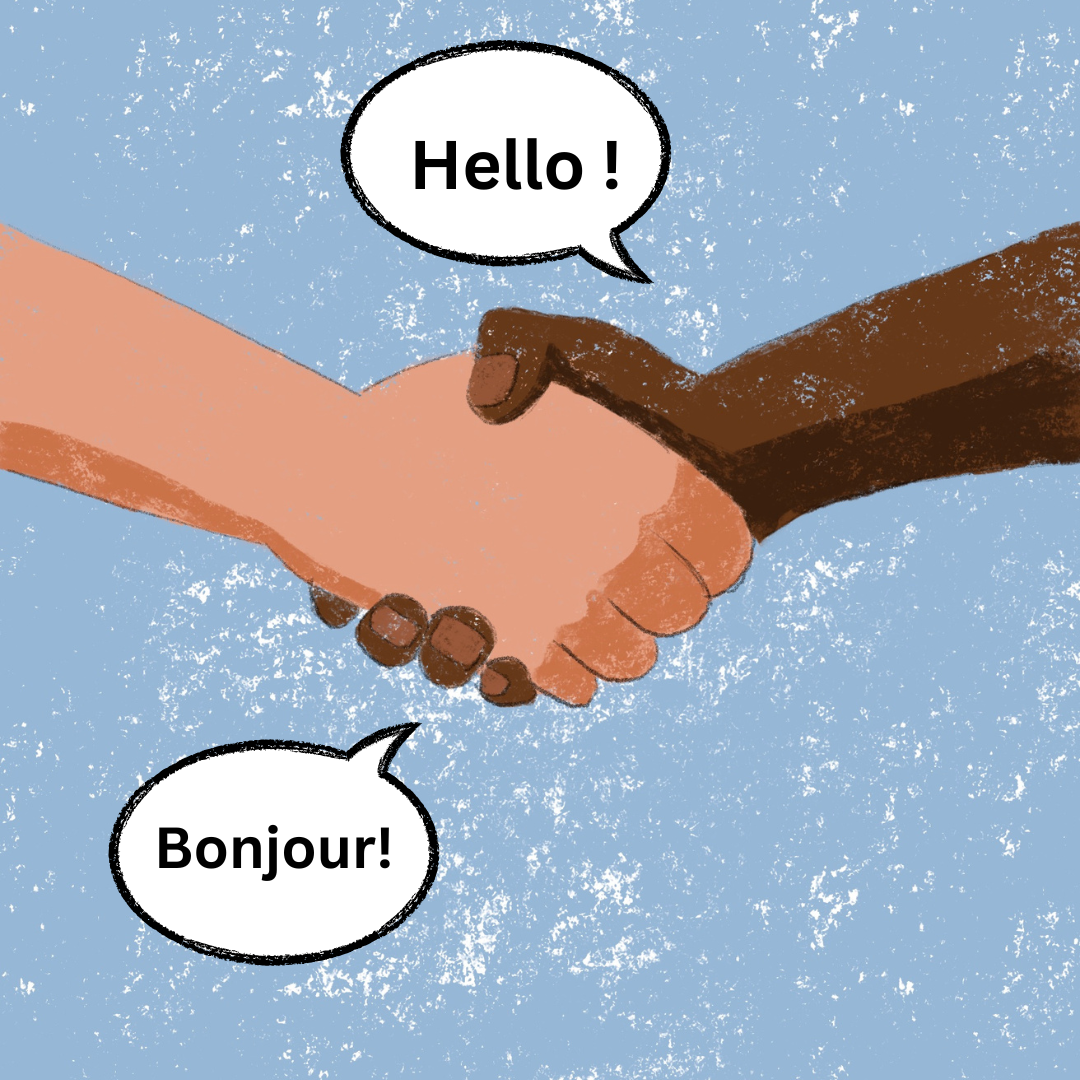
There has been an extensive history of political, social, and cultural tensions between these two populations in Canada. Yet, the existence of bilingualism and the consequent dual cultural aspect of Canada is a staple of the Canadian identity; with many people considering it a fundamental part of Canada — even if they are the type of Canadian that disparages the other language and culture.
Clearly, it is not the ideal for Canadian society, nor the most fitting conditions under which to construct and maintain a Canadian identity. This disdain should not be the norm. So how incredible and awed was I when I came to Bishop’s and found the tranquil coexistence of the francophone and anglophone cultural and linguistic traditions.
One of my first impressions of Bishop’s was the intensive cheering of the crowd at a Gaiters football game in a clamorous jumble of an English and French nourished raucous. Then a few days later, I witnessed a conversation wherein one person communicated exclusively in French and the other in English in an engaged and merry manner. Never before had I experienced such an effortless, truly natural, coexistence of Canada’s two linguistic traditions. Throughout my time at Bishop’s, I have also found an ease of engaging with and experiencing both anglophone and francophone cultural traditions like nowhere else before.
Yet this has not been simply my experience. There are many other students, faculty, and alumni at Bishop’s who have expressed a similar perception of the bicultural and bilingual integration at Bishop’s. It is in fact generally understood to be one of the defining features of the Bishop’s community.
It is wonderful that this harmonious relationship between francophones and anglophones is a central part of Bishop’s — its community and consequently its fundamental identity — yet, it is unfortunate that such integration does not exist all throughout Canada. Certainly that would change the sociopolitical dynamics of Canada, but Bishop’s acts as a demonstration that the two cultures/languages can coexist and complement each other, creating a rich and cohesive society. This seems to me, to be the epitome of the vision of Canadian identity: a society of people possessing a firm tradition predicated on the tranquil interaction of francophone and anglophone linguistic and cultural practices, at least insofar as it must be
linguistic-foundationally oriented. Thus, Bishop’s provides a valuable illustration and demonstration of the possibility of the achievement of the Canadian ideal of identity and socio-cultural tranquility; one that the rest of Canada ought to take note of and seek to replicate. Truly, if one has never experienced the exceptional, incredible community of Bishop’s, one has not seen the Canadian socio-cultural potential.



 The Campus