
By Jillian French – News Editor
The Sexual Violence Support Centre unveiled its new location on Dec. 4, 2024, with a celebration and press release featuring Sexual Violence Response Advisors (SVRAs) Gabrielle Joncas-Brunet and Noémie Thibault, Principal Sébastien Lebel-Grenier, and Vice Principal of Student Affairs Danai Bélanger. The Campus sat down with Joncas-Brunet and Thibault in the new centre location to talk about the space and the resources afforded to the Bishop’s community to combat sexual and gender-based violence.
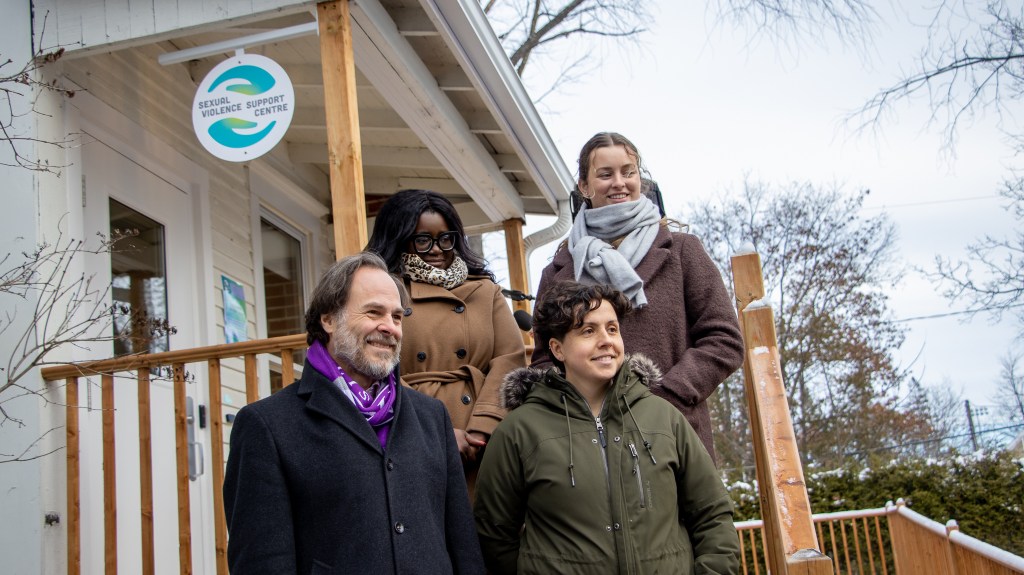
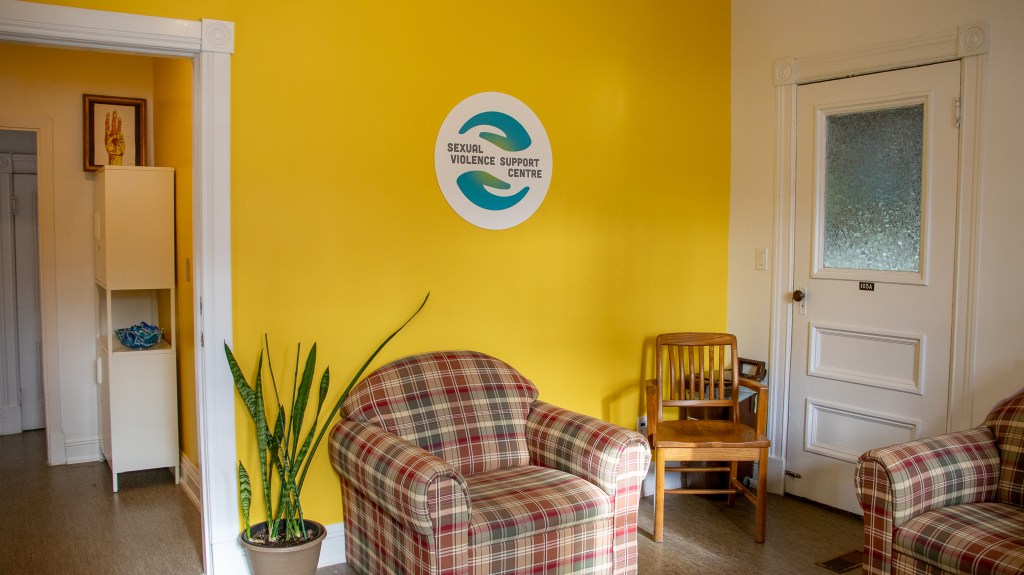
The space, now located on Harold Drive in Cormier House, is designed to feel accessible, comfortable, and safe. Beyond repainting and redecorating, the couches and seating are meant to make students feel at ease in the space. The centre is also wheelchair accessible, having installed a new ramp. New offices also provide confidential rooms for the advisors to meet with multiple students and faculty at the same time in a confidential manner and provide support. Joncas-Brunet added that the opening of the centre also signalled they are “back at full capacity” with two advisors, giving students a chance to gravitate towards the advisor they are most comfortable speaking with.
Students and faculty impacted by sexual or gender-based violence can use the centre as the primary point of contact for short- and long-term accommodation, support, and information. Thibault explained the options for both on- and off-campus resources: off-campus may include access to community services, hospitals, or police services, while more immediate on-campus support can include no-contact orders or academic accommodations from SAS (Student Accessibility Services). Joncas-Brunet emphasized how support is tailored to the individual: “It’s important that we listen to their needs… every situation is different”.
The centre also dedicates itself to being a queer-positive space, mentioning the importance of being “aware of intersexuality when addressing sexual violence” and taking account of the “full complexity” of the subject, especially, as Joncas-Brunet points out, amidst the anti-trans political climate and the unique and disproportionate challenges facing the 2SLGBTQ+ community. It’s important to them that education on sexual and gender-based violence does not just include queer voices as an “afterthought”.
Support is provided in both French and English. The advisors underscored the importance of bilingual options in building trust, which is not mandated by the government. Francophone students studying at Bishop’s may feel more comfortable speaking to an advisor in their primary language, whereas English students may find translation services useful while navigating francophone systems such as the Sherbrooke Police, legal system, or hospital. Joncas-Brunet also mentioned the bilingual services are important to fully grasp the semantic “nuance of words” related to sexual violence, and its differences across the two languages.
Beyond individual meetings, the centre also promotes educational events and training within the Bishop’s community, including specialised approaches for leadership roles such as coaches and O-Week judges and leaders. They also organize general consent and bystander training for the student body at large, both in person and online, to dispel popular myths that perpetuate harmful conceptions surrounding topics of sexual and gender-based violence. “We’re here as a resource for information”, Joncas-Brunet affirms.
They add that a common problem they see is students who feel bad for using the service because they don’t believe they’ve passed a certain threshold for harm experienced in “domestic abuse” or “sexual abuse”. Joncas Brunet explains how the term “intimate partner violence” helps correct some of the connotations associated with “domestic abuse” that make people feel like they must be physically abused to seek help. “Harm is done through many means”, they add. The services are not “wasted” on any student struggling: “Everyone deserves support”.
To contact the centre, the two advisors encourage students and faculty to contact them at the joint email address svsc@ubishops.ca or their personal addresses nthibault@ubishops.ca or gjoncas@ubishops.ca, where they can ask questions or make an appointment to visit the centre. Advisors are also available for drop-in appointments at the centre between 9:00 a.m – 4:00 p.m. To help flag repeat offenders, they also add that the online REES platform (https://ubishops.reessecure.com/) can help students record or report incidents that help the campus flag repeat offenders.


 The Campus