
By Lucie Casinghino – Contributor
Set in the American suburbs in 1996, I Saw the TV Glow (2024) defies categorization. Yes, it is a horror movie, but it’s more unsettling than scary in many respects. Yes, it’s a fantastical story that stretches the fabric of reality, but it feels less like a fantasy movie and more like an ode to
discomfort, Buffy the Vampire Slayer, David Lynch and being transgender than an outright spectacle of dreamlike wonder.
I Saw The TV Glow is director Jane Schoenbraum’s second feature fiction film and tells the story of Owen and Maddy, friends who bond over their love of the TV show The Pink Opaque. The Pink Opaque is an epic for these two, they live their lives by it, know all the episodes front to back and discuss all the intricate lore of the show’s strange story with each other. It’s a refuge for them, a respite from their suburban American teenage reality.
Soon, though, the show becomes more than fiction. Maddy disappears, and things spiral for Owen from there. After her disappearance, he’s left to muddle through high school and the awkward despair of being a teenager. I don’t want to get too much into the plot description, since so much of I Saw the TV Glow’s power comes from its viscerality and the viewing experience itself. Of course, I still have more to say about it though. This is a movie that in many ways wears its heart on its sleeve.
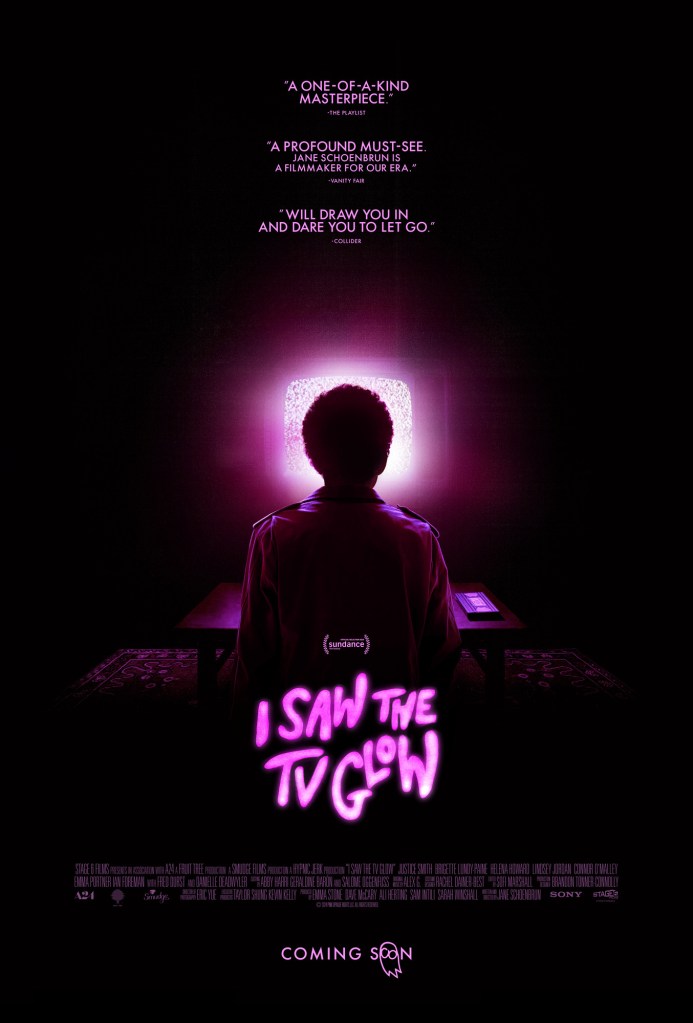
The openness of the film’s story as a transgender allegory is powerful in part because it pulls no punches. There are times when I felt the film lacked subtlety, or when dialogue felt clunky and went on too long. However, then you get scenes like the one in which Maddy describes being buried alive, which will stay with me for a long time.
There are a lot of reasons to watch the film, with all its intensity and surrealness. There’s its visual strength with a bold color palette, the strange costumes and characters from The Pink Opaque that feel like a fever dream and of course the outstanding performances from Justice Smith and Bridgette Lundy-Paine as Owen and Maddy. I still come back months after watching the movie to the incredible score from Alex G, and the original soundtrack which features a who’s-who list of indie music darlings like Phoebe Bridgers, Caroline Polachek, Snail Mail, and Sloppy Jane.
The ending of the film is haunting and tragic in a way I felt in my bones. The thing I’m left with isn’t hopelessness. Even though I sat in unease and dread through much of the movie, there are moments of clarity throughout the film, perhaps most intense in the phrase “There is still time” written in chalk on the street in Owen’s neighborhood. It’s a powerful message, one that harkens to the film’s powerful transgender allegory – that there is still time to become who you want to be. Transformation is always possible.

 The Campus