
By Megane Masson – Contributor
As Truth and Reconciliation Week drew to a close, Bishop’s University highlighted the national holiday with various activities led by the Indigenous Student Support Centre (ISSC). The week also provided an opportunity to highlight the ongoing construction of Kwigw8mna, formerly known as Divinity House, which is being transformed into a new centre for the Indigenous community at Bishop’s. The centre and an accompanying documentary both carry deep significance, helping the Indigenous community reconnect with a piece of land that was historically theirs.
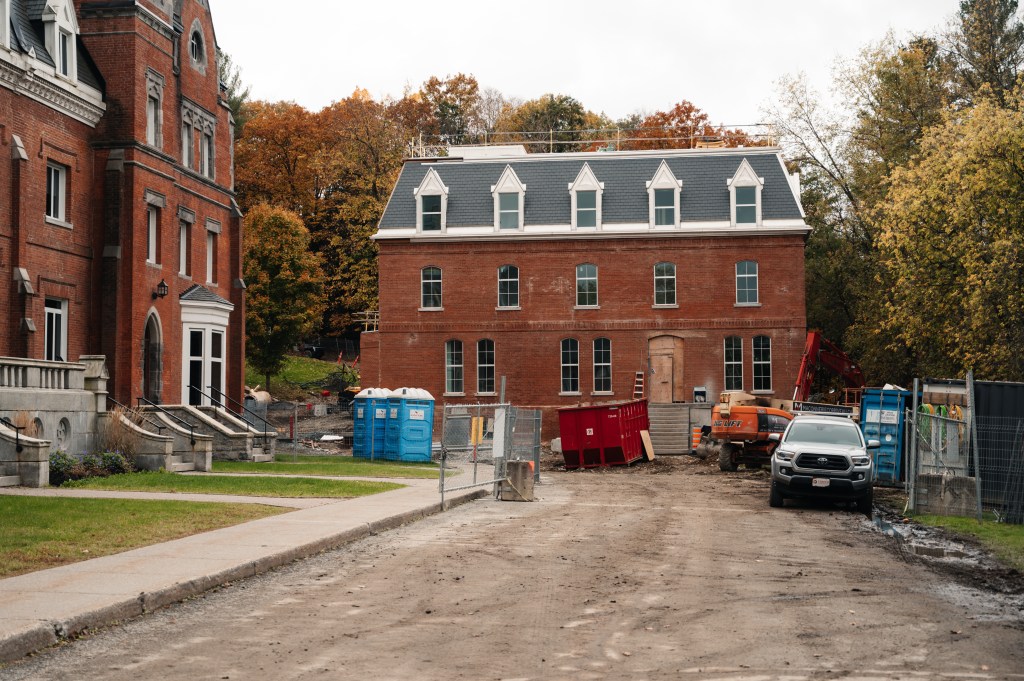
The Kwigw8mna House is designed to be a home away from home, as noted by Shawna Chatterton-Jerome, coordinator of Indigenous student support services. Kwigw8mna will feature a communal kitchen, a library, gathering spaces for Indigenous peoples and quiet study rooms in the basement. The upper floor will house an apartment-style section where relatives and guest speakers can stay for short periods, offering Indigenous students a gathering place free from external pressures— a space where they can thrive to be their authentic selves.
The building is not just under construction; it represents the creation of a community that has long needed attention and care. The individuals behind this project had to advocate for their vision and communicate their needs clearly.
Their voices had to be heard for this project to come to life. The building itself embodies the voices of Indigenous peoples, advocating for themselves after generations of being silenced and marginalised. Now, they have a space where they can speak as loudly and clearly as ever before.
While Shawna Chattetron-Jerome acknowledged a few challenges along the way, she emphasised that the outcome will far exceed any obstacles they’ve faced. In a lighthearted moment, she expressed her excitement about the communal kitchen, noting that she’ll no longer be the only one bringing traditional food and will finally have some left over for herself.
Among other things, the construction of Kwigw8mna represents the Indigenous community’s reclamation of ancestral land that was taken from them long ago. The entire process will be documented for everyone to witness. The purpose of the Kwigw8mna documentary is to chronicle both the hardships and joyful moments experienced during the construction of this home away from home and to illustrate the profound impact it will have on Bishop’s Indigenous community. The documentary will follow several of the individuals involved in the project, capturing moments from the construction site to behind-the-scenes efforts.
“There are so many people involved that we won’t be able to feature them all, but they are all making a huge difference in this process,” Shawna said, expressing her gratitude to the many contributors. The main takeaway that Shawna and the ISSC team hope viewers will grasp is the importance of listening and communication. “Hard work and change takes time,” she noted, adding that the process, while challenging, is a necessary step that must be faced with open-mindedness and determination.
The documentary will also emphasise the importance of building genuine relationships with Indigenous peoples—not merely acknowledging past wrongdoings, but actively working to repair them. It will serve as an educational tool, shedding light on the long and ongoing journey toward rebuilding and recovery. Although Chatterton-Jerome is unsure of the exact release date, she estimates the documentary will be published around May 2025, shortly after the completion of the Kwigw8mna House.
The Kwigw8mna Centre aims at having a profound impact on Bishop’s Indigenous community, helping students reconnect with their roots and providing a safe space where they truly belong. Students and community members will be able to connect with others from their nations who share similar interests and experiences.
The concept of a “home away from home” is central to the building, offering students from distant Indigenous communities a place to ground themselves, and even providing accommodation for family members during short stays.
Shawna Chatterton-Jerome also expressed hope that Kwigw8mna will encourage more Indigenous students to attend Bishop’s University, noting that a few, if any, institutions have undertaken such a project.
This initiative represents a significant step forward in making higher education more accessible to Indigenous peoples. The construction of Kwigw8mna highlights the importance of Indigenous cultures, languages and histories, reinforcing the need for spaces that celebrate and preserve these vital elements of identity.
The reconciliation of the Indigenous community and culture at Bishop’s will be honoured through both the documentary and the House. For allies, there are numerous ways to actively participate in Truth and Reconciliation efforts. Among them, Bishop’s offers a course on the Abenaki language and culture, taught by Philippe Charland, Ph.D.
The Abenaki language is severely endangered, and where there is language, there is culture. The complete loss of the Abenaki language would denote a devastating loss of the Abenaki culture, a tragedy for all. The eradication of languages has historically been a tool of oppression, but learning and preserving these languages is a powerful act of resistance. Including a land acknowledgment in Abenaki at the end of emails is a thoughtful gesture, but actually learning this intricate language is a far more meaningful way to contribute.


 The Campus