
By Antonia Driscoll – Contributor
In commemoration of International Women’s Day and Women’s History Month, it is imperative to shine a spotlight on the often-overlooked struggles of women, particularly those enduring devastating circumstances. During the global celebration of women’s achievements and progress, we cannot turn a blind eye to the women in Gaza amid ongoing genocide.
It has been estimated that at least 32,226 people have been killed in Gaza as of March 24, 2024, more than 13,000 children and 8,400 women. The situation in Gaza is not just a political or humanitarian crisis; it is undeniably a women’s issue. “90 per cent of children under the age of 2 and 95 per cent of pregnant and breastfeeding women face severe food poverty”, writes UNICEF in a press release. UN agencies estimate that more 180 women give birth each day in Gaza. CBC reports that in northern Gaza, most remaining health clinics are short of medicine and painkillers.
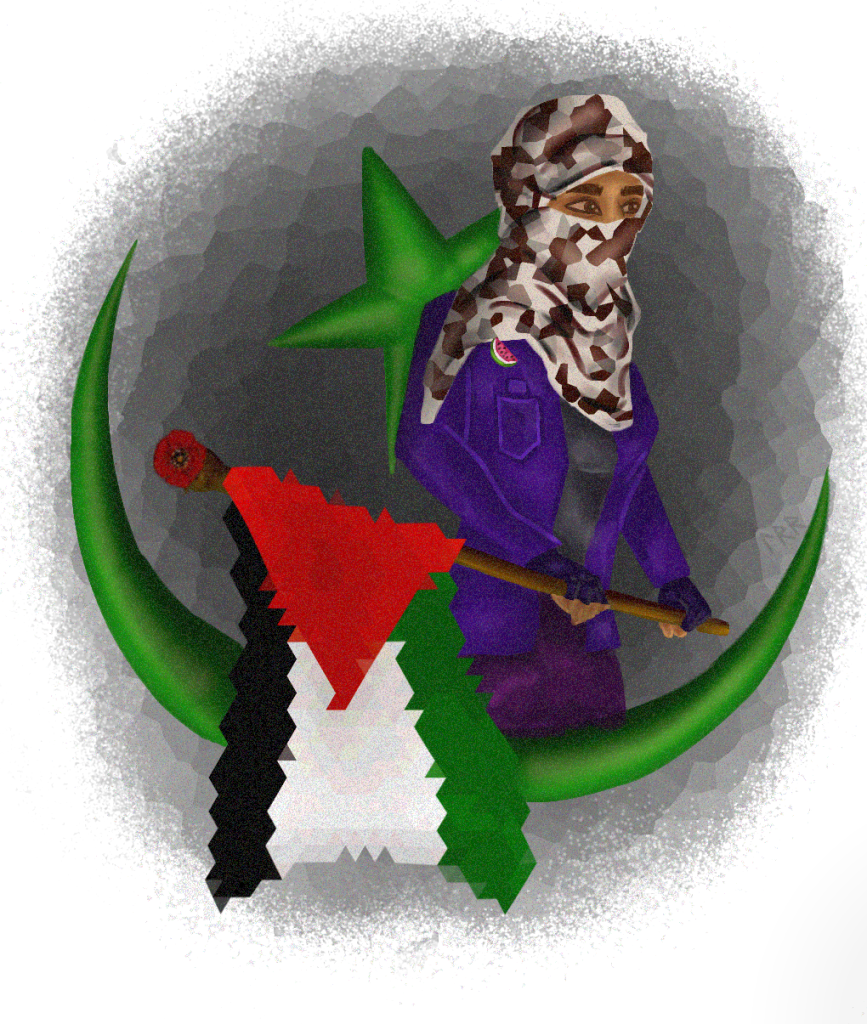
In an interview with Mohammed Al Fotihi, president of Bishop’s Muslim Students Association, he highlighted the harrowing realities faced by those in Gaza. Al Fotihi shared his personal anguish, revealing the distressing circumstances of his friends trapped in the region. “I have friends in Gaza,” he disclosed, “but I haven’t been able to be in touch with my friends… I am not able to live a normal life, knowing that my friends are going through hell.”
I would like to highlight Dr. Sara Al-Saqqa, the first female surgeon in Gaza, who exemplifies the courage and resilience of Palestinian women. Despite the dangerous conditions, Dr. Al Saqqa is risking her life every day saving Palestinian civilians and also witnessing their deaths.
Saleh Hussein, media coordinator for the Muslim Students Association, further emphasized the remarkable contributions of Palestinian women. “Dr. Amira Al-Asouli is recognized for her heroic efforts in Gaza, where she risked her life under Israeli gunfire to save an injured man near the Nasser Medical Complex in Khan Yunis”, he expressed. “She emphasized the duty of doctors to assist those in need, showcasing exceptional bravery and commitment to humanitarian service.”
Amid discussions surrounding Women’s History Month, Lee Schaefgen, a sociology student at Bishop’s University, emphasized the importance of intersectionality in addressing systemic inequalities. Schaefgen pointed out that oppression persists beyond designated months of recognition. They advocated for sustained dialogue on the challenges faced by marginalized groups.
Schaefgen’s sentiments resonate profoundly in the context of Gaza, where the pervasive suffering transcends simplistic categorizations. The atrocities in Gaza are not isolated incidents but symptomatic of systemic injustices. The normalization of such violence perpetuates a culture of indifference and apathy towards the suffering of vulnerable populations.
As we reflect on the legacy of women’s resilience and activism, let us not forget the women of Gaza who endure unimaginable hardships every day. It is incumbent upon us to stand in solidarity, to amplify their voices. We must demand justice for all marginalized communities. The women of Gaza should inspire us all to strive for a more just and equitable world.
Free free Palestine



 The Campus