
By Gabrielle Liu – Editor-in-Chief
The model minority myth is used as a wedge to separate Asians from standing in solidarity with other minorities. We must remember this myth is a tool of oppression, and fighting against injustices requires viewing our past, present and histories as interconnected with Black, Indigenous and people of colour (BIPOC) communities.
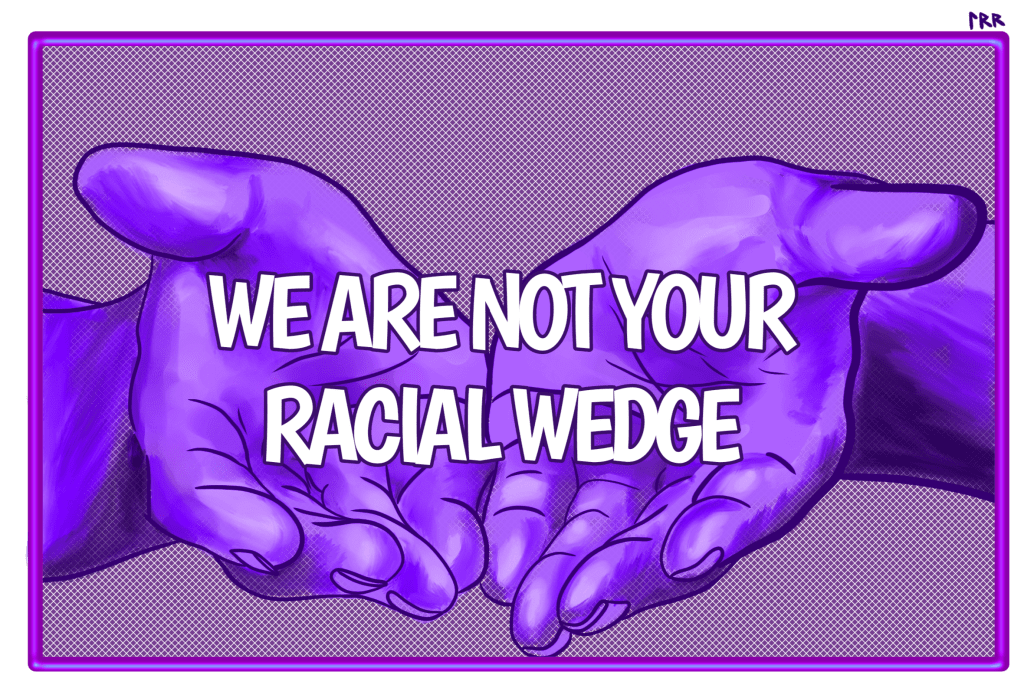
The model minority myth is a narrative that certain races are more successful and hardworking than others. It claims all Asians are studious, tenacious and earn high-paying jobs. It agglomerates a diverse Asian community into a monolithic body that is then used as a cudgel against other people of colour and immigrants. We are supposed proof that if you try hard enough, you can succeed. The myth downplays colorism and the systematic barriers other minorities face in accessing equal health, education and socioeconomic outcomes, assigning blame on the individual for not working hard enough.
The myth whispers to us that we should not be politically abrasive; It encourages us to be a “non-threatening kind of person of colour”, as author Viet Thanh Nguyen writes.
We share a history of systematic exclusion in North America that should compel us to view our BIPOC communities as interconnected, even if Asians do not face the same systematic discrimination today. In 1872, the government of B.C. passed an act prohibiting Chinese Canadians and Indigenous Peoples from voting in provincial elections. Up until 1948, not all Asian Canadians had the right to vote. After the Canadian Pacific Railway was completed, the 1885 Chinese head tax and what is known as the 1923 Chinese Exclusion Act targeted Chinese immigrants. In 1908, the federal government passed an immigration act targeting Indian and Japanese immigrants. During World War II, the federal government sent 90 per cent of the Japanese Canadian population into internment camps.
We share a historical and present solidarity with BIPOC too. Asians used to be called “orientals”. It was university activists in California, Yuji Ichioka and Emma Gee, who coined the term “Asian American” to describe a multi-ethnic coalition in solidarity with other people of colour throughout the U.S. and the world. The Union of B.C. Indian Chiefs issued a statement in 2021 condemning anti-Asian hate crimes during the pandemic, “understanding the hurt and frustration that comes from being treated as perpetual outsiders”.
There are still anti-Black and anti-Indigenous sentiments within our own families and communities we must address. We must also reckon with what it means to be immigrant-settlers on unceded land.
The most glaring example of how the model minority myth is used as a wedge is when the U.S. Supreme Court struck down affirmative action programs at Harvard University and the University of North Carolina. Affirmative action, or race-based admissions programs, are designed to increase access to education for historically marginalized groups. The plaintiffs in the case were a group named Students for Fair Admissions (SFFA), created by a conservative activist Edward Blum. SFFA claimed that Harvard’s race-based admissions suppressed the number of Asians admitted despite them scoring higher on academic and extracurricular ratings. Blum strategically recruited Asian students “in part because they could be depicted as especially sympathetic victims and model minorities cruelly harmed by affirmative action,” wrote Prof. Julian Maxwell Hayter in The Conversation. Blum’s and SFFA’s success fails to address the larger picture of inequitable admissions at Harvard and other universities. Family members of Harvard donors were seven times more likely to be admitted than other applicants. Legacy applicants were nearly six times more likely to be admitted. Nearly 70 per cent of this group is white. While affirmative action programs are neither perfect nor sufficient in addressing education inequalities, the model minority myth was employed by political figures to question diversity initiatives – and I doubt any of them truly cared about Asian issues at all. It was an elixir people could gulp down to say we shouldn’t see colour.


 The Campus