
By Diane Sibai – Contributor
Bishop’s now offers a new minor in scientific diving and freshwater environmental assessment (SDFEA). The minor aims to advance and develop the scientific diving program at Bishop’s. Bishop’s already provided a scientific diving course and an internship in this field prior to adding the minor. The minor, now combining courses related to freshwater biology, ecology and environmental impact assessment, will help improve students’ expertise in scientific diving and freshwater biology. The biology and the environmental, agriculture and geography (EAG) departments brought forward the addition, approved by the university senate in January.
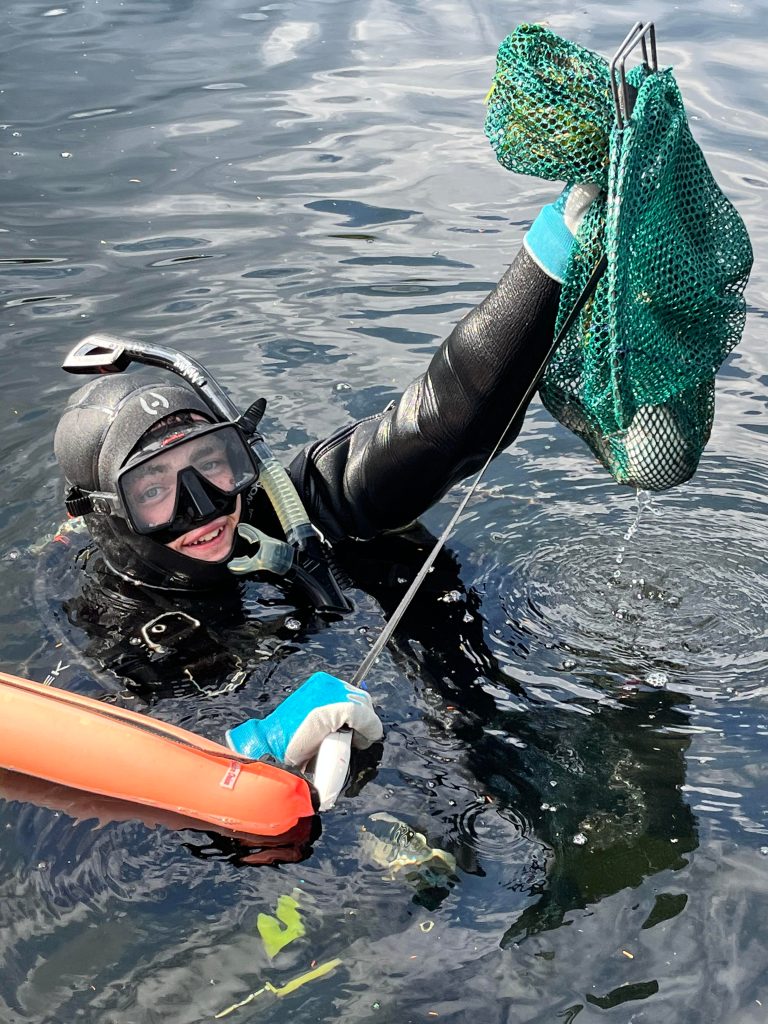
Bruno Courtemanche, a professor in the EAG department, introduced this program as a way to provide students training to conduct underwater research projects and other tasks such as removing invasive species. To meet the standards for commercial scientific divers to perform these tasks, Bishop’s University is a member of the Canadian Association of Underwater Science (CAUS).
Students can obtain a diving certification by taking the course ESG288: Underwater Environmental Assessment, recognized by the CAUS and the American Academy of Underwater Sciences. Prof. Courtemanche stated that a new standard from the International Organization for Standardization would allow scientific diving certifications to be recognized internationally rather than just in Canada or the United States. This means that completing the course at Bishop’s could permit students to work as scientific divers around the world. Bishop’s University is currently the only university in Quebec that offers a scientific diving certification.

Amélie Morin, a third-year biology major with a concentration in ecology and biodiversity, is currently completing the minor in SDFEA. She expressed how this new minor would provide her hands-on experience in the field and help her gain skills in underwater science such as sampling, collecting data and setting up quadrats. “We are also able to apply what we saw in other classes such as Vertebrate Life and Freshwater Biology with the internship,” she adds. She believes the new program will also prepare prospective students for future outdoor jobs, considering the harsh diving conditions in Quebec lakes.
This minor is recommended for students interested in freshwater ecosystems. If students are specifically interested in underwater diving rather than environmental science and ecology, taking the course ESG 288 will prepare students to become professional divers.
Following the addition of this program, outside institutions have reached out to the department requesting to collaborate. This could develop into new research and internship possibilities with other organizations and offer multiple career prospects.
Diane Sibai is an environmental science student with the new SDFEA minor.

 The Campus