
By Olivia Woods – Contributor
Menstrual equity and period poverty are rising topics of conversation in Canada. Menstrual products can pose a burdensome cost, especially during university. After I heard that students have had to leave class because they did not have accessible products, this reaffirmed that it was time to address menstrual equity at Bishop’s.
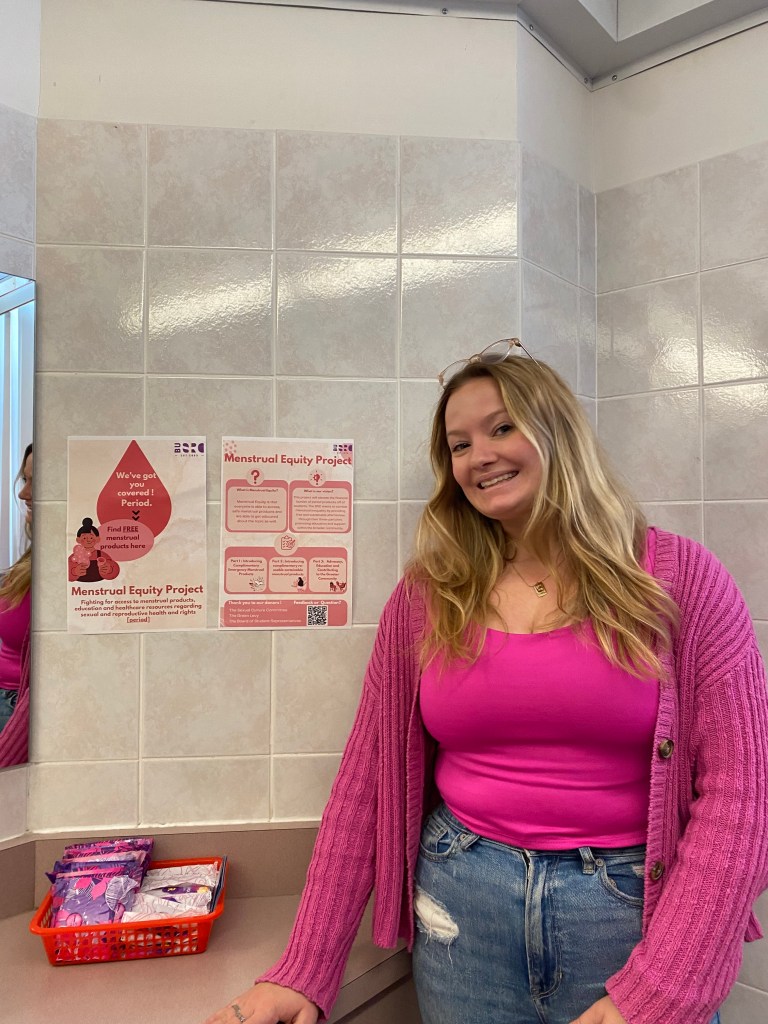
After extensive research, the Menstrual Equity Project (MEP) was created. Menstrual equity initiatives are not uncommon in university scenes, with McGill and Concordia both having established programs already. These programs served as inspiration as to what the project at Bishop’s could look like.
After student consultation, the project was split into three phases. The first phase, which has been in full effect since mid-December 2023, consisted of introducing emergency products to the different restrooms on campus. Menstruation can affect students who may have to miss class or leave due to their period. These products can now be found in small bins located on the counters of various restrooms across campus. For the pilot project, these products have been supplied through Tampax. However, a transition to more eco-friendly products is projected as the project grows. As an alternative to plastic tampon applicators and wrapping, there are eco-friendly products made from sugar cane and compostable materials. The hope is that with emergency products available, students will no longer have to miss class if they are caught off guard.
The next step, or phase two, is education. Menstruation can tend to be a taboo topic in society, even though it is a biological body response. According to a survey conducted by Plan International Canada, “52 per cent of 18 to 24-year-old women think the word “period” is considered dirty or inappropriate in Canadian society.” By increasing educational supplies, breaking down stigma and having conversations, the MEP aims to normalize menstruation on our campus. A considerable part of this will also include education about reusable products in the third phase of the project.
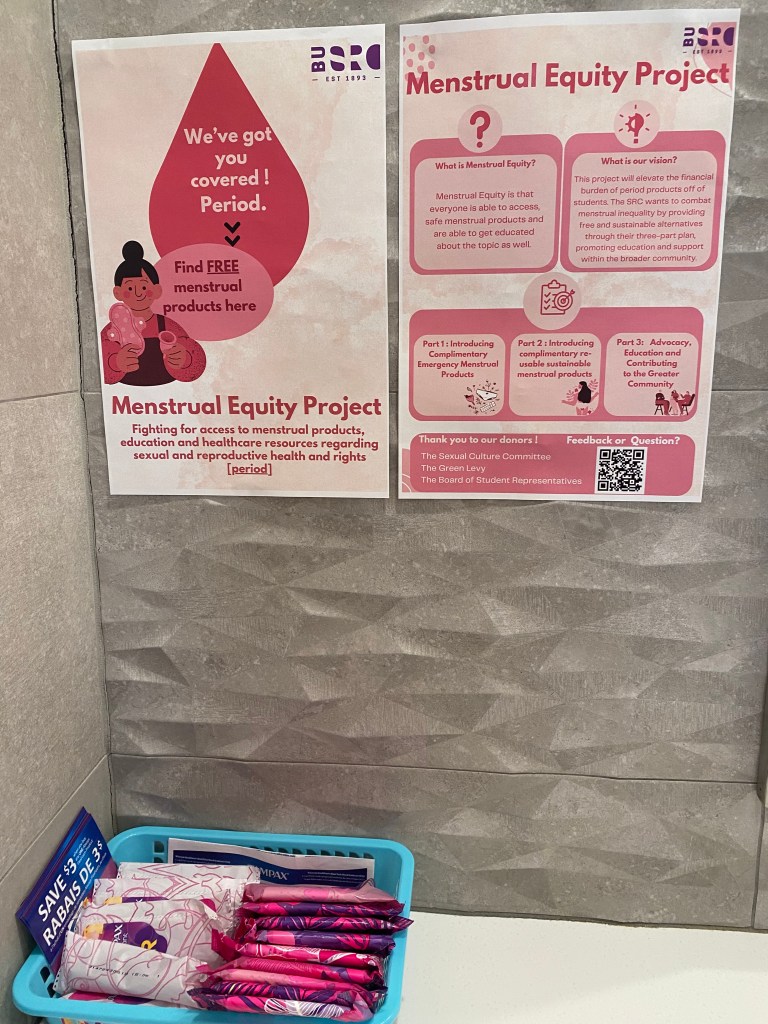
The average menstruating individual can use anywhere from 5,000 to 15,000 single-use menstrual products. In comparison, an average of four menstrual cups (a menstrual hygiene device) could replace these products. The difference is astronomical for the environment but also for people’s wallets. The pilot project plans for two different types of reusable products to be available: menstrual cups and reusable pads. Over time, the hope is that the MEP can include menstrual discs, period underwear and the newly released reusable tampon applicators. The second phase of the project is expected to come to fruition at the mid-to-end of March 2024.
Reusable menstrual products may have stigmas surrounding them. Society may regard them as unhygienic or unusual as it is not the most common product to use. After hundreds of years, with the only product created for menstruation being cotton, there has to be a better approach. Yes, reusable products do need to be cleaned, but they come with tons of information on how to do so.
Menstrual inequality continues to affect Canadians all over the country, particularly low-income individuals. It is time to switch the conversation. Menstruation is not shameful, nor should it be used as a tool of oppression. Education about anatomy and biological processes is essential. The SRC strives to make our campus more inclusive, but it is up to us as a community to start meaningful conversations and speak up when needed.
Do you have questions or feedback for the Menstrual Equity Project? Follow this link: https://forms.office.com/r/2K9TPkFL6C
Olivia Woods is the SRC Vice President Student Life and works on the Menstrual Equity Project.




 The Campus