
By Frédérique Leblanc-Piette – Contributor
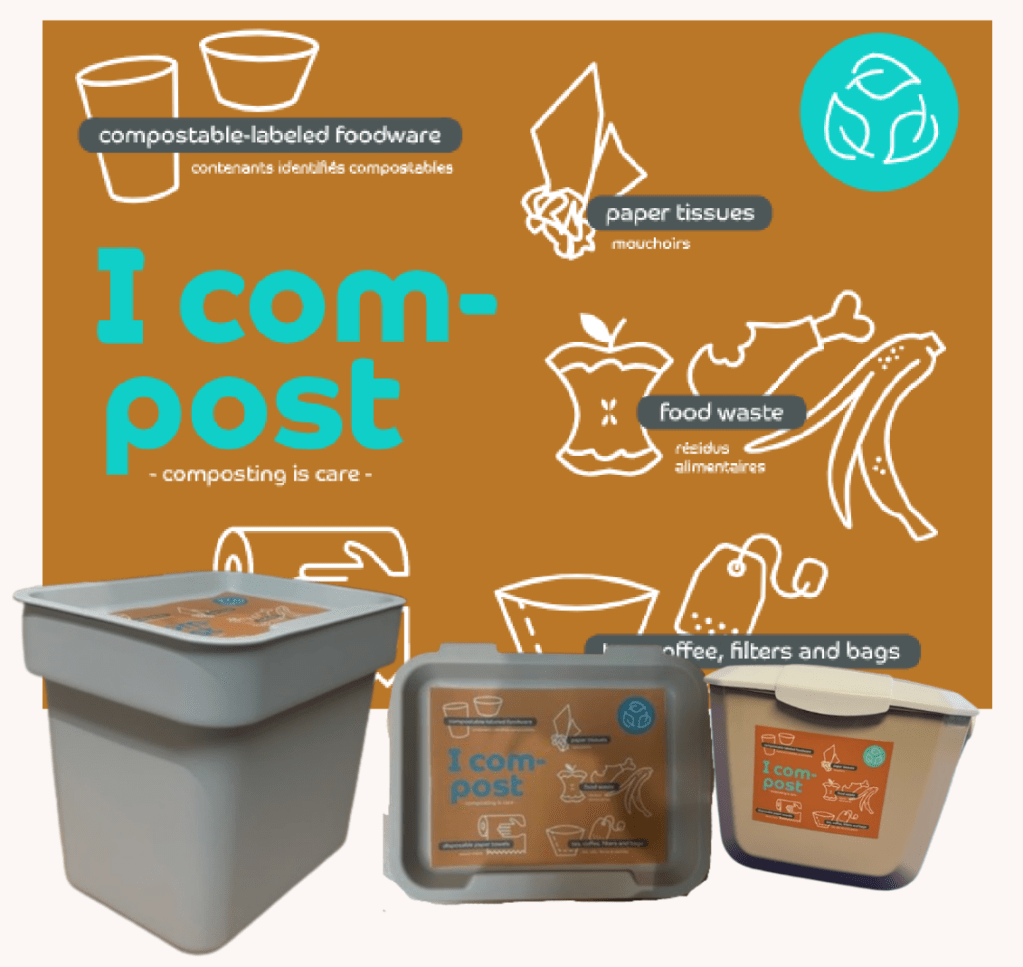
As of January 2024, compost is coming into all the residences. The Sustainable Development Office team will gradually distribute small compost bins to residents along with instructions and informational pamphlets.
Composting at Bishop’s
Depending on where you are at Bishop’s, the type of activities you do, where you live and the type of waste you produce, your composting journey will vary, adapt and evolve.
Likewise, this month, those living in residences will receive small bins adapted to their needs in a room or apartment without a kitchen or cooking space. This implies that the amount of compostable items will be largely reduced as there are no cooking scraps. However, the bin will still be very much needed for items such as tissues, snack leftovers, soiled paper, dead leaves or dirt from indoor plants, compostable containers and more.
For the past year, food scraps have been collected and composted on campus with the help of the experimental farm’s team. Ultimately, the objective is for this compost to be used for crop cultivation on the farm.
What is compost?
Compost is waste composed only of organic waste/matter. Organic matter refers to anything that is not from synthetic sources or that has not been treated with synthetic materials, such as; leaves, food scraps, cardboard, newspaper, etc. Once decomposed, either naturally or in a composting facility, that waste is transformed into a valuable fertilizer that can enrich soil and plants.
It is important to note that anything that grows decomposes eventually. Composting centres simply speed up the process by providing an ideal environment for bacteria, fungi and other decomposing organisms (such as worms, sowbugs and nematodes) to do their work. Other commercial centres create specific biological conditions to break down materials only suitable for industrial composting, such as certain plastics or containers. The resulting decomposed matter, which often ends up looking like fertile garden soil, is called compost. It is very valuable, and farmers often refer to it as “black gold,” as it is rich in nutrients and can be used for gardening, horticulture and agriculture.
Why compost?
You might wonder why compost matters if everything ends up in the soil anyway. Approximately 40 per cent of residential waste is organic according to Environment Canada. Thus, there is a lot of waste that can be diverted! When organic waste is buried in landfills, the lack of oxygen means its decomposition produces more greenhouse gases like methane. In addition, recycling food and other organic waste provides a wide range of environmental benefits. Once decomposed, the waste can become a great fertilizer used to grow more food, which means fewer synthetic fertilizers are needed. There can be cascading effects if fewer landfills are needed and if nutrients are recycled. A circular system and improved soil health can reduce the impacts of droughts.
We know change can be stressful, but we hope that with help and a little bit of will, we can become a greener and more sustainable campus together, for a better future.


 The Campus