
By Eve Rowlett – Contributor
As a fourth-year student studying in the drama department, I have had incredible opportunities to work alongside professors and artists-in-residence to put on a multitude of productions in Turner Studio Theatre and Centennial Theatre.
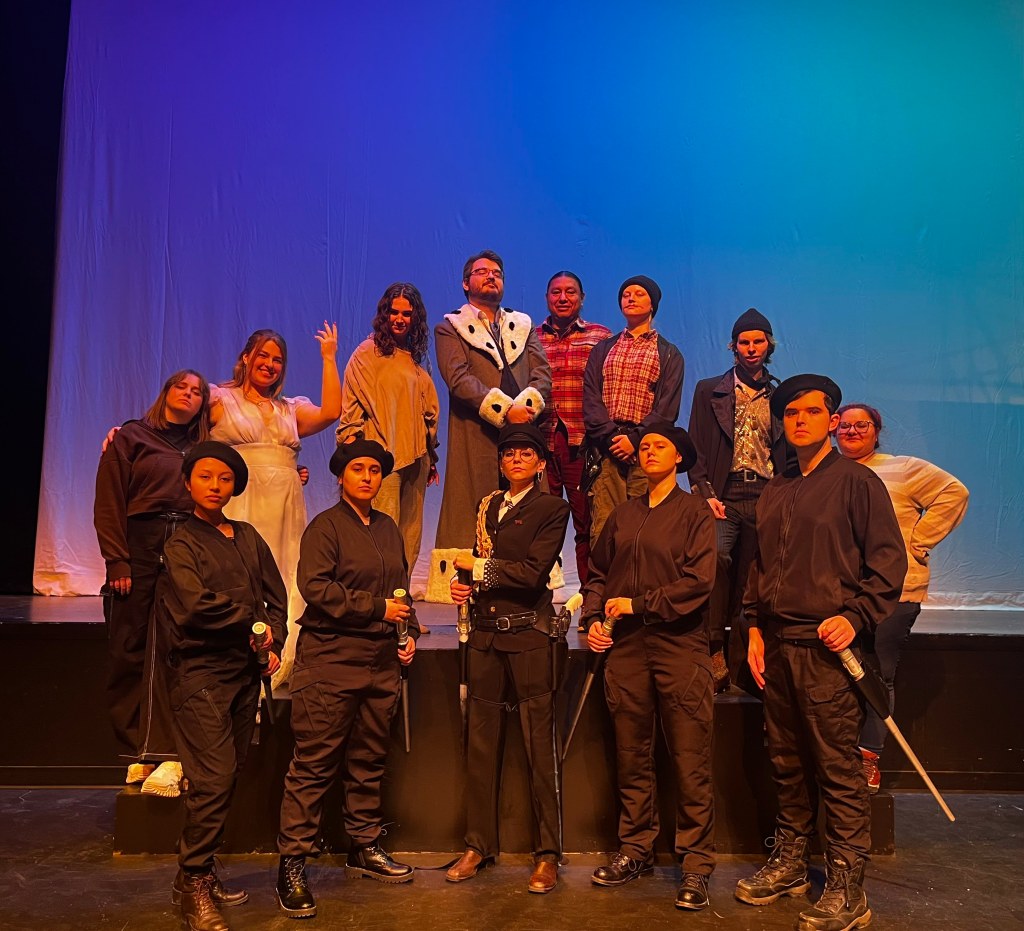
This fall, I was able to combine my experiences and manage the stage for Life’s a Dream. I worked alongside artist-in-residence Carlos Rivera, student director Laura Fernandez and 11 dedicated cast members. Our audition process began in mid-September and after a lengthy day of vocal and physical exercises, varying line reads and multiple water breaks. Finally, we had chosen our cast.
While managing Life’s a Dream, I was coordinating the New Plays Festival, which has open auditions at the start of each semester and puts on plays of varying genres and lengths. Thus, I had many schedules to organize. After a successful sold-out festival, I was able to dedicate all my time and energy towards our main production: Life’s a Dream. Before rehearsals began, I had many meetings with my directors and the heads of all our departments: lighting, sound, costumes and set/props. Department meetings continued weekly until our production ran in early November, and it was my responsibility to keep us on track while taking down all notes.
When I first arrived at Bishop’s University, I knew that acting was not my strong suit and that within the drama department, I wanted to study production and management. Thankfully, during my second year, a spot opened up for stage management, and I was thrown in with the cast. It was a whirlwind of a production, and I am thankful for my director and cast who helped me during this experience. After my second year, I continued to stage manage and later direct in the department’s New Plays Festival and TheatreActiv. Both are wonderful opportunities for the department and the general Bishop’s community! It helped grow my confidence as a stage manager and my skills in the world of technical theater.
After department meetings, we began with a table read and then moved onto rehearsals. Rehearsals were about six days a week, however, actors were only called when needed. Each evening, I took notes to pass along to various departments and kept track of the actors’ blocking – placements and movement on stage – in my main script. This can be helpful if an actor forgets their place, was missing during rehearsal or if directors need refreshers. When late October came around and we practiced more run-throughs, it was my responsibility to be on book, constantly reading along with the actors, to give them a line if needed. During this process, I also kept track of lines that were misread, forgotten or paraphrased, in hopes that these notes would benefit the actor’s overall memorization.
When November rolled along, it was my favorite time of the production schedule: tech week. During tech week we focused on complete run-throughs and dress rehearsals of the show, though the week always began with a cue-to-cue (Q2Q). A Q2Q is a stage manager’s day to run through the entire script and practice calling all the cues with actors on standby. This took a couple of days and many hours of work.
Life’s a Dream had many light and sound cues, meaning that Q2Q would help to clean up and tighten when the cues needed to be called. I wore a headset all day until my ears ached, and actors repeated line after line until we all generally felt confident in the cue placement.
When the show dates came around, I believe we all felt very solid in our performance and excited to show audiences our hard work! Overall, I hope everyone enjoyed Life’s a Dream and our recent festivals. A lot of effort and dedication goes into these productions, and I genuinely enjoy every step of the way!


 The Campus