
By Gabrielle Liu – Editor-in-Chief
What internship should I apply for? How do I build this personal project? Navigating the experiential learning opportunities on and off campus can be overwhelming. Bishop’s Experiential Learning (EL) Office, less than a year old, could offer a starting point for some of your questions.
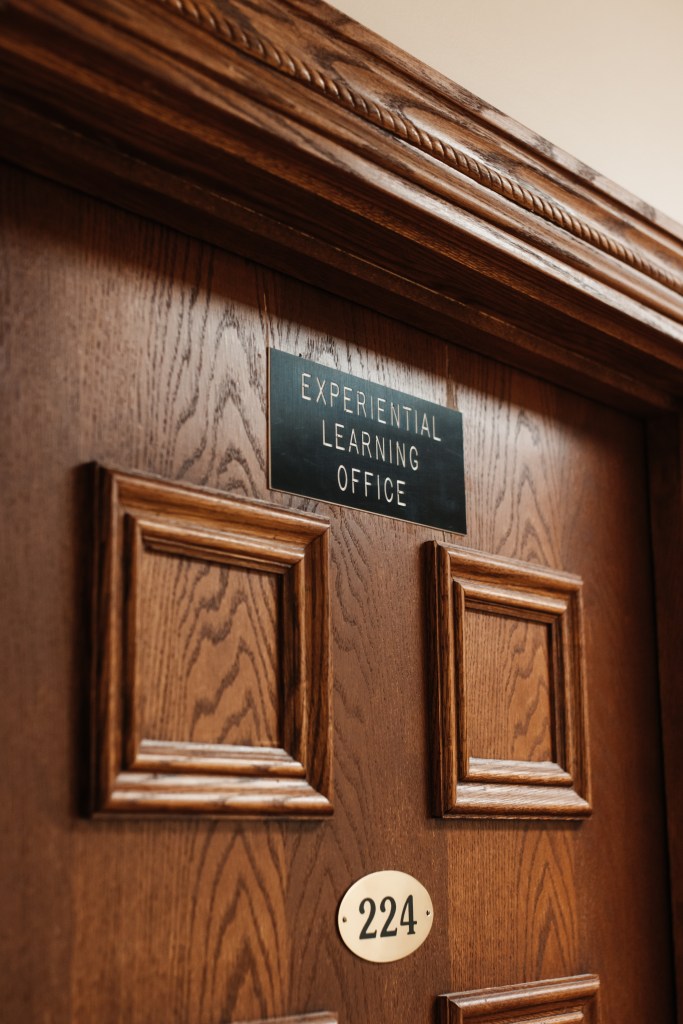
“The first step is to talk to your EL coordinator,” says Kelly Gillis, the EL coordinator for natural sciences, social sciences and mathematics. “When we meet with students, we find out what are their interests, what classes they’re enjoying, what things do they want to learn, what skills do they want to develop, what potential career paths they see for themselves,” says Gillis. “We’re just mainly there to give information and also to support them once they’ve decided to take the next step.” Gillis emphasizes that you don’t have to have a plan before you approach your coordinator. Bassam Chiblak is the coordinator for arts and Sandrine Hébert the coordinator for business.
The EL Office doesn’t have any project funds this year but can assist students in sourcing external and internal funding at Bishop’s. If you’re a student looking for a work placement during the summer or the school year, the office can refer you to wage subsidies to apply for. Faculties may also support certain projects, Chiblak adds.
“Experiential learning happens on a spectrum,” Chiblak emphasizes about the kinds and sizes of projects students can look into. They range from courses with experiential learning modules to events like an internal hackathon, to virtual guest speakers paired with debate and reflection. Gillis adds one of the office’s main roles is to point students to EL opportunities that exist already, such as the observatory internship in the physics department or the brewing science program. Students may also approach the office seeking to build a particular skill, like leadership.
The EL Office’s work can provide five services to students and faculty. They spotlight the work students do, co-design EL activities and connect you to external partners, like local organizations and businesses. The EL Office had pointed fourth-year student Leea Rebeca Ruta to a suitable contact based on her interests, resulting in an EL pilot project at Grace Village, a local seniors’ home. Ruta underscored that the EL Office doesn’t just support independent projects that departments sponsor, but is a resource for students to go to when there are no other options available.
The EL Office also researches experiential learning in other universities and journals. Finally, they can assist in coordinating the logistics of learning opportunities, like transportation.
The EL Office organized the bus logistics for the Archives Research Workshop in mid-September, part of Prof. Linda Morra’s course “Women Writers & their Archives”. “They’re not going to learn about this anywhere else,” said Morra when asked why an experiential learning component was essential to the course. Archivists spoke to them about archiving procedures, and the students had hands-on experience looking at the archives and mining through them, Morra explained. This engaged students in subjects such as who is excluded from the archives, who is included without consent and the protocols of archiving Black and Indigenous work. For more information about the EL Office, students can contact sherbert@ubishops.ca for opportunities in business, kgillis@ubishops.ca for natural/social sciences and mathematics and bchiblak@ubishops for the arts.


 The Campus