
By Gabrielle Liu – Editor-in-Chief
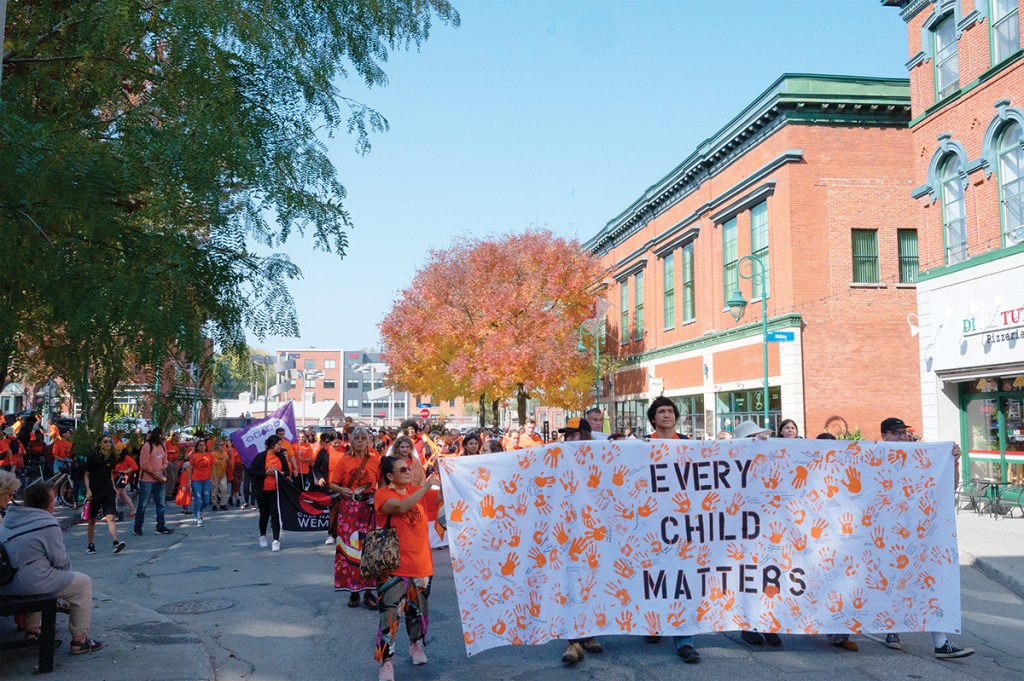
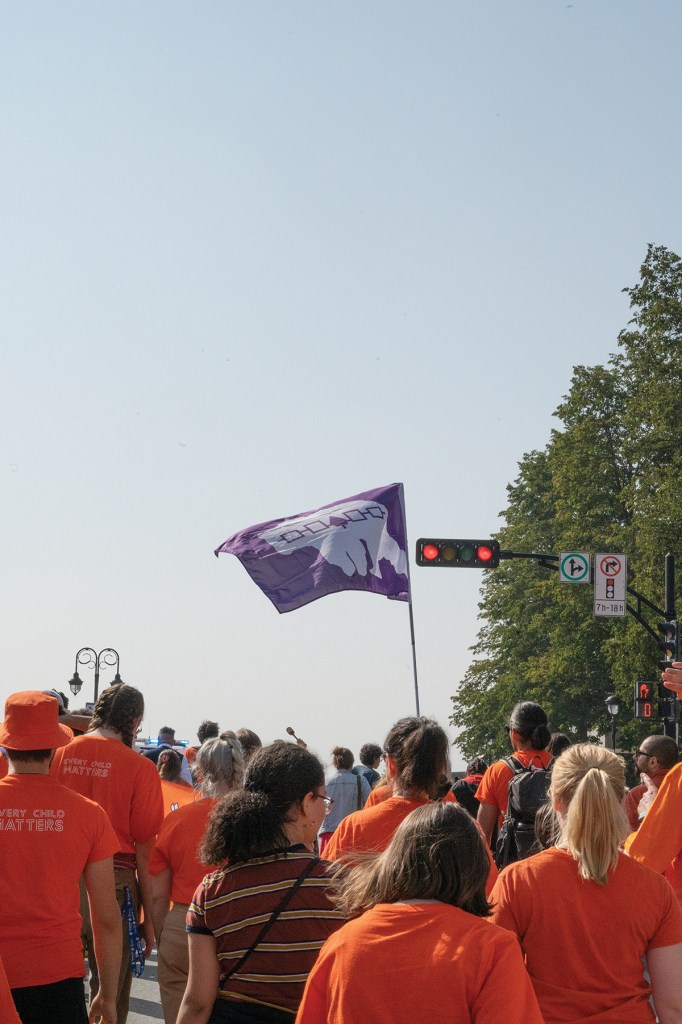
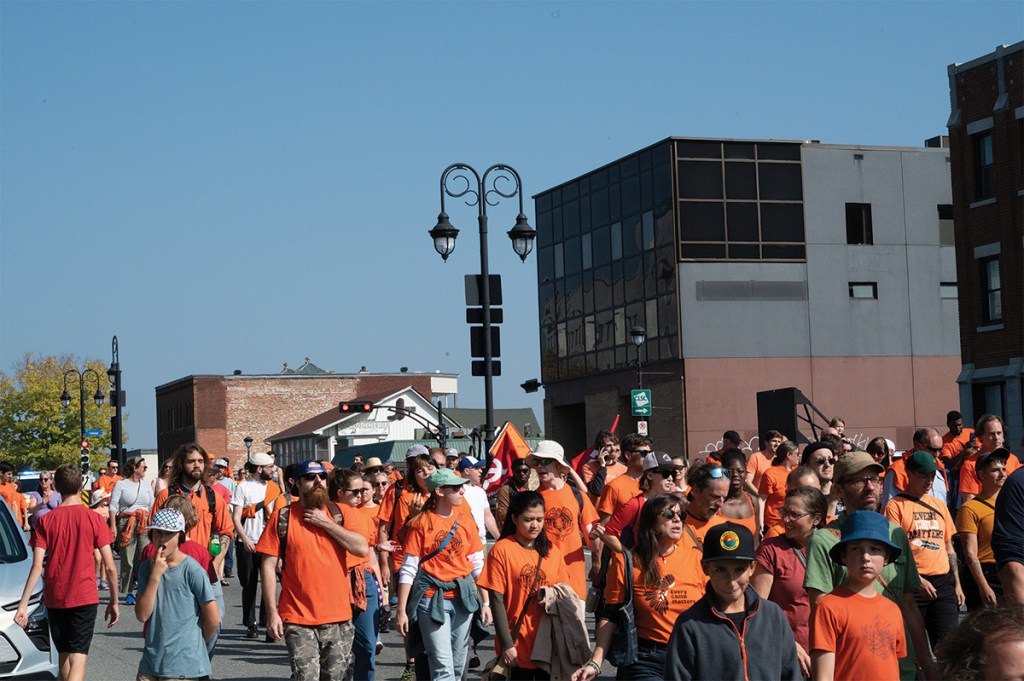
The last week of September marked Truth and Reconciliation Week, finishing with an “Every Child Matters” march on Saturday, Sept. 30.

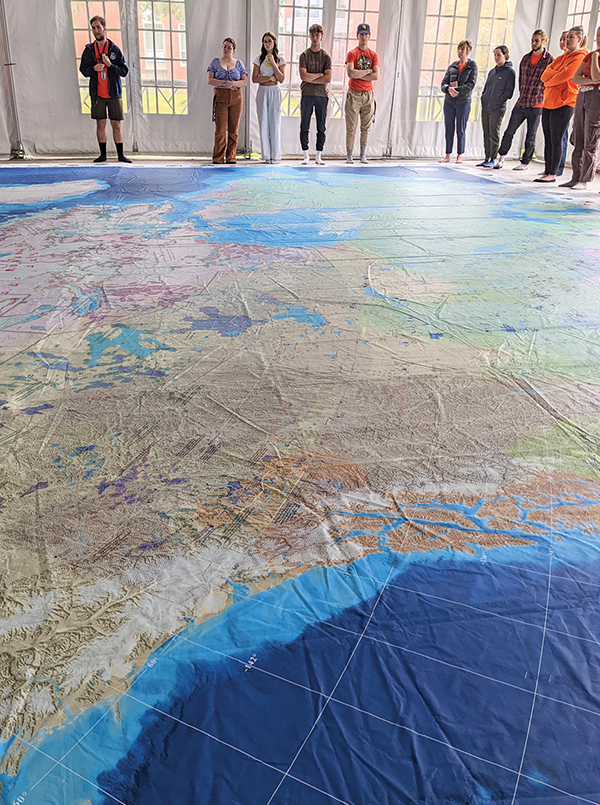
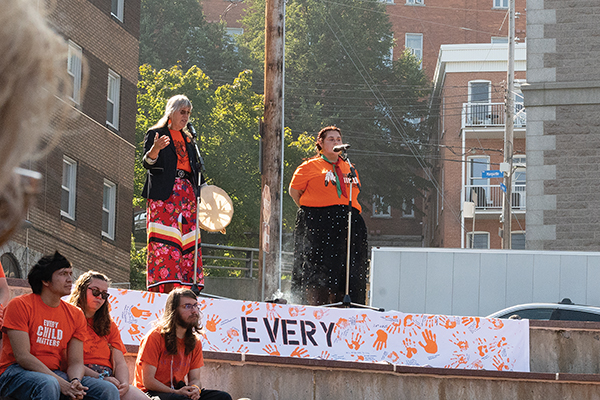
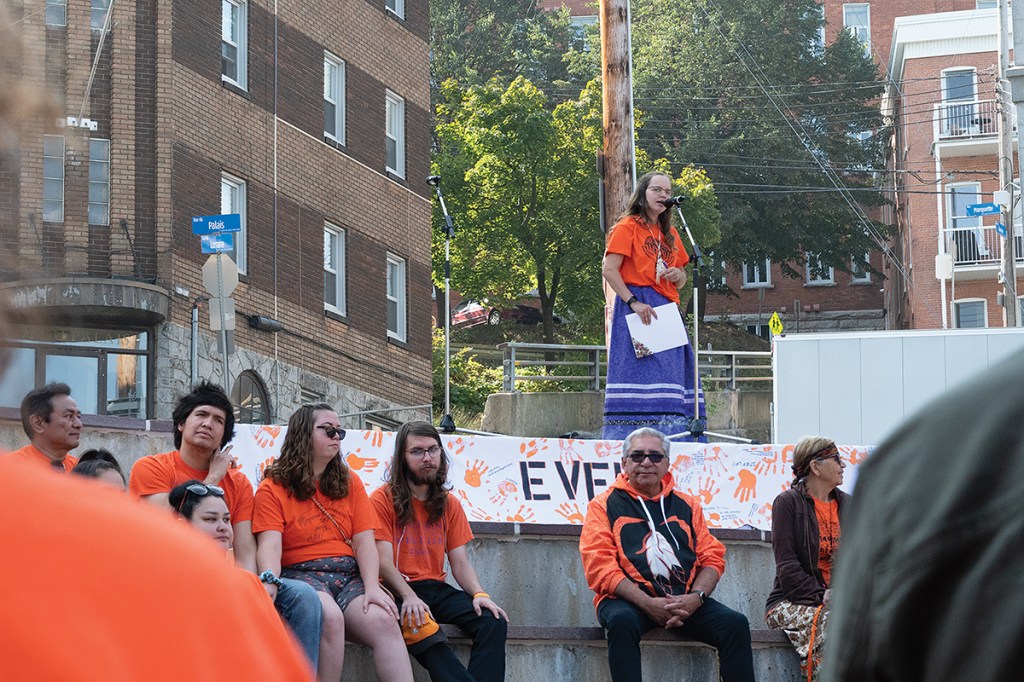
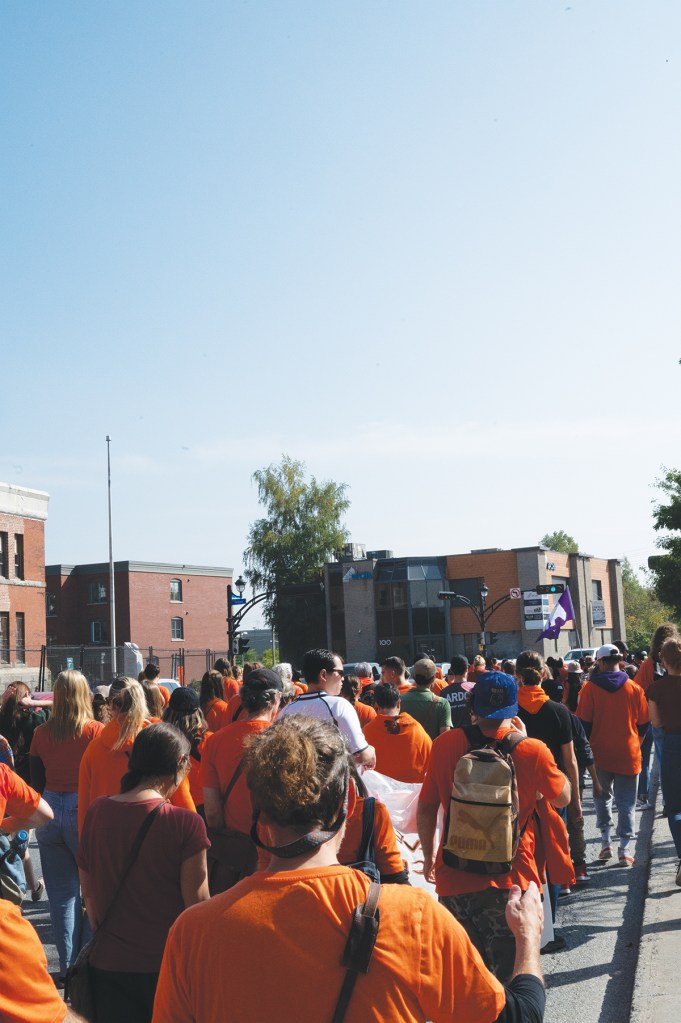
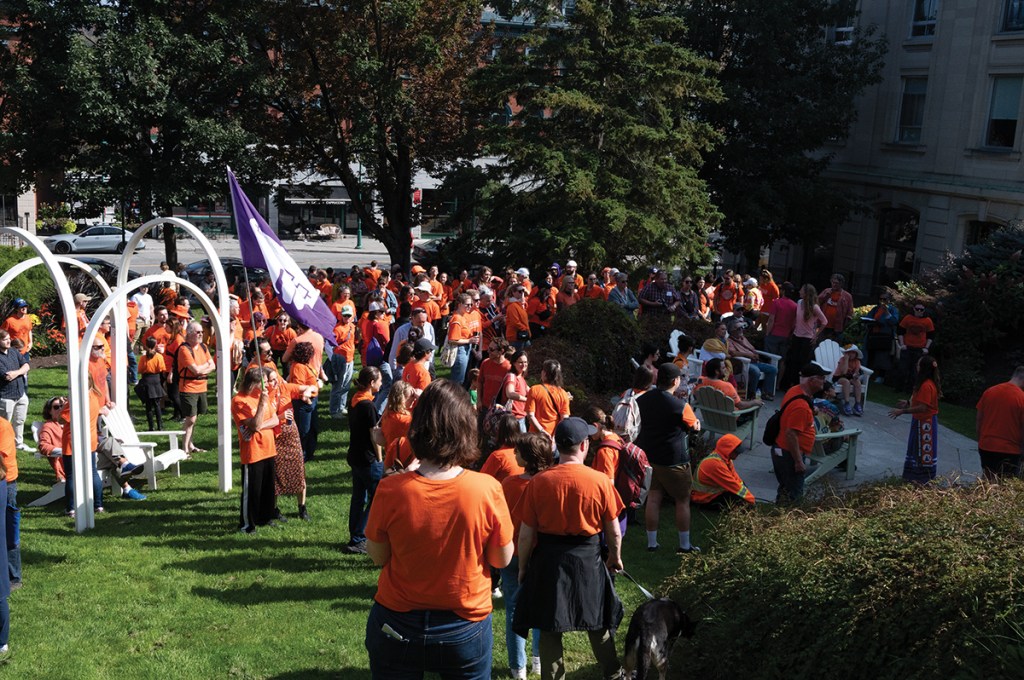

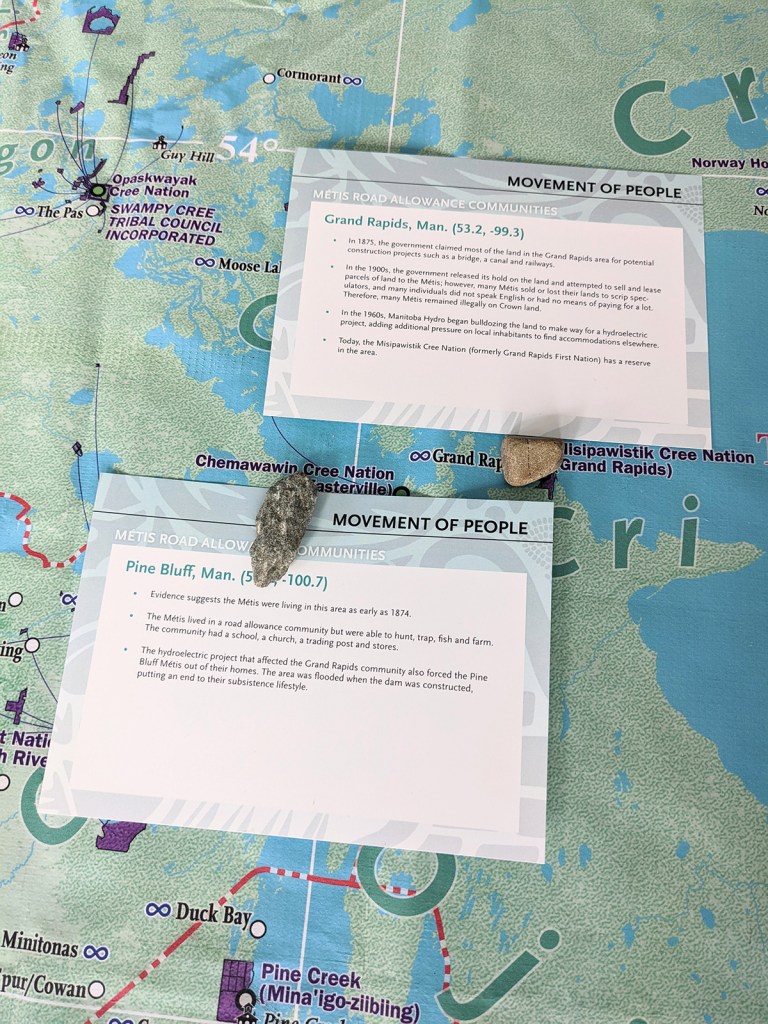
The Indigenous Student Support Centre (ISSC), grounded the week’s activities on a large atlas map of Canada without colonial borders. Students from the education department facilitated interactive events at the map throughout the week, many of whom were students of Professor Colette Yellow Robe.
Remy Gehmaire, a liberal arts student working in communications for the ISSC, is from the Na-Cho Nyak Dun First Nation in Mayo, Yukon territory. Gehmaire noted that “[Truth and Reconciliation Day] is a national holiday, but not everywhere does a lot about it”, commenting that it was beneficial that Bishop’s had a week of activities.
Tuesday’s interactive activity invited conversation about Indigenous self-governance. Students located and discussed how various communities, like the Sechelt Band in B.C. had only limited authority over self-governance. The Special Advisor for Indigenous Student Support, Vicky Boldo, emphasized how far away Ottawa is from the people it governs. The ways of life up in the North are entirely different from what people in the South experience, she noted.
Drew Henkel, the Indigenous students representative of the SRC and member of the Saugeen Ojibwe Nation expressed that he hopes students “approach the week with an open mind for learning”. He commended learning about history during the week but also wishes for effort about what we will do going forward. He suggested revisiting progress made on campus each year, like with Kwigw8mna, and reflecting on what we’ve learnt in the past. Henkel said that he understands that people make mistakes, but the apologies that follow don’t always touch on the real issue at hand. Henkel says he has seen promotional material of the week using the image of a First Nations headdress “with the best intentions”, but that the headdress is not representative of all nations. He did not want to point any specific group or organization out.
He highlighted that the SRC was making meaningful progress in reconciliation. “They have tools for good reflection,” he said, citing Vice-President of student life Olivia Wood’s presentation about making land acknowledgements with reflection and purpose. While emphasizing that sporting events are great spaces for the community, he mentioned that when students sing the national anthem after limited engagement in the land acknowledgement, “you can see the disconnect”.
Around 50 students gathered at the map on Wednesday to hear Elder Roger Echaquan from the Atikamekw Nation of Nehirowisiw share words of wisdom. Fourth year student Antonia Driscoll spoke of the ceremony being one where “we’re healing with [Indigenous students] and recognizing the truth”. She expressed that it allowed her to feel grounded. Explaining the emotional intensity of the week, she said, “they shouldn’t have to advocate for their own rights. Non-Indigenous people should.”
Several more students met at the map on Thursday for an activity about movements of people. Vicky Boldo emphasized that many Indigenous people relocate because of a lack of sufficient resources like healthcare or economic opportunities today. During the activity, students mapped forced relocations or even eliminations of Indigenous communities, such as the Sayisi Dene in northern Manitoba. The Sayisi Dene were relocated in 1956 because of the incorrect assumption that their hunting practices were to blame for a drop in caribou numbers.
Shawna Jerome, coordinator for the ISSC, drew on anecdotes about salmon fishing in her Mi’kmaq community in Gesgapegiag and the 2020 Mi’kmaq lobster dispute to illustrate ongoing misconceptions about Indigenous resource management. “We know what is sustainable because of years of years of knowledge passed down,” she said.
Alex Kovalchuk, a first year student in psychology at Thursday’s activity, said, “Coming here and learning about the present situation, I thought this was in the past.” He was shocked to hear about the 2020 Mi’kmaq lobster dispute. “[The activity] gives me the motivation to learn more”, he said.
Friday’s engagement at the map had students share about treaty territories, such as the Peace and Friendship Treaties and the Nunavut Land Claims Act.
Yixin Zhang, an education student who attended Friday’s activity, expressed that when participants stood in a circle during the learning activity, “we feel each of us in the circle has a role.”
After Friday’s activity, education student Twaihiba N. said that from the events of the week, “People get interested in wanting to educate themselves.”
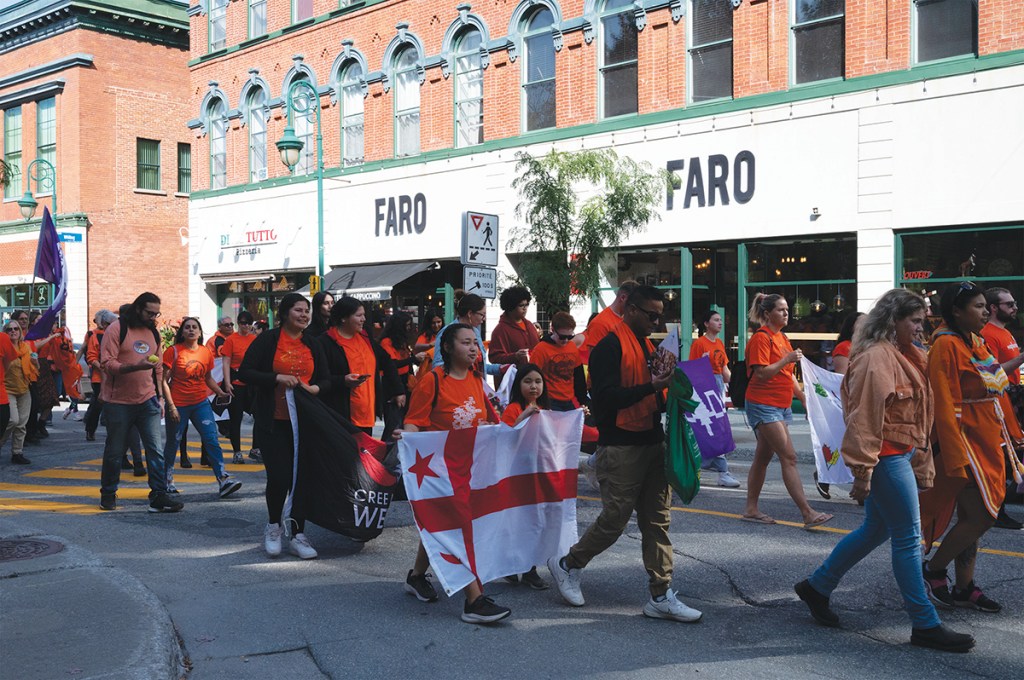
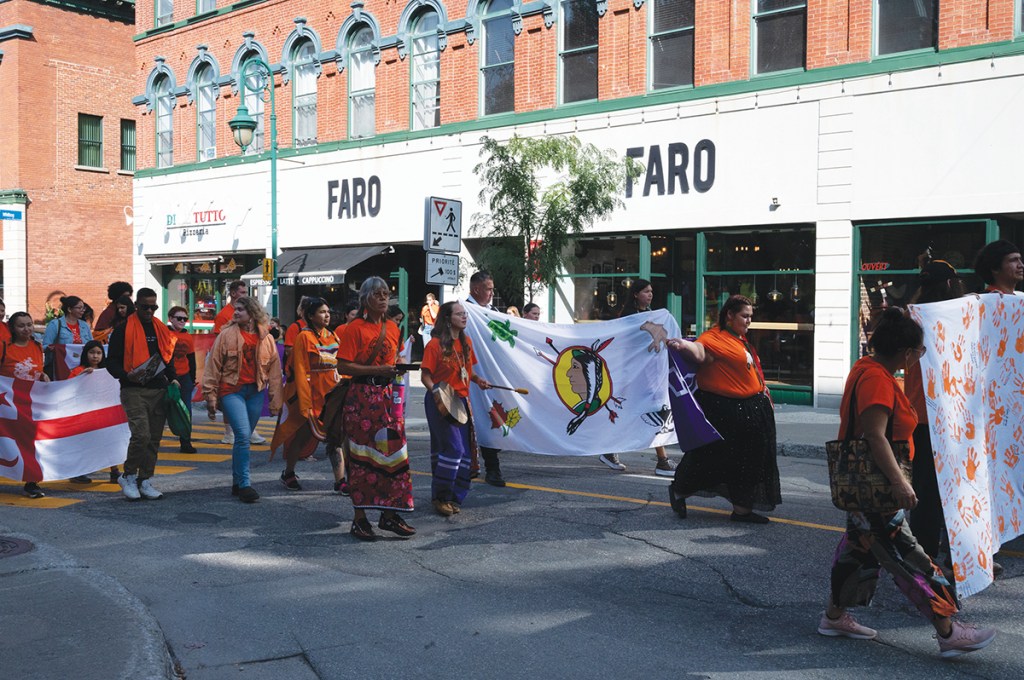
The larger Sherbrooke community convened in front of Sherbrooke City Hall on Sept. 30. Several members of the community delivered speeches, including Lois Dana, student life counselor at Champlain College; Jacques T. Watso, Odanak Council member; and Abel Bosum, former Grand Chief of the James Bay Cree. Bishop’s and Champlain students recounted the intergenerational impacts of the residential schools and Indian day schools, conflicting identities and challenges of learning far away from home in a different culture. Shawna Jerome introduced each speaker, and Vicky Boldo provided a steadying presence to them before closing out the speeches in the song.
Attendees walked as an orange wave through the streets of downtown Sherbrooke to the Marché de la Gare, encouraged to use the time to silently honor those lost and impacted by the residential school system.
In the original version of this article published on October 2, pg. 2, paragraph 2, Prof. Colette Yellow Robe’s name was incorrectly written as as Prof. Colleen Yellow Robe. The Campus takes responsibility and apologises for this mistake. This version online has been corrected.
 The Campus