
By Fanny Essel – Arts and Culture Editor
I was intrigued by Foreman Art Gallery’s new exhibition “What is the value of a dollar?”, curated by Matthew Kyba. It will be displayed on campus from Jan. 20 to March 18. It showcases seven artists who examine capitalism and systems of oppression through a series of videos, collages, pictures, and murals.
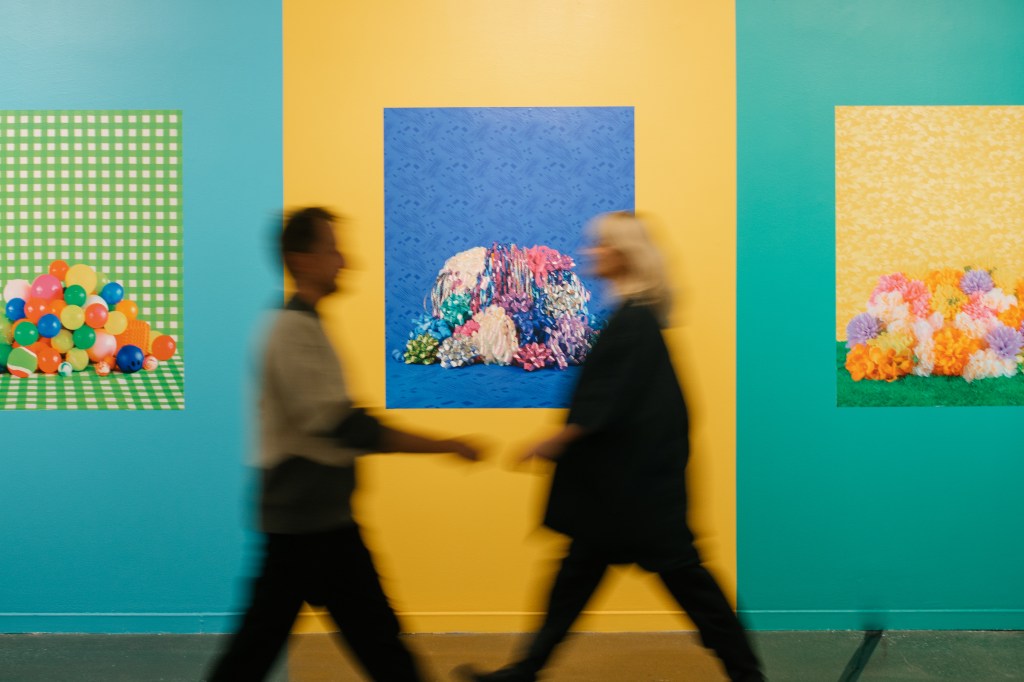
When I entered the minimalist gallery, I was overwhelmed by the bright and colorful walls. On the right-hand side of the room, there was a huge installation of a pink price ticket, created by Sean Weisgerber. “The series asserts and criticizes art’s contemporary and primary function as commodity, positioning the artist as the servant of the commercial art markets,” wrote Matthew Kyba in the exhibition’s pamphlet.
It was quite an ironic experience for me since, as editor of the arts and culture section for The Campus, I am also part of the mechanism of consumerism. Indeed, I am in charge of recruiting artists who would please the readers.

On the other side of the room, I saw a series of pictures by TJ Shin’s Universal Skin Salvation (2018). I could see pictures of flawless skin and slick cosmetic products. I became uneasy looking at, and – in a way – fetishizing the Asian woman’s perfect skin.
This perfection, probably created by Photoshop, was, for me, an apparatus of capitalism. Pictures of perfect skin usually influence the consumer to take part in beauty trends, while emphasizing “lactification,” which is, according to the pamphlet, a term describing “the desire to whiten one’s race.” It is a direct consequence of colonialism and the domination of the white western society.
In the back room of the gallery, some visitors were debating over three clay wall reliefs named Spoils (2018), created by Patrice Renee Washington. From afar, they looked quite plain, but when I scrutinized the details, I could read “don’t cry brand Louisiana sweet potatoes.”
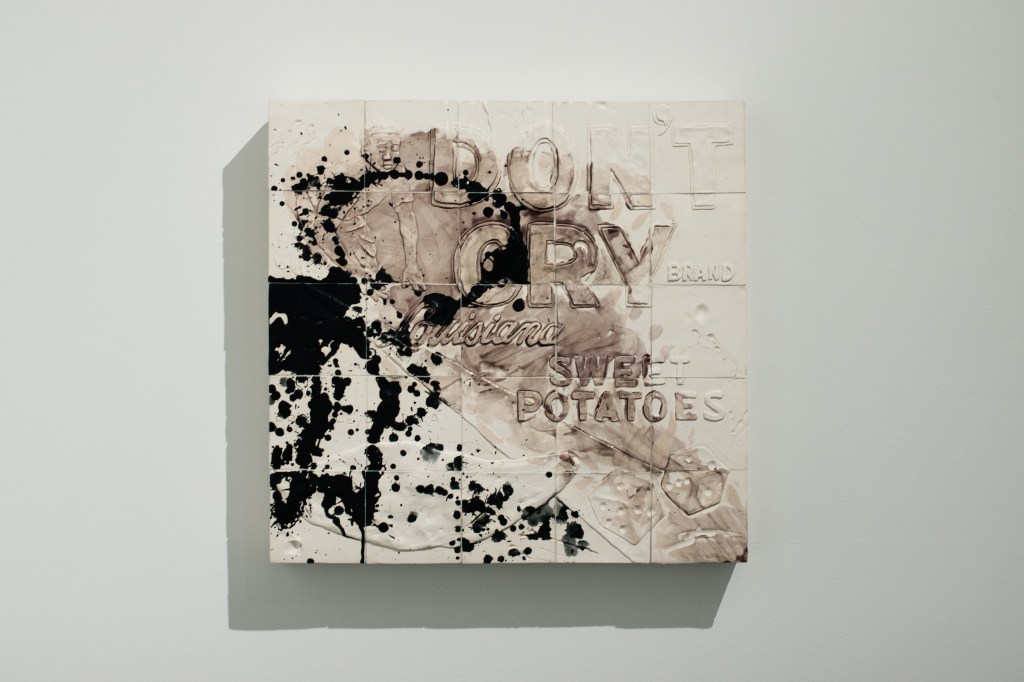
I understood why the visitors were talking about the reliefs. They looked like former racist ads created to appeal to the white-middle class consumers in North America.
For me, the artist showcases how capitalism forces consumers to buy products cultivated by African-American minorities, who in return, receive a minimum wage and live in poverty. Kyba writes: “[The reliefs exploits] racist imagery [which] have routinely typecast marginalized bodies for North American commercial exploitation.”
“What is the Value of a Dollar?” is a beautiful exhibition that can pique one’s interest. It questions our role in the machinery of capitalism when it comes to racism, exploitation and domination.



 The Campus