
By Fabrice Blais-Savoie — Contributor
The United States midterm election of November 2022 created an unstable landscape for the American government. The Republicans, who, according to polls and historical trends, were set to take overwhelming control of the legislative body, failed to win a majority in the Senate and only garnered a slim majority in the House. This dismal performance, coupled with previous divisions stemming from party infighting, has left political analysts unsure of the effectiveness of this House majority.
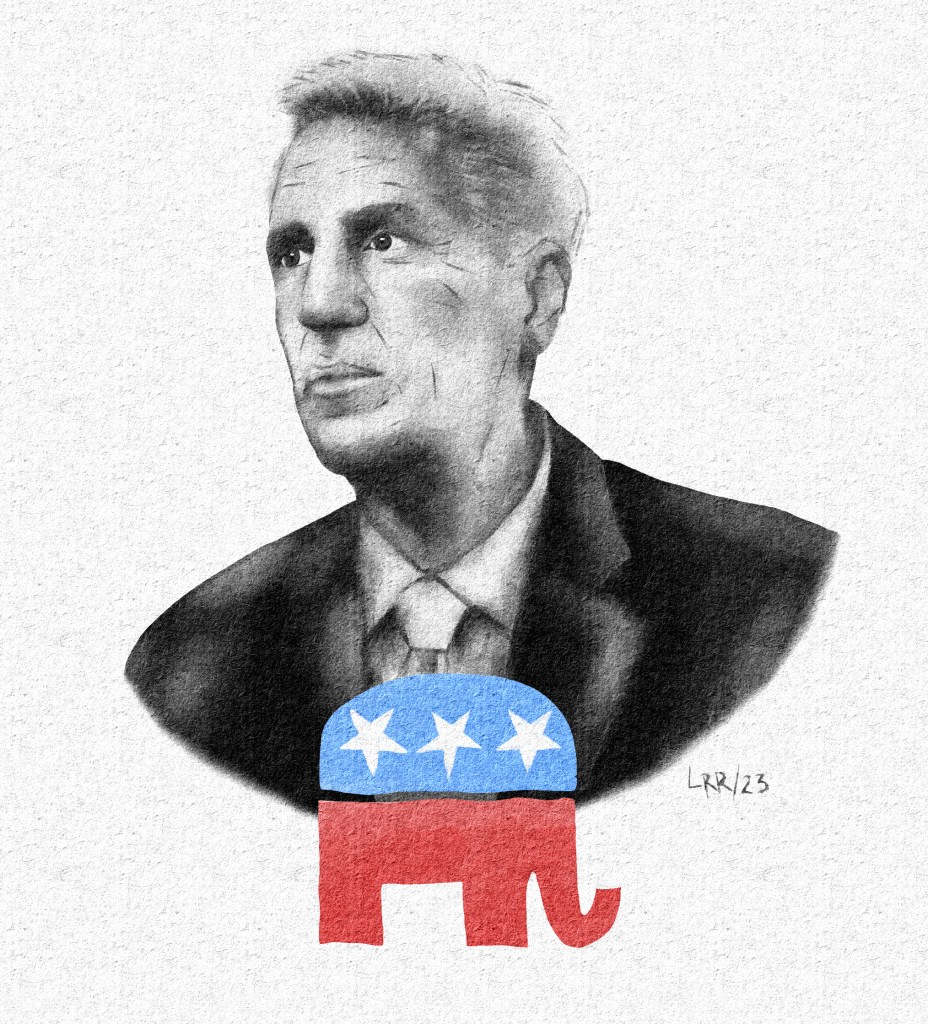
This was compounded by a new development concerning the election of a new Speaker, which must take place before the legislative session. The U.S. Constitution created the office of Speaker of the House, but there are no legal or constitutional rules encompassing the election or the powers of the speaker. The standard practice is for a candidate, traditionally party leaders, to be suggested by both the minority and majority parties, with representatives voting on the one they believe would be most capable of fulfilling the duties of speaker. These duties are undefined but usually include procedural duties such as maintaining order and announcing bills as well as sometimes leading the policy agenda of the House. Because of the importance of these duties, the majority, especially in recent years, will almost certainly elect a member of their own party.
The current divisions in the Republican party, and the slim majority, made this election particularly troubled. Kevin McCarthy, a Republican from California and previous House minority leader, is the one who achieved victory. This, however, was a hard-fought victory, requiring 15 consecutive voting rounds, the most since the American Civil War. The stalemate caused Donald Trump to voice support for McCarthy, against the wishes of his supporters in the House who would have preferred Trump to be speaker (Trump is not currently serving in any political position, but the Constitution does not explicitly require the Speaker to be a member of Congress). In order to win the support of this right-wing faction, McCarthy conceded many articles on the rules package, a document formalizing the procedural rules of the House, which is usually the first vote held by the members of the House. The rules package was voted on separately, with McCarthy’s changes, and narrowly passed.
Even on the 15th vote, McCarthy only won because some members of the House abstained from voting, lowering the threshold. The modifications made to the rules package significantly weakened McCarthy’s position by allowing any representative to call for a vote removing him as Speaker. Other concessions included giving more seats on the House Rules Committee to far-right representatives, capping spending, and removing metal detectors around the House floor, according to USA Today.
The support of Donald Trump was particularly relevant since the holdouts were the so-called “freedom caucus”. Mirroring the Democrats’ “progressive” caucus, this Republican caucus is a subgroup that pushes right-wing ideology and rhetoric. With well-known members such as Matt Gaetz and Marjorie Taylor Green, they have amassed considerable popular support from much of the Republican electorate. They continue to peddle the idea that the 2020 election was stolen from Donald Trump and subscribe to many other ideologies divergent from the mainstream, particularly their distrust of vaccines and disagreement with LGBTQ2S+ rights.
While the current division of the House, Senate, and Executive Branch almost ensures the American legislative process will grind to a halt, this instability in the House will also weaken its ability to pass budgets and likely nullifies any remaining chance of passing productive legislation. This situation also foretells a future where the Republican party becomes splintered between its traditionally conservative establishment and its more radical new members.
While this may seem like a foreign, distant issue, the repercussions of this instability will likely be felt within Canada. The U.S. Congress is constitutionally responsible for trade and the United States accounts for 65 per cent of all Canadian imports. Most importantly for this community, the Eastern Townships is a region which acts as the gateway for much of the trade between the two countries. Furthermore, trade does not only account for goods. International students and researchers are also regulated through trade deals. In the worst-case scenario, a Speaker who fails to unite the House or is consistently pushed towards the right could lead to a weaker academic integration between the two countries.
Additional sources:
Mascaro, L. (2023, January 7). Speaker McCarthy: A weakened leader or emboldened survivor?. Associated Press. https://apnews.com/article/politics-united-states-house-of-representatives-kevin-mccarthy-government-e986c620149b72030bb418bd5fadb4a2
Mascaro, L. (2023, January 9). Having elected House speaker, Republicans try governing. Associated Press. https://apnews.com/article/politics-us-republican-party-united-states-house-of-representatives-kevin-mccarthy-b9fcfd11427a695fe2eb49e36988f1a0
Morgan, D., Warburton, M., & Sullivan, A. (2023, January 7) Kevin McCarthy elected House speaker, but at a cost. Reuters. https://www.reuters.com/world/us/us-House-speaker-fight-enters-fourth-day-amid-antebellum-era-dysfunction-2023-01-06/
United States of America House of Representatives. (n.d.). Speakers of the House (1789 to present). https://history.House.gov/People/Office/Speakers-Intro/
Statistics Canada. (2022). Trade in goods by importer characteristics, by country of export. https://www150.statcan.gc.ca/t1/tbl1/en/cv.action?pid=1210011501


 The Campus