
By Gabrielle Liu — Junior Copy Editor
Between discussions on studded tires, tire widths, and whether to buy a winter bike, “the best bike is the one you have,” Olivier Coutu – a representative from Vélo Québec – reminded the audience. The Sustainable Development Office hosted a winter biking conference at the Gait on Nov. 22 at 4:30 p.m.
Coutu and Micheline Piché from Vélo Québec, a Montreal-based non-profit biking organisation, put together a presentation on a five-step process to beginning winter biking. The conference was also part of Bishop’s University’s Vélosympathique certification, which is taken on by cities, businesses, and campuses building bike-friendly cultures and design.
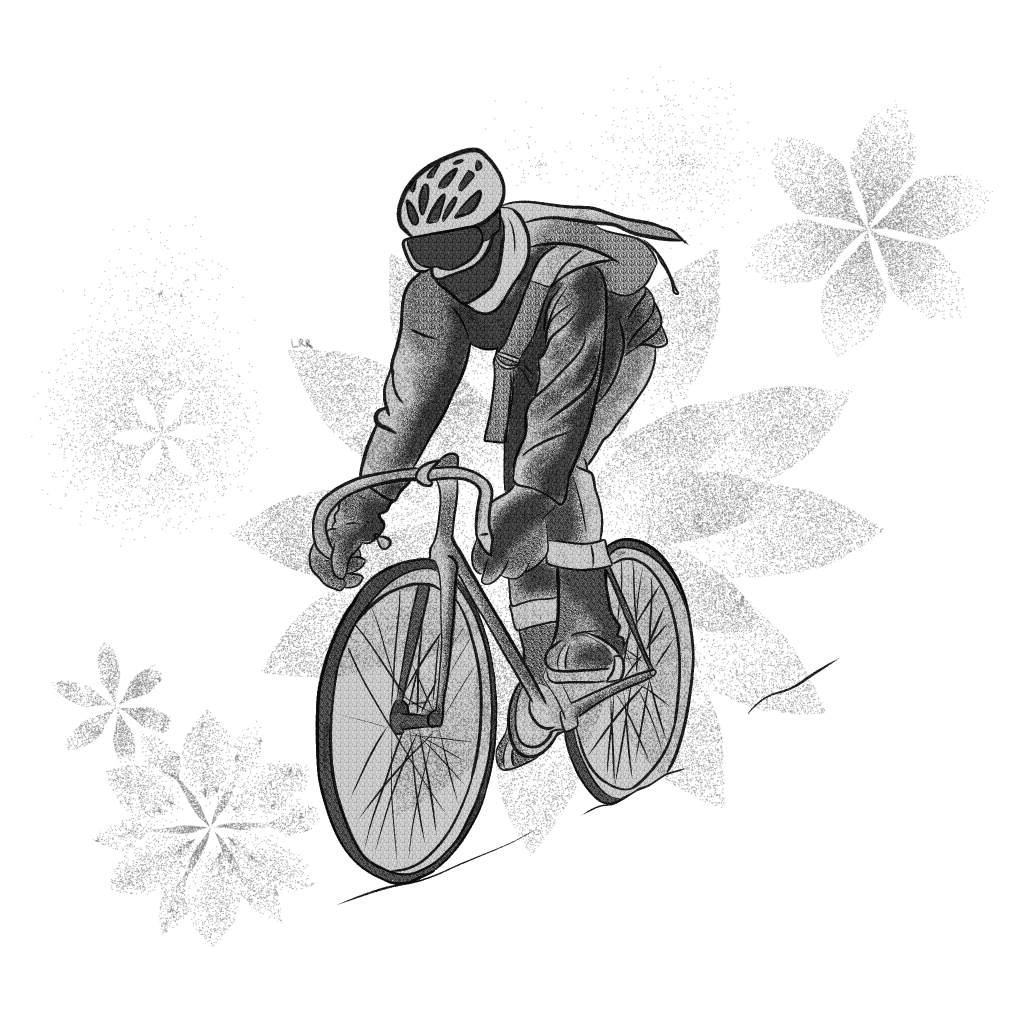
According to Vélo Québec, cyclists who continue to cycle in the winter have increased from 8.4 per cent in 2016–2017 to 13.6 per cent in 2020–2021 in Montreal. These numbers pale in comparison to European cities like Copenhagen where 80 per cent of cyclists continue in the winter, but goes to show that winter cycling is a sport that can be normalized. “15 years ago, I was the crazy guy,” Coutu later said when asked about public perception of being on the road during the winter. But now, he said, it’s normal to see winter bikers in Montreal. During the presentation, Coutu shared that a search of Facebook groups will reveal multiple winter biking communities in Quebec. Laurence Williams, the sustainable development advisor, pointed out that while Sherbrooke may not have a dedicated winter biking club, Vélo Urbain Sherbrooke’s Facebook page continues to be an active community in the winter season.
Vélo Québec shared that the first of the five steps in winter biking is to be visible. This includes having active lighting like attachable strobe lights and headlights. Quebec laws require all bikes that are rented and sold to have reflectors, and cyclists can receive tickets for lack of visibility. Coutu brought various active lighting examples, as well as a reflective vest.
Second, “stay dry, but not too warm.” Gesturing to Piché’s winter coat, Coutu said that if you wear something similar, “you are going to cook.” Instead, just like with ski wear, he recommends starting with a base layer, adding a warmth layer, and then a windbreaker or waterproof shell. Eye protection against the cold wind can be crucial. Coutu himself wears a ski helmet, since it’s built to be warm and hold ski goggles in place, but points out that some people wear $5 lab goggles.
Third, equip and maintain your bicycle. Coutu explained that most people first winterize their existing bike before buying one dedicated to the winter. Fair-weather bikers who only bring out their bike on sunny, dry-road days may not need to change tires, but as a daily commute, studded tires are the way to go, especially in hilly areas like Sherbrooke, or for trail biking. He also pointed out that bikers lower their seats in the winter to make sure they can get a sure footing on the ground. While he explained details on fenders that prevent the splash of mud and slush onto clothes, Piché rolled a winter bike to audience members for them to get a closer look. The snow, slush, and salts take a toll, so extra maintenance to lubricate gears, chains, and cables is necessary. Bike locks should be oiled as well lest you want them to seize up, Coutu added, recalling some explicitly unrecommended examples of people using a blowtorch or boiling water to unfreeze their locks.
Fourth, adapt your riding style and itinerary. Coutu pointed out that even when taking small roads, be wary of cars expecting you to move into snow banks while they pass– the hard-packed ice is slippery and is not an area you’d want to be on. Major roads have dangers of their own, but an upside is they’ll have less ice. Williams shared that while turning, she puts her feet out just in case she hits a slippery patch. A low bike seat and prepared “stance” will likely prevent you from tough falls.
Vélo Québec’s last instruction was to have fun. The experience of riding in fresh snow – that is, riding not despite of the winter, but because of the winter – is a thrill for Coutu given the proper precautions.



 The Campus