
By Eva Rachert — News Editor
The second Donald Lecture of the year was hosted on Monday, Nov. 21. The speaker was Eva Kuper, a Polish Holocaust survivor and educator who lives in Montreal. She spoke for an hour about her personal experience in the Warsaw Ghetto, the stories of her family members and the ways in which her children have been affected by the loss of their family. Kuper works at the Montreal Holocaust Museum, preserving stories like her own.
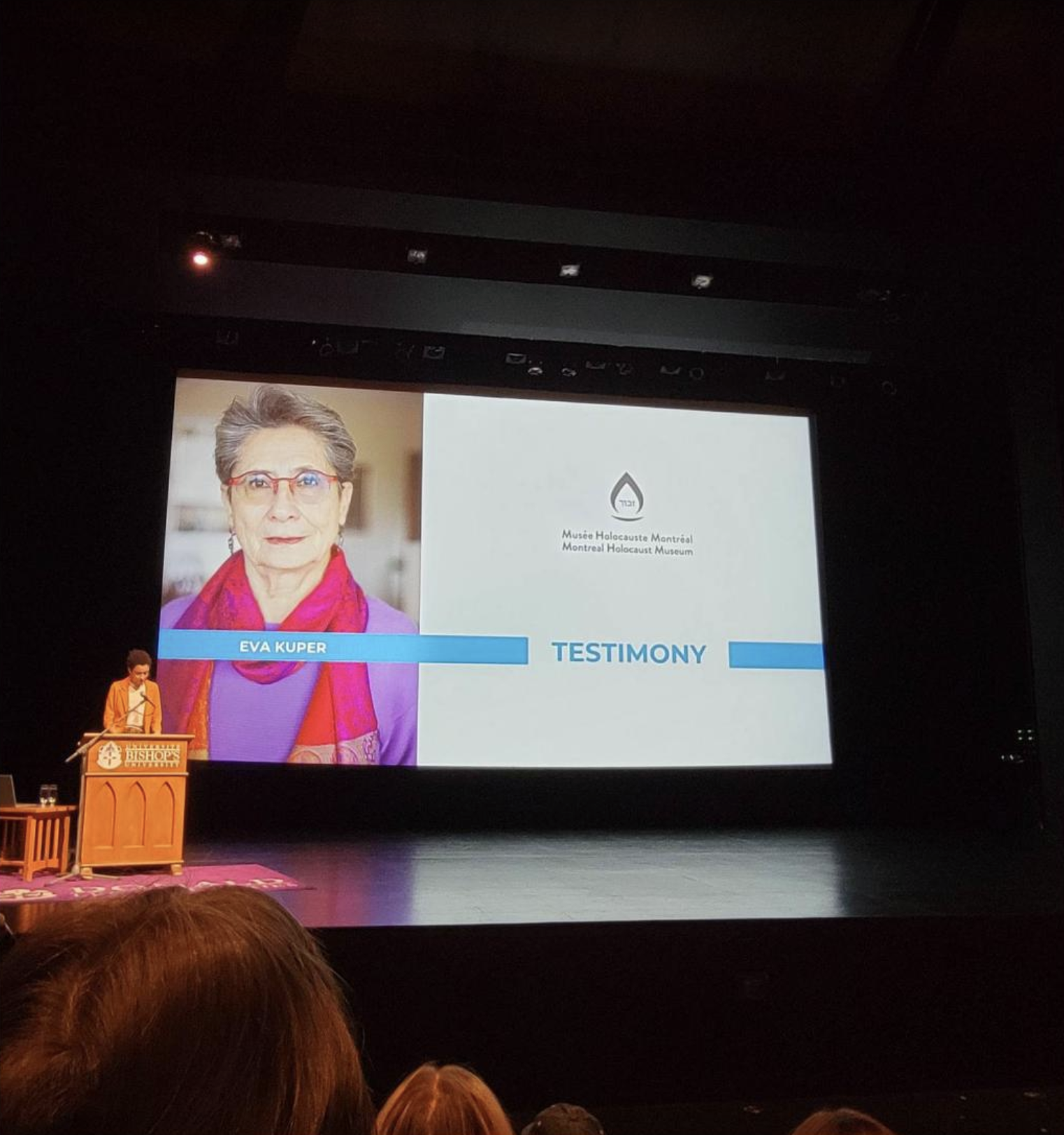
Principal Michael Goldbloom hosted a reception for Kuper at his home before the lecture, inviting students and professors to gather an hour and a half before the lecture began. Attendees had the opportunity to meet and talk to Kuper in a more casual setting, to thank her for coming and to introduce themselves. Students and professors met with Kuper and asked her questions about her life and experiences, which she then detailed at the lecture. Those invited to the reception attended the lecture together.
Kuper’s presentation detailed her family’s experience fleeing from Poland to Canada. She talked about losing her mother and how her aunt intervened to save her from the same death. In addition to sharing personal stories, she provided statistics on the number of people living in the Warsaw Ghetto and the loss of life in her home country.
Kuper spoke about her attempts to track down her own family history and explained that her father had rarely discussed what he had experienced and witnessed. Kuper worked with genealogists to track down relatives and people who helped her family to escape. She concluded the lecture with a message of hope in times of adversity and called on the audience to take part in remembering the Holocaust and preventing future human rights abuses.
After her speech, audience members asked questions about how she coped with what she had experienced, many relating personal stories about losing family members to genocide and being unable to uncover their family histories. Kuper encouraged the audience members to research their families and document the stories they discovered.
Kuper called on the crowd to remember her story and share what she had said with others. She emphasised the importance of storytelling in remembering history and cautioned audience members against being glib about history. She reminded the crowd that they were the last generation of people to be able to talk to WWII and Holocaust survivors personally.
The opportunity to speak with Kuper personally at the principal’s reception enhanced the content of the lecture. Kuper spoke against forgetting about the humanity of the victims and survivors of the Holocaust, which was furthered for those who had the opportunity to speak with her beforehand.
 The Campus