

In July of 2022, I was offered a strange yet enticing opportunity to collect primary data using ethnographic methods, meaning I was given the chance to travel halfway across the continent, live in a village, and collect primary data. As an honours student in the international political economy program, I’ve opted to write a 6-credit honours thesis to fulfill my honours degree requirements. Typically, a thesis involves finding one or two supervisors, conducting extensive research, and writing a particularly long essay which investigates every facet of the author’s proposed research question. This feature discusses my experience with the research design process, ethical review, and project execution.
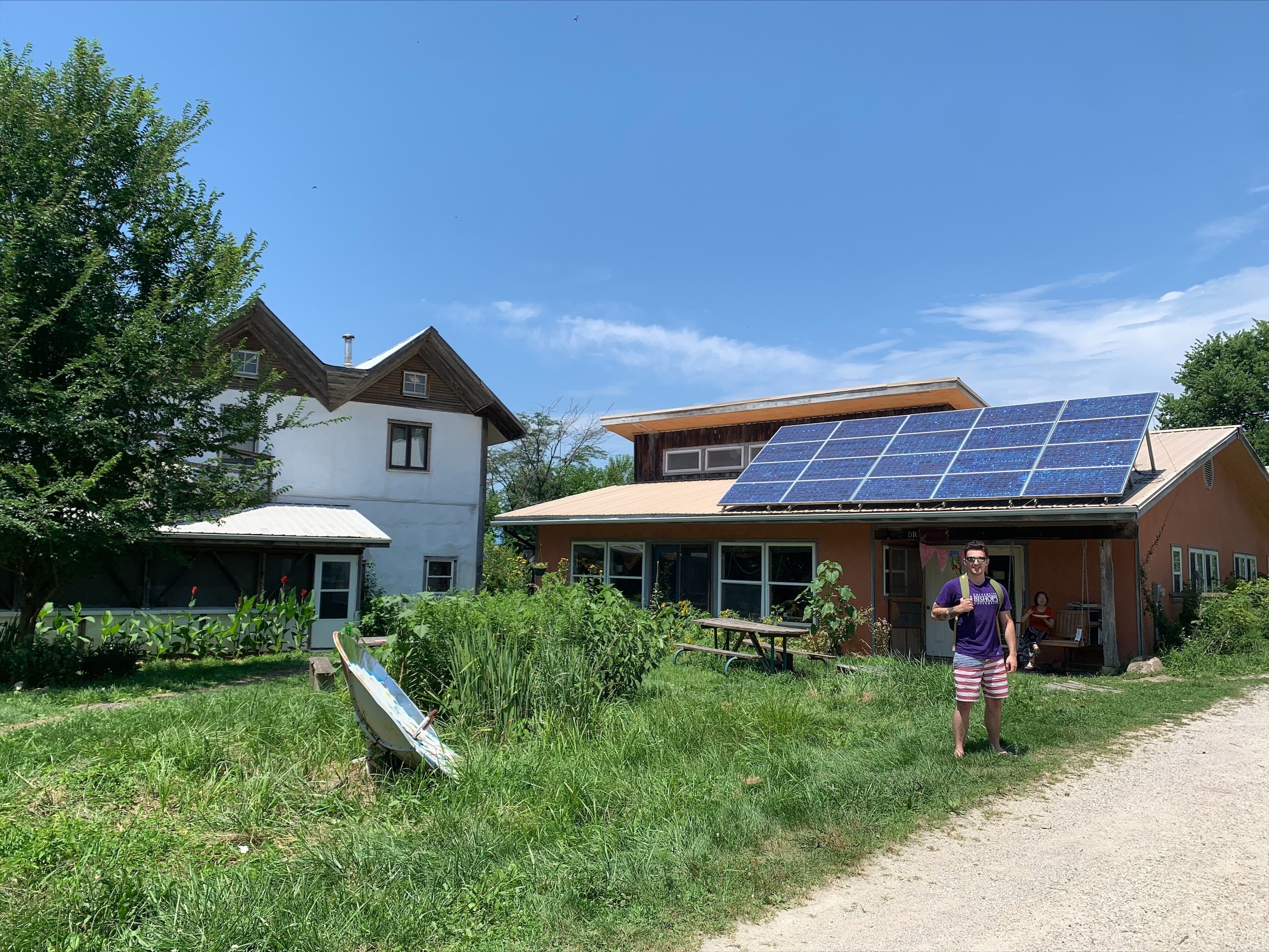
If you’ve felt disconnected from your community, frustrated by the conventions of modern industrial society, and have an intense desire to upend your entire life, “intentional communities” may be for you. Intentional communities are self-organized collectives of people who intentionally create communities outside of the mainstream culture to pursue their own niche set of ideals. I visited one such community in Missouri, named “Dancing Rabbit Ecovillage,” with a mandate to create an ecologically and environmentally conscious society which embraces personal development through a practice they call “inner-sustainability.” Dancing Rabbit was the subject of my honours thesis research; it is not, however, the subject of this article. I won’t be talking about my experiences in DR, due partially because ethical guidelines prohibit me from discussing sensitive research prior to publication, but also because I want the focus of this feature to be on the process of conducting research as an undergraduate student. Other students may already be thinking about conducting primary research in their field, and this article can give them an idea of what to expect.
Your thesis supervisor or principal investigator, depending on the type of research you’re conducting, is your best mentor. They’ve been through the process, so heed their word. The first step of writing a thesis in most divisions is submitting a research proposal to the department, detailing your research question, methodology, preliminary sources, and hypotheses. When deciding what subject to research, keep in mind that the purpose of scholarly research is to fill a gap in academic literature. Your project should fill a niche with a contribution that has yet to cover the exact topic you’re writing about. If your proposal involves costly primary research, such as mine did, you should also identify potential or verified sources of funding. The opportunity to fund research exists both internal and external to Bishop’s, meaning that there are ways to finance your research project with grants from outside of the university. Academic institutions, government research councils, and not-for-profit foundations will sometimes be inclined to fund undergraduate research if it enhances the academic experience of the student.
Most research involving lab experiments or human participants will be subject to review by the university’s ethics board before the project begins. The process of reviewing every aspect of your research project can often be tedious, but it’s for good reason; researchers have to protect themselves and the subjects of the research from liability and potential harm. The board may be subject to send content back to the researchers, asking for revisions before accepting the project.
After the long, arduous journey of filling out paperwork, the actual experiment or fieldwork can ensue. During the process of data collection, it is important to be mindful of your prior ethical agreements and the original purpose of your thesis in the first place. Following the experiment, most students will be enrolled in a one or two-semester course which exclusively
involves independent work with their supervisor, in order to write an extended essay, typically between 50 to 100 pages in most divisions, which addresses every conceivable detail of the research. In my eyes, this is the most exciting part of conducting original academic research as an
undergraduate student. You get to witness and experience how professional scientists design and execute a project, and no longer is the research process exoticized or mystified, because you have now done it yourself.
The intention of this article was to both inspire students to conduct their own research, as well as to warn prospective thesis authors of the research process. My hope is that no students were discouraged by the technical challenges of conducting original research as an undergraduate. In fact, research is so rewarding not in spite of those challenges, but specifically because of those challenges. If research and writing were easy, everybody would do it. The effort invested into this process is what makes the end result so rewarding, informative, and inspirational to others.



 The Campus