

“I trust whatever you choose. CSA Baskets are about trust,” Camille Lussier says.
She’s talking to a customer who is selecting 10 vegetables as part of their weekly community-supported agriculture (CSA) basket subscription. Lussier is one of the heads at Les Hôtes Épinettes, a certified organic farm in Cookshire-Eaton. They will be at Bishop’s Quad every Friday 11 a.m to 1 p.m. until Oct. 28 as a basket pick-up location and mini market for fresh produce.
What is community-supported agriculture?
Community-supported agriculture is a way for community members to directly support local farmers and receive high quality produce. Typically, consumers give a down payment for a set number of weekly baskets of fresh produce. Their money goes directly to the farmers growing their food, who then use it for seed, equipment, and resources.
Registration for CSA baskets took place on Aug. 15, with a limit of 60 members, as a pilot project led by the Bishop’s sustainable development office and the sustainable agriculture and food systems (SAFS) program. Those who registered committed to a seven-week or nine-week basket subscription and will receive five or ten fresh vegetables per basket. Laurence Williams, the sustainable development advisor, sees this as a much-needed service to the community, evident by how quickly the 60 basket spaces filled up, and the growing waitlist.
There are many other positive impacts of CSA baskets, Williams shared. With the rise of urbanization and fewer children being raised on farms, CSA brings people physically closer to and more aware of their food system. Vegetables at a grocery store may have been transported hundreds of kilometers to get there, but with CSA, you build a relationship with the farmer that grows your food, Lussier emphasized at the first market on Sept. 2nd. “By getting closer to our farmers and sharing the risks of agriculture, it makes our community closer too,” Williams said.
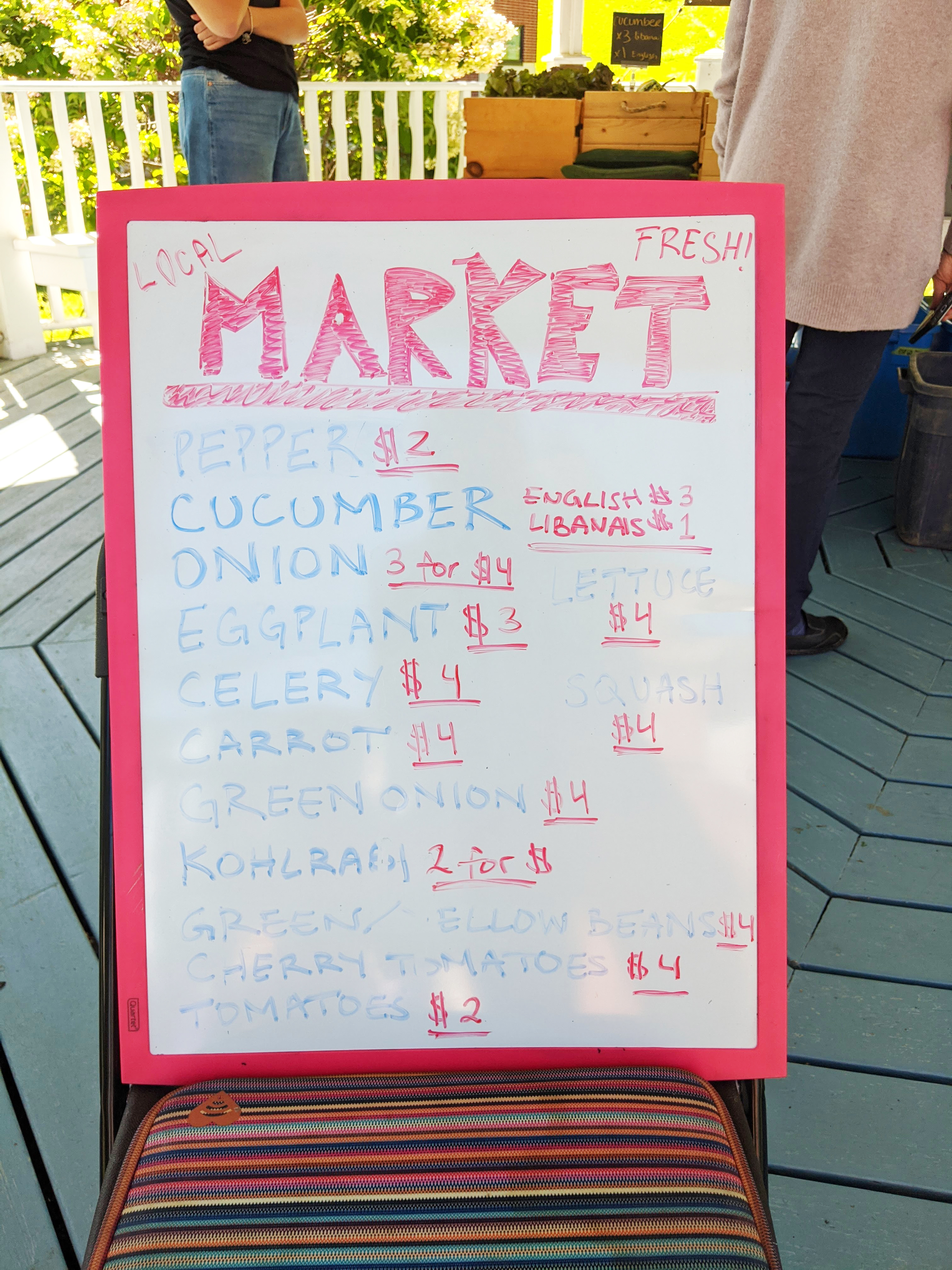
Williams thinks the response to this initiative may also be a combination of Bishop’s location, people’s lifestyle goals, and the rising cost of food. Students without cars may find their grocery options limited around Lennoxville. “Accessing local, good quality, and organic food is more and more popular as a lifestyle,” she said, but at the same time, people are increasingly aware of rising food costs being linked to oil prices. While the prices in a grocery store may rise, the price of CSA baskets are set at the start of a season, so consumers “secure” the cost of their produce.
Development
This is not the first time CSA basket projects have been at Bishop’s. Jaidan Stockhill, a graduate of environmental studies at Bishop’s University in 2022, set the grounds for this initiative with her honours thesis. She could track down little information about the previous CSA project several years ago, but knew it was led by Tierra del Fuego, a community organization that had members at Bishop’s.“As students graduate, you know, the project goes with them,” she shared. “One of the goals in this (new) project was that . . . it would be student focused and student run in a sense, but with the support of the school so that it is maintained from year to year.”
Stockhill reached out to over 70 farms around Bishop’s to gauge interest and identify potential candidates. Many farms were simply too busy to respond or add on to their CSA clients. Among those who were interested, Les Hôtes Épinettes already had a connection to the area as a vendor at Lennoxville’s farmer’s market. Lussier herself had worked at Bishop’s as a sports therapist, and she was friends with Williams.
Through her research, Stockhill studied the potential challenges tailoring a CSA project to Bishop’s. As a small university, the farm would have a smaller base of potential customers to draw from. Few people outside the environmental studies or the SAFS program knew what CSA was. Next, “most CSA programs are designed for families and working professionals who can afford a more expensive down payment,” she shared.
Then, there’s the challenge of timing. Peak harvest season occurs in the spring and summer, when most students leave Lennoxville – so Bishop’s is working with a unique calendar. Lussier explained that the nine-week CSA project at Bishop’s was a half-season: Les Hôtes Épinettes normally provides 20-week subscriptions. “It’s amazing to add 60 baskets in the middle of our season,” Lussier said, but it can be “a challenge as we have other clients to fulfill.”
These factors all culminated into the pilot project happening this fall, with the shorter season, 15 per cent student discount, pick-up spot on campus, and a farm just 24km away. To learn more about CSA, you can visit the sustainable development office’s kiosk and Les Hôtes Épinettes at the market each Friday.
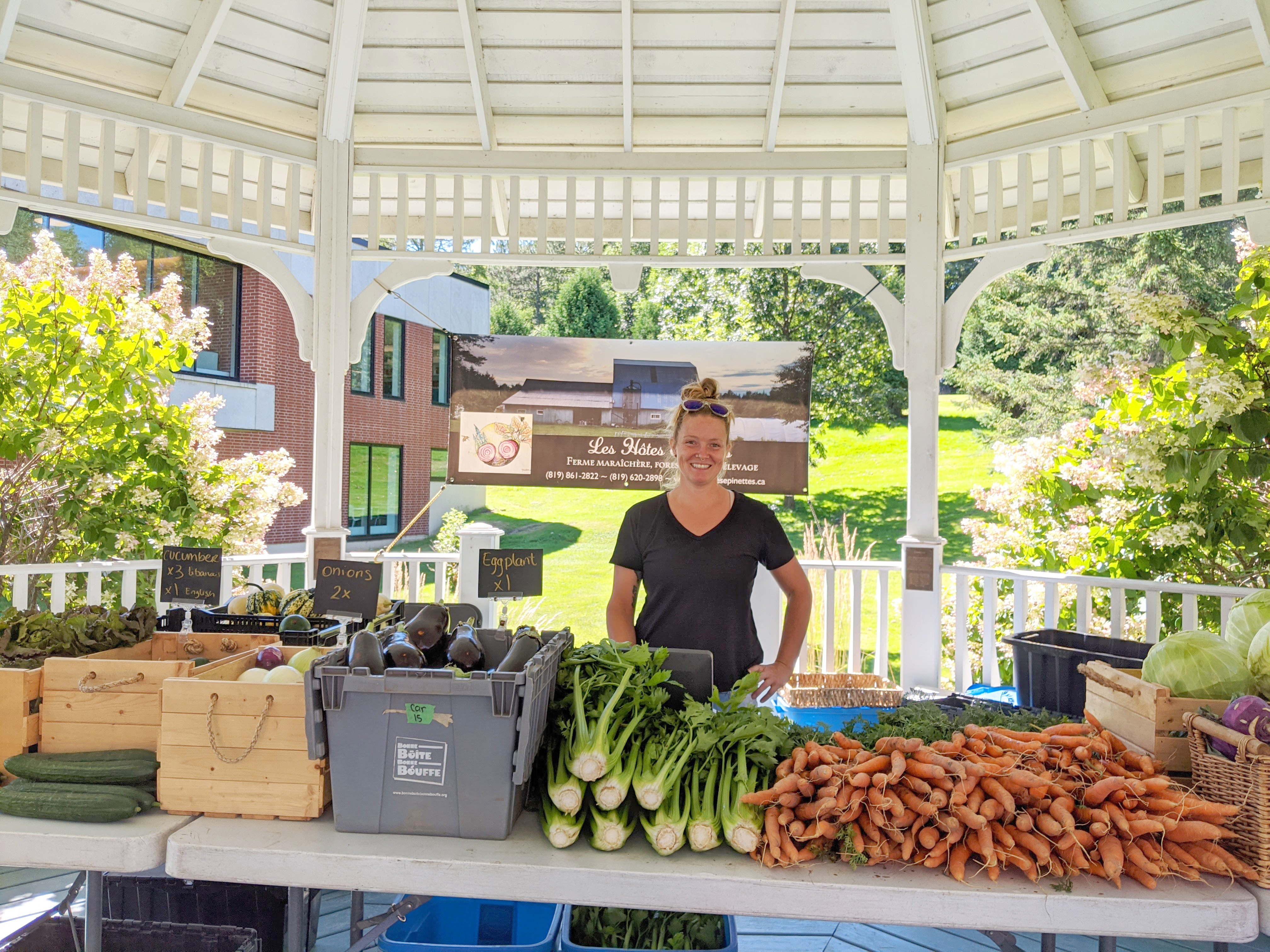
Caption: Camille Lussier, one of the head farmers at Les Hôtes Épinettes, at the Sep. 2 farmer’s market at Bishop’s University
Photo courtesy of Gabrielle Liu



 The Campus